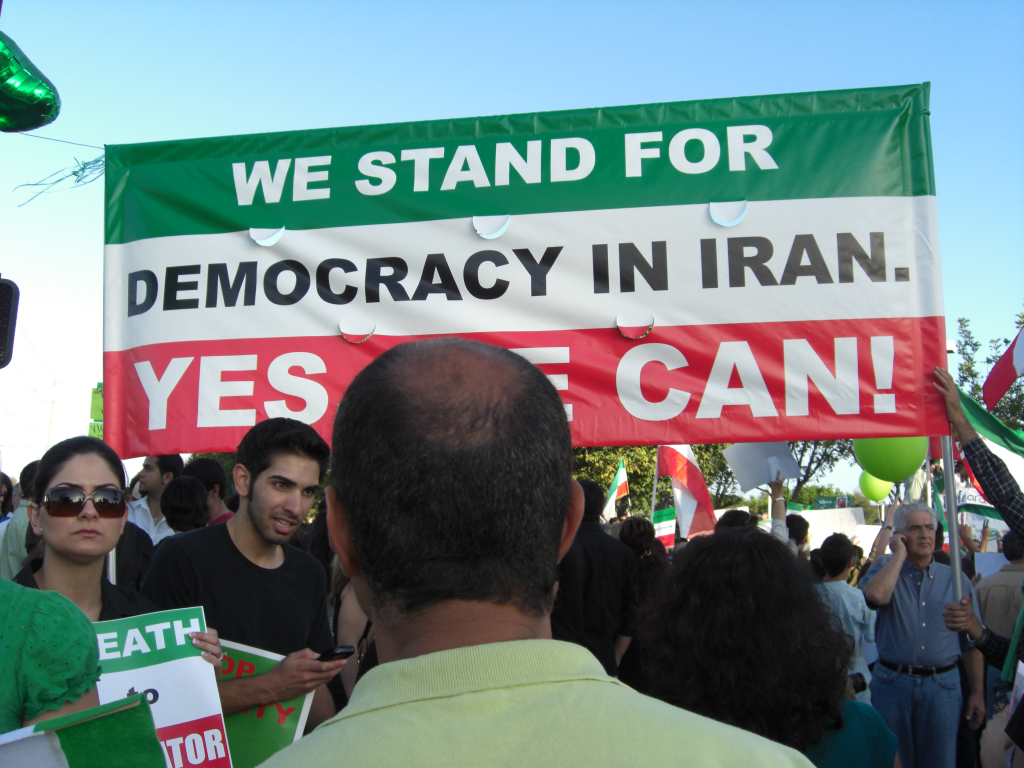
A growing chorus of voices is demanding the immediate deportation of pro-Iranian demonstrators in the United States, arguing that their protests signal disloyalty to the nation amid heightened tensions with Iran. The sentiment, amplified in the wake of President Donald Trump’s aggressive foreign policy and domestic immigration crackdowns, reflects a belief that such demonstrations undermine national security. As the administration pushes mass deportations and policies like the proposed Census redo, the call to expel pro-Iranian activists has sparked a heated debate over free speech, patriotism, and the limits of dissent in a polarized America.
The demand arises against the backdrop of strained U.S.-Iran relations, exacerbated by Trump’s withdrawal from the 2015 nuclear deal in 2018 and new sanctions in 2025 targeting Iran’s oil exports. Pro-Iranian protests, though small—numbering fewer than 1,000 participants nationwide, per 2025 FBI estimates—have emerged in cities like New York and Chicago, often led by Iranian-American groups or students opposing U.S. policy. Demonstrators, some waving Iranian flags, call for de-escalation and dialogue, citing the human cost of sanctions, which a 2024 UN report linked to shortages of medicine in Iran. Critics of these protests, however, view them as support for a hostile regime, especially after Iran’s 2024 missile tests raised fears of nuclear ambitions.
Advocates for deportation argue that pro-Iranian demonstrators, particularly non-citizens, forfeit their right to remain in the U.S. by aligning with a nation designated a state sponsor of terrorism. They point to Trump’s immigration policies, including the “Alligator Alcatraz” detention facility in Florida and 139,000 ICE arrests in 2025, as evidence of a mandate to prioritize national security. A July 2025 poll shows 58% of Americans support stricter measures against protesters perceived as anti-American, reflecting frustration with what some see as disloyalty during a time of global uncertainty. Supporters draw parallels to historical measures, like the 1798 Alien Enemies Act, which Trump has invoked to expedite deportations.
Opponents, however, warn that deporting demonstrators violates core American principles. The First Amendment protects free speech, including controversial protests, as affirmed by the Supreme Court in cases like Texas v. Johnson (1989), which upheld flag burning as protected expression. Civil liberties groups, including the ACLU, argue that targeting pro-Iranian demonstrators risks chilling dissent and disproportionately harms immigrant communities. Many protesters are U.S. citizens or legal residents, making deportation legally dubious. Critics also note that Iranian-Americans, numbering 500,000 per 2023 Census data, often protest U.S. policy, not America itself, driven by concerns for family in Iran facing economic hardship.
The logistics of such deportations raise practical concerns. Identifying and processing thousands of demonstrators, many of whom are not undocumented, would strain ICE’s resources, already stretched by mass deportation efforts costing $315 billion, per a 2025 American Immigration Council estimate. Legal challenges would likely arise, with courts scrutinizing whether protests constitute a deportable offense. A 2025 Supreme Court ruling limiting Trump’s attempt to end birthright citizenship suggests judicial pushback against overreach. Moreover, deporting citizens or legal residents could spark international backlash, particularly from allies critical of Trump’s foreign policy, like the EU, which condemned the USAID closure in June.
The debate mirrors broader cultural tensions. Trump’s base, emboldened by policies like abolishing property taxes and ending Social Security taxes, sees deportation as a logical extension of “America First.” A 2025 Gallup poll shows 94% of Trump voters stand by their choice, viewing protests supporting adversarial nations as betrayal. Conversely, groups like the People’s Unity Project argue that dissent is a hallmark of freedom, warning that targeting demonstrators echoes authoritarian tactics. The issue could sway 2026 midterm races in states like Michigan, where Iranian-American communities are vocal.As America grapples with its 249th year of independence, the call to deport pro-Iranian demonstrators tests the boundaries of liberty and loyalty. For some, it’s a necessary defense against perceived threats; for others, it’s a betrayal of the nation’s founding ideals. With Trump’s policies—like tariff hikes and immigration raids—already polarizing the nation, the push to expel protesters risks further division. Whether courts, voters, or the administration itself will draw the line remains uncertain, but the controversy underscores a nation wrestling with how to balance security, free expression, and its identity in a turbulent world.