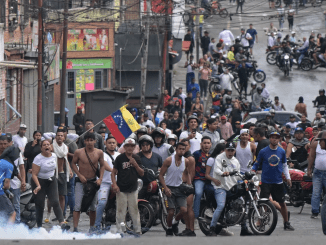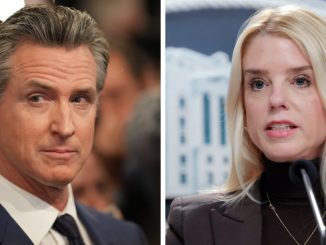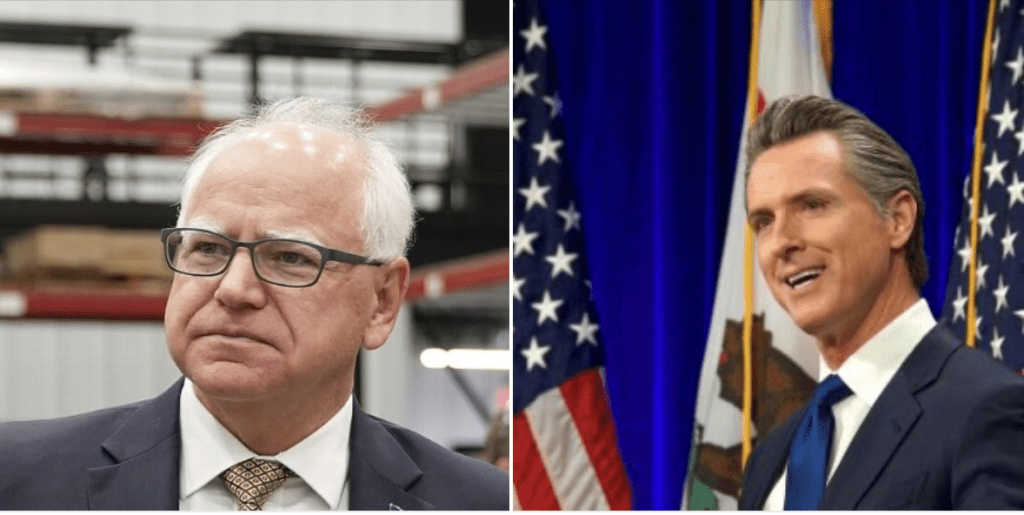
The debate over who holds the dubious title of America’s worst governor in 2025 has ignited, with Minnesota’s Tim Walz and California’s Gavin Newsom locked in a fierce contest. Critics, pointing to fiscal mismanagement, rising crime, and controversial policies, argue both have fumbled their states’ challenges, fueling national scorn. As President Trump’s ICE raids and “No Kings” protests roil the country, the spotlight on Walz and Newsom’s leadership failures intensifies, with each governor’s missteps drawing sharp comparisons.
In Minnesota, Walz faces backlash for overseeing a 36% budget spike, from $51.9 billion in 2022-2023 to $70.5 billion in 2024-2025, earning an “F” from the Cato Institute for fiscal irresponsibility. His push for tax hikes—on businesses, high earners, and even middle-class drivers via gas and vehicle fees—has alienated voters. The assassination of Representative Melissa Hortman, labeled a “politically motivated” attack, has exposed security lapses, with Walz’s call for unity overshadowed by Minnesota’s unrest. Critics argue his handling of 2020 riots, where a police precinct was overrun, set a precedent for chaos, undermining his claim to competence.
California’s Newsom, graded a “D” by Cato, fares little better. His state’s $68 billion deficit and $6.2 billion Medi-Cal shortfall, tied to expanding coverage for undocumented immigrants, have drawn fire. Los Angeles riots over ICE raids, causing $5.2 million in damages, are blamed on Newsom’s sanctuary policies, like SB 54, which critics say embolden lawlessness. His podcast, featuring right-wing figures like Steve Bannon, has baffled allies, with 59% of Californians opposing his 2028 presidential bid. Newsom’s defiance of Trump—suing over 700 Marines deployed to LA—rallies some, but others see it as posturing amid a state in decline.
Both governors face accusations of prioritizing politics over governance. Walz’s 2024 vice-presidential run distracted from Minnesota’s woes, while Newsom’s national media blitz, including a “Real Time” appearance calling Democrats “toxic,” suggests a focus on 2028 ambitions. Crime stats haunt them: California’s violent crime rose 11% last year, while Minnesota’s urban centers struggle post-2020. Walz’s paid family leave tax and Newsom’s Medi-Cal expansion are seen as burdensome, with middle-class families feeling the pinch.
Supporters, however, argue both face unfair scrutiny. Walz’s defenders highlight his school meals program and abortion rights protections, noting Minnesota’s economy grew 2.6% last year. Newsom’s backers point to his wildfire response, earning 52% approval in February 2025, and his legal battles against Trump’s policies as bold leadership. Both govern blue states, they say, where progressive policies naturally draw conservative ire, and national polarization—48% back Trump’s raids—amplifies criticism.
The “worst governor” label, though, sticks due to tangible pain. Minnesota’s tax hikes hit 60% of households, while California’s 75,000 homeless and riot-scarred businesses fuel despair. Walz’s security failures and Newsom’s fiscal recklessness offer ample ammunition for detractors. With 52% of battleground voters supporting Trump’s agenda, both governors appear out of step with a frustrated electorate.
As Walz and Newsom navigate their states’ crises, the race for “worst” is less about policy nuance than public perception. Minnesota’s mourning and California’s chaos paint a grim picture, leaving voters to judge who’s fallen furthest. The verdict? A tie for now, with neither showing the leadership to pull their state—or themselves—out of the fire.