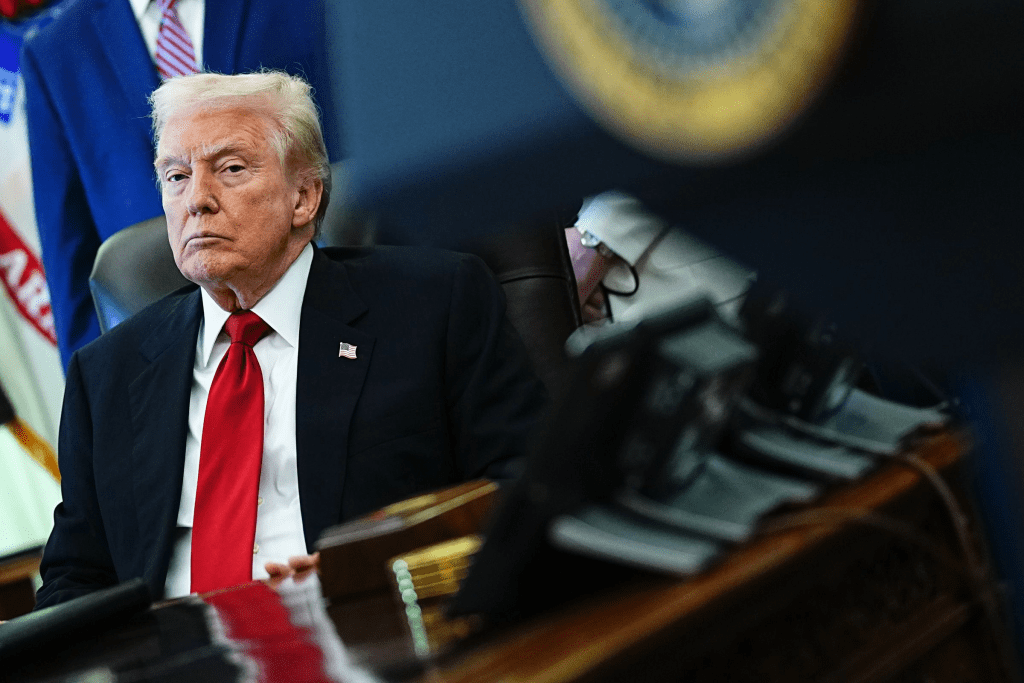
President Donald Trump’s promise of $2,000 “tariff dividend” checks, funded by revenue from import taxes, has stirred excitement and skepticism as his second term unfolds. First floated in November 2025, the idea aims to distribute windfalls from tariffs on goods from countries like China and Mexico directly to Americans, primarily middle- and lower-income households. Trump has described it as a “rebate” to offset any inflationary effects of the tariffs, estimating hundreds of billions in collections could cover the payouts without new spending.
In a recent New York Times interview, Trump suggested the checks might arrive “toward the end of the year,” potentially in late 2026, and insisted they could be issued without congressional approval. The administration views tariffs as a tool to boost domestic manufacturing and reduce deficits, with early 2026 revenues already surging nearly 200% year-over-year. However, analysts estimate a single round of $2,000 payments could cost $450-600 billion, far exceeding projected tariff income of $200-300 billion annually. Critics warn it could fuel inflation or require deficit spending, contradicting Trump’s debt-reduction goals.
Supporters hail the dividends as a direct benefit to voters, with some online voices even suggesting eligibility be limited to Trump 2024 supporters—a notion dismissed as unconstitutional but reflective of partisan fervor. Democrats decry the plan as a gimmick favoring the wealthy, arguing tariffs disproportionately burden consumers. Legal hurdles loom, including potential Supreme Court challenges to tariff authority.
As midterms approach, the proposal tests Trump’s economic vision. If implemented, it could provide relief amid rising costs, but details on eligibility, timing, and funding remain vague. For now, the tariff dividends represent a bold, untested experiment in redistributing trade war spoils.