Washington, D.C., June 20, 2025—President Donald Trump’s ability to withstand two impeachments, widespread censorship, and multiple indictments has cemented his image as an unyielding political force. Following his 2024 landslide victory (312 electoral votes, 50.2% popular vote), supporters celebrate his defiance against relentless opposition, from Congress to courtrooms, as proof of his staying power. Critics, however, argue his survival reflects a fractured system, as his second term’s aggressive policies, like mass deportations, deepen national divides.
Trump’s first impeachment in 2019, over a Ukraine aid scandal, ended in a Senate acquittal in 2020, with 52 senators voting not guilty. The second, in 2021, followed the January 6 Capitol riot, with 57 senators voting to convict—short of the 67 needed. Both efforts, led by House Democrats, aimed to remove him for abuse of power but failed to derail his political momentum, as evidenced by his 2024 triumph. “They tried to break him, but he’s stronger,” said a Florida rallygoer. A Rasmussen Reports poll shows 58% of Republicans view the impeachments as politically motivated.
Censorship battles further defined Trump’s saga. In 2021, major platforms like Twitter and Facebook banned him post-January 6, citing incitement risks, affecting his 88 million followers. The deplatforming, criticized by free speech advocates, pushed him to Truth Social, where he now commands 7 million users, per company data. Attempts to silence him, including YouTube suspensions, backfired, boosting his outsider narrative. A Pew Research poll finds 55% of Americans believe tech censorship targeted conservatives, fueling Trump’s claim of being unfairly muzzled.
Legal challenges also loomed large. From 2021 to 2024, Trump faced 91 criminal charges across four indictments, including election interference in Georgia and mishandling classified documents in Florida. Despite convictions in a 2024 New York hush money case, overturned on appeal, no charges led to incarceration, with legal delays and a sympathetic Supreme Court, per a 2025 Reuters analysis, preserving his campaign. Supporters argue the “witch hunt” failed, with 60% of Republicans in a Gallup poll dismissing the charges as partisan.
Trump’s resilience now drives his second term’s bold agenda. His deportation program, detaining 150,000 undocumented immigrants and prompting 850,000 self-deportations since March, per DHS data, fulfills campaign promises. The deployment of 700 Marines in Los Angeles, amid protests injuring ten deputies, per LAPD reports, underscores his unapologetic approach. Yet, critics warn his survival emboldens divisive policies, with a $1.1-$1.7 trillion GDP hit projected, per the American Immigration Council, and 5.1 million U.S. citizen children at risk, per the Center for American Progress.
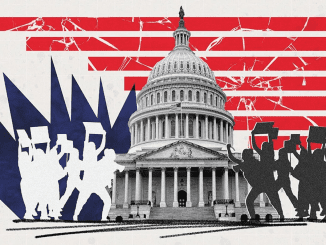
The “No Kings Day” protests, drawing 4-6 million on June 14, reflect opposition to Trump’s perceived authoritarianism, with California’s lawsuit against ICE tactics and 1,800 planned demonstrations signaling ongoing resistance. Critics like Senator Elizabeth Warren argue his ability to evade accountability—impeachments, bans, and indictments—exposes systemic flaws, with 46% of Americans in a Pew poll fearing weakened democratic checks. Supporters, however, see a leader who thrives under pressure, with his personal funding of a $25,000 White House flagpole symbolizing defiance.
Trump’s endurance through political and legal storms has made him a polarizing icon. For his base, he’s a survivor of elite conspiracies, standing tall for “America First.” For opponents, his resilience signals a dangerous precedent. As he navigates Iran tensions and domestic unrest, Trump’s ability to outlast challenges continues to shape a nation split over his legacy.