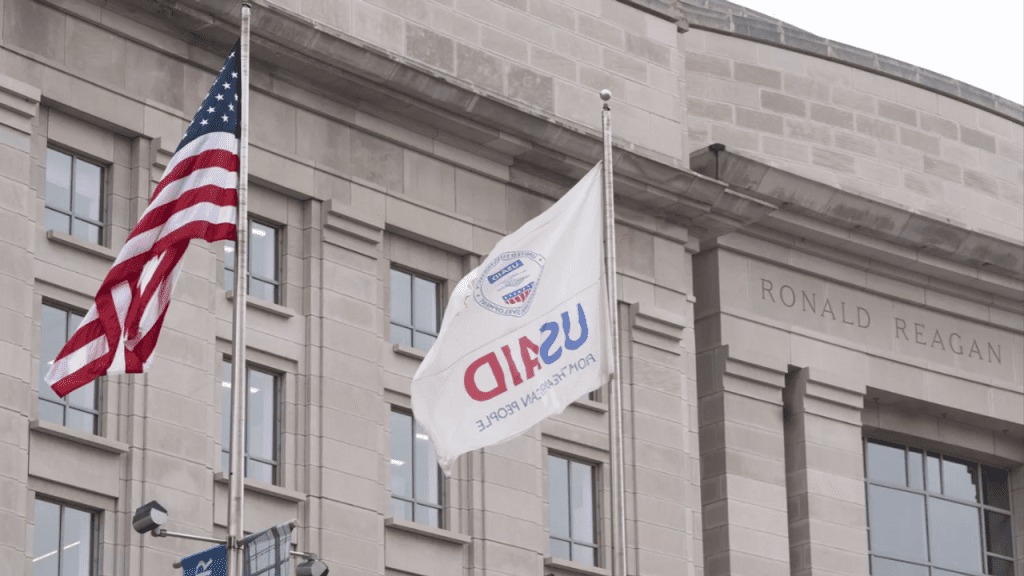
The abrupt termination of the United States Agency for International Development (USAID) under the Trump administration has ignited global controversy, with a recent CNN report warning that the move could lead to 14 million deaths worldwide over the next five years. The decision, driven by President Trump, Elon Musk, and Senator Marco Rubio, reflects a broader push to slash foreign aid and redirect resources to domestic priorities. While humanitarian groups decry the cuts as catastrophic, a growing chorus of Americans dismiss the alarm, arguing that the U.S. bears no responsibility for global crises. The debate reveals a stark divide over America’s role in the world and the moral weight of its choices.
USAID, established in 1961, has long been a cornerstone of U.S. foreign policy, delivering humanitarian aid, health programs, and economic support to over 100 countries. Its initiatives, like the President’s Emergency Plan for AIDS Relief (PEPFAR), have saved millions of lives by providing HIV treatment, vaccines, and food assistance in nations like Haiti, Sudan, and Zambia. The agency’s budget, roughly $40 billion annually, represents less than 1% of federal spending but supports critical interventions, from famine relief to maternal health. A study published in The Lancet in April 2025 projects dire consequences from USAID’s closure: 15 million AIDS-related deaths, 2 million tuberculosis fatalities, and 8 million child deaths by 2040, alongside millions of unplanned pregnancies.
The decision to dismantle USAID aligns with Trump’s America First agenda, which prioritizes domestic issues like border security and tax cuts over international obligations. Administration officials argue that foreign aid has been mismanaged, often propping up corrupt regimes or failing to deliver measurable results. They point to the $1.7 trillion federal deficit in 2024 as justification for cutting programs that benefit non-Americans. Supporters also contend that nations like China and India, with growing economies, should shoulder more responsibility for global aid. For them, the U.S. has been unfairly burdened as the world’s philanthropist, and redirecting funds to infrastructure or healthcare at home is long overdue.
Critics, however, see the move as shortsighted and morally bankrupt. Humanitarian organizations warn that slashing USAID will destabilize fragile regions, exacerbate migration pressures, and weaken U.S. influence abroad. The loss of PEPFAR alone could reverse decades of progress in HIV/AIDS control, particularly in sub-Saharan Africa, where 25 million people rely on U.S.-funded treatments. Developing nations like Myanmar and Afghanistan, already reeling from conflict, face heightened risks of famine and disease. The ripple effects could also harm American interests, as global instability fuels security threats and trade disruptions. Critics argue that the U.S., as the world’s largest economy, has a moral and strategic duty to lead on humanitarian issues.
Among some Americans, the response to these warnings is a defiant “not my problem.” This sentiment, echoed in public discourse, reflects frustration with decades of global commitments that many feel have drained U.S. resources without clear benefits. Polls from June 2025 show 52% of Americans support reducing foreign aid, with many citing domestic challenges like homelessness and healthcare costs. For these voters, the specter of 14 million deaths abroad is tragic but distant, overshadowed by concerns closer to home. They argue that charity begins with one’s own citizens, and the government’s first duty is to Americans struggling to make ends meet.
The debate exposes a deeper rift over national identity and responsibility. For some, America’s greatness lies in its global leadership and compassion; for others, it’s about prioritizing its own people in a world seen as increasingly ungrateful. Legal challenges to USAID’s closure are underway, with advocacy groups arguing it violates international commitments. Meanwhile, warehouses in Africa sit stocked with expiring medicines, as reported by journalists on the ground, a stark symbol of the aid vacuum left behind.As the world grapples with the fallout, the U.S. faces a reckoning over its global role. The decision to end USAID may save billions in the short term, but the long-term costs—human, economic, and geopolitical—could be staggering. Whether Americans view the consequences as their burden or someone else’s will shape not only foreign policy but the nation’s moral compass. For now, the divide persists: one side mourns a retreat from humanitarian ideals, while others stand firm, insisting the world’s problems are not America’s to solve.