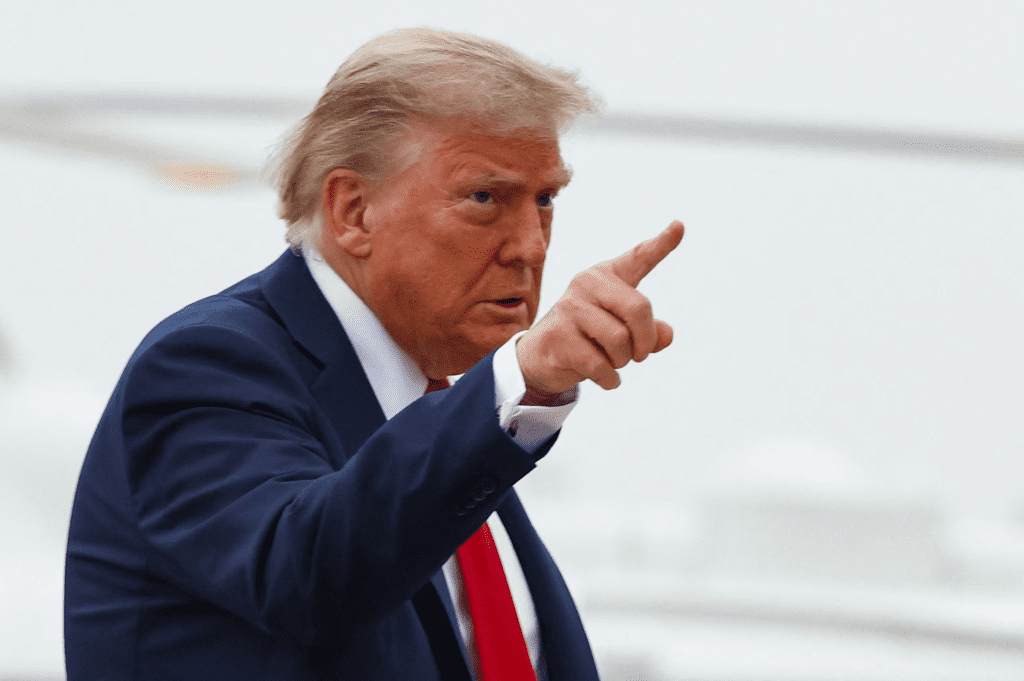
President Donald Trump has once again thrust immigration into the national spotlight, declaring his intention to pursue the “remigration” of an estimated 21 million undocumented immigrants, a policy he frames as “reversing the invasion” of America. The provocative rhetoric, delivered at a rally in June 2025, signals a hardline approach to immigration enforcement, drawing both fervent support and sharp condemnation. As the administration ramps up its deportation efforts, the term “remigration”—a concept tied to far-right movements in Europe—raises questions about the scope, legality, and human cost of such an ambitious plan.
The term “remigration” entered the U.S. political lexicon in 2024 when Trump referenced it in a campaign post, promising to “end the migrant invasion” through mass deportations. The concept, as articulated by close adviser Stephen Miller, involves not only expelling undocumented immigrants but also pressuring those with legal protections to leave voluntarily. The administration’s blueprint, influenced by the Heritage Foundation’s Project 2025, includes expanding Immigration and Customs Enforcement (ICE), deploying military resources, and invoking the Alien Enemies Act of 1798 to expedite removals. Trump’s claim of 21 million undocumented immigrants—higher than the 11 million estimated by the Pew Research Center in 2022—amplifies the scale of his vision, which he describes as the largest deportation operation in U.S. history.
Since taking office, the administration has moved swiftly. ICE arrests have surged, with 139,000 deportations reported by April 2025, targeting both criminal and non-criminal immigrants. High-profile raids in cities like Atlanta, Miami, and Seattle have detained hundreds, including some U.S. citizens mistakenly swept up in operations. The Department of Homeland Security has also introduced the CBP Home app, offering a $1,000 stipend for voluntary self-deportation, a tactic critics liken to coercion. Additionally, the administration has revoked legal protections for over 500,000 immigrants from Cuba, Haiti, Nicaragua, and Venezuela, leaving them vulnerable to deportation following a Supreme Court ruling in May 2025.
Supporters of Trump’s plan argue it restores sovereignty and prioritizes American citizens. They point to economic strains in border communities and crime rates linked to undocumented immigrants, though studies show immigrants commit crimes at lower rates than native-born citizens. The administration’s focus on “criminal aliens”—with 75% of recent ICE arrests involving accused or convicted offenders—resonates with voters who backed Trump’s promise to secure the border. The sharp drop in border crossings since January 2025, with daily “gotaways” falling to 77 from 1,837 under Biden in 2023, is touted as evidence of success.
Critics, however, warn of catastrophic consequences. The American Immigration Council estimates a mass deportation of this scale could cost $315 billion, disrupting industries like agriculture, construction, and hospitality that rely on immigrant labor. Human rights groups decry the policy as inhumane, pointing to the trauma of family separations and the targeting of schools, hospitals, and places of worship—reversing prior sanctuary protections. The use of the term “remigration,” with its European far-right connotations of ethnic cleansing, has alarmed civil liberties advocates. The ACLU and others are preparing legal challenges, arguing that invoking the Alien Enemies Act for deportations exceeds presidential authority absent a declared war or invasion.
Logistical hurdles also loom large. ICE’s current workforce of 21,000 is stretched thin, even with 10,000 additional agents authorized under new legislation. Plans to use military aircraft and National Guard troops have sparked concerns about violating the Posse Comitatus Act, which limits military involvement in domestic law enforcement. Foreign governments, notably Colombia, have resisted accepting deportation flights, complicating the process. Meanwhile, the economic fallout—estimated at a $130 billion GDP hit by the Brookings Institution—could strain an already polarized nation.Trump’s “remigration” push reflects a broader ideological battle over America’s identity. For his supporters, it’s a reclamation of national pride and security. For opponents, it’s a dangerous step toward exclusion and division. As legal battles mount and protests erupt in cities like Los Angeles, the policy’s feasibility remains uncertain. What is clear is its potential to reshape communities, economies, and the nation’s moral fabric. With the 2026 midterms approaching, the fight over “remigration” will likely define Trump’s second term, testing the limits of executive power and America’s commitment to its immigrant roots.