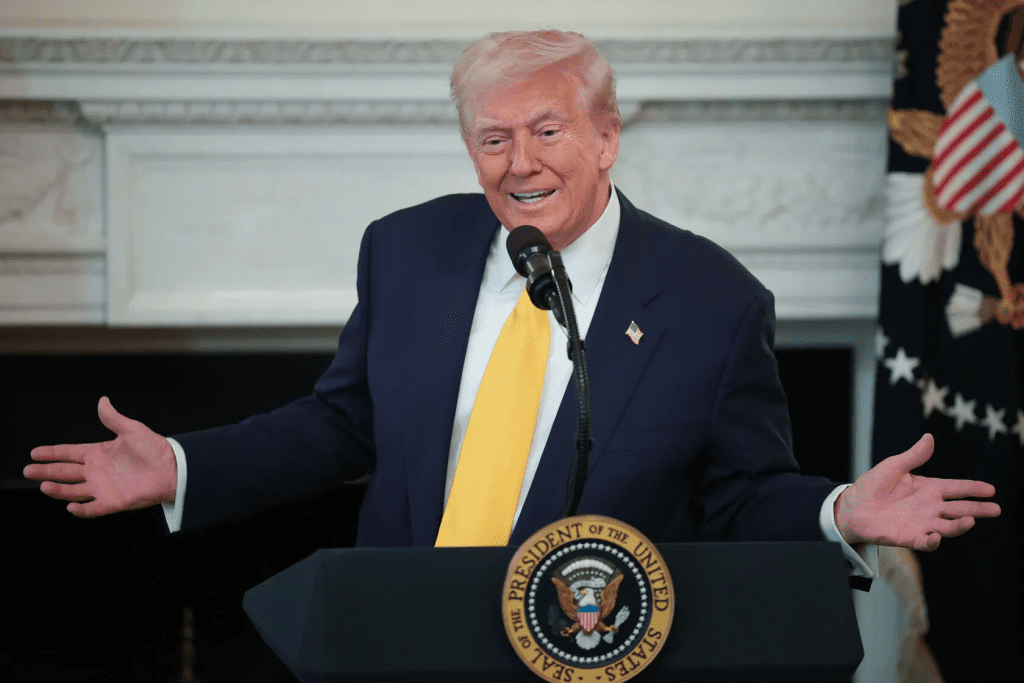
Washington, D.C., June 17, 2025—President Donald Trump’s long-standing claim that undocumented immigrants are “bringing drugs, they’re bringing crime, they’re bringing rapists,” first uttered during his 2015 campaign launch, remains a cornerstone of his immigration policy as his second term unfolds. The phrase, repeated at a recent Mar-a-Lago rally, has galvanized supporters behind his mass deportation program while reigniting accusations of xenophobia from critics. As protests and violence escalate, Trump’s rhetoric—unchanged since day one—continues to shape a deeply polarized debate over immigration and national security.
On June 6, Immigration and Customs Enforcement (ICE) launched sweeping raids, detaining 150,000 undocumented immigrants across cities like Los Angeles and Chicago, under Trump’s January 2025 executive order prioritizing removals. The administration cites crime statistics to justify the crackdown, pointing to a 2024 Department of Homeland Security report claiming 425,000 undocumented immigrants have criminal convictions. Trump’s supporters, bolstered by his 2024 landslide (312 electoral votes, 50.2% popular vote), argue the rhetoric reflects undeniable truths about border security, with 59% of Republicans in a Rasmussen Reports poll supporting mass deportations.
Critics argue the rhetoric paints an unfair portrait, inflaming tensions and justifying aggressive enforcement. A 2025 Cato Institute study found that undocumented immigrants have lower incarceration rates (0.85%) than native-born citizens (1.3%) for violent crimes, challenging Trump’s narrative. Democrats, including Senator Elizabeth Warren, have called the language “dehumanizing,” linking it to violent backlash, like a June 15 shooting in Utah tied to immigration tensions. The “No Kings Day” protests on June 14, drawing 4-6 million, denounced both the deportations and Trump’s inflammatory words, with organizers citing a rise in hate crimes against Latinos, up 11% since 2024, per FBI data.
The rhetoric’s impact is evident in policy and public response. ICE’s expanded use of private detention centers and military bases has drawn scrutiny, with California suing over alleged due process violations. In Los Angeles, where 700 Marines were deployed to secure federal assets, protests turned violent, injuring ten sheriff’s deputies in a week, per LAPD reports. Trump defenders argue his warnings about crime justify such measures, pointing to $50 million in damages from protest-related looting. A Pew Research poll shows 52% of Americans support the deportations, but 46% worry about economic fallout, particularly in agriculture, where 50% of workers are undocumented, per USDA estimates.
Trump’s team has doubled down, framing the rhetoric as a call to protect American communities. Acting ICE Director Thomas Homan claimed at a June 13 briefing that deportations target “public safety threats,” citing 56,000 removals of individuals with criminal records in 2025. Yet, critics note that 60% of detainees lack criminal convictions, per ICE data, fueling accusations of overreach. Legal challenges, including a federal injunction in California, highlight tensions, while Governor Gavin Newsom’s push for sanctuary policies has clashed with federal efforts, escalating the crisis.
The phrase, now a decade old, remains a lightning rod. Supporters see it as a blunt truth that propelled Trump’s political rise, resonating with voters frustrated by border policies. Opponents argue it stokes division, undermining the contributions of immigrants and fueling unrest. As 1,800 more protests are planned and Trump pushes for expanded enforcement, possibly invoking the Insurrection Act, the debate over his rhetoric reflects a nation grappling with identity, security, and the human cost of its policies.