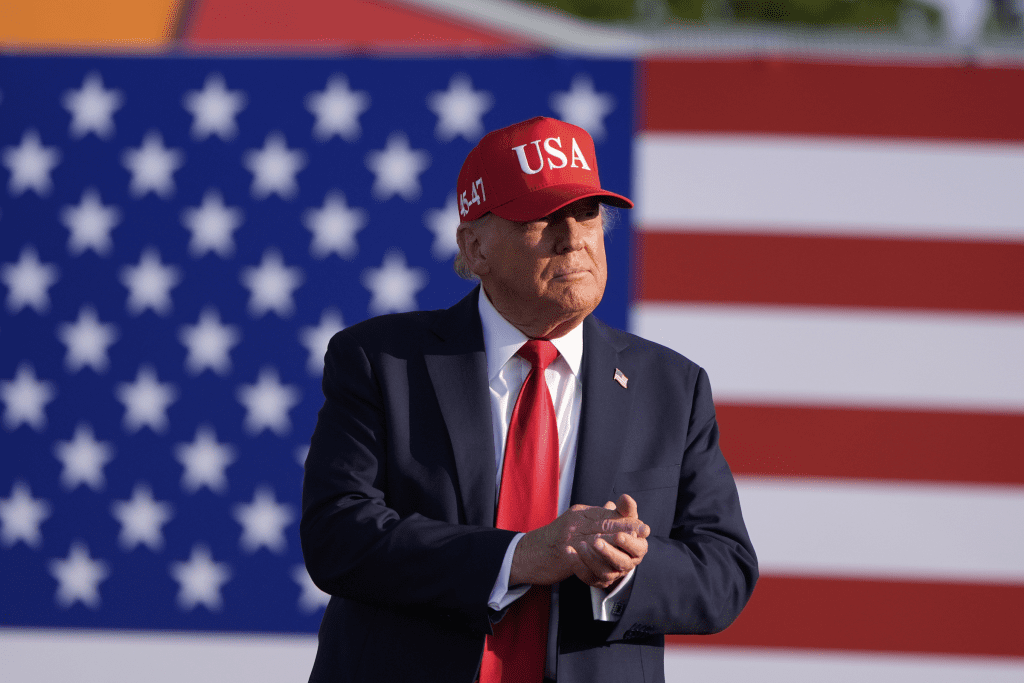
In a stunning announcement that has electrified his base, President Donald Trump has called for the elimination of property taxes in every state, framing it as a cornerstone of his economic agenda to relieve American homeowners. The proposal, floated in early July 2025, aligns with Trump’s broader push for sweeping tax relief, as seen in his recently signed “One Big Beautiful Bill,” which extended 2017 tax cuts and raised the state and local tax (SALT) deduction cap to $40,000. While supporters hail the plan as a game-changer for the middle class, critics warn it could cripple state budgets and local services, raising questions about its feasibility and impact.
Property taxes, levied by state and local governments, generate roughly $700 billion annually, funding essential services like schools, police, and infrastructure. Trump’s call to abolish them would shift this burden, potentially requiring federal intervention or massive spending cuts. The president argues that eliminating property taxes would put more money in homeowners’ pockets, stimulate economic growth, and fulfill his campaign promise to prioritize American families. With 65% of Americans owning homes, per 2024 Census data, the proposal resonates with a broad swath of voters who see it as relief from rising costs in high-tax states like New Jersey, where 39.9% of properties face taxes over $10,000, or New York, at 25.9%.
The idea builds on Trump’s recent tax victories. The “One Big Beautiful Bill,” signed on July 4, 2025, made permanent the 2017 tax cuts, eliminated taxes on tips and overtime, and boosted the SALT deduction, saving high-tax state homeowners up to $10,500 annually at a 35% federal tax rate. Supporters, particularly in states like California and Illinois, see the property tax plan as a logical next step, arguing it would free homeowners from what they view as an unfair burden. They point to the economic boom under Trump—5% growth in manufacturing jobs and 3.2% unemployment in June 2025—as evidence that bold fiscal moves deliver results.
Skeptics, however, call the proposal unrealistic and potentially disastrous. Property taxes are a state prerogative, and abolishing them would require unprecedented federal overreach, likely facing legal challenges. The National Governors Association has raised alarms, noting that states like Texas and Florida, which lack income taxes, rely heavily on property taxes for revenue. A 2025 Tax Foundation report estimates that replacing property tax revenue could cost the federal government $2 trillion over a decade, ballooning the deficit already strained by $4.5 trillion in tax cuts from the recent bill. Critics also warn that cuts to services like education—70% of property tax revenue funds schools—could harm communities, especially in low-income areas.
The plan’s details remain vague, with no formal legislation yet introduced. Trump has suggested federal subsidies or tax credits to offset state losses, but analysts question the funding source, especially after cuts to Medicaid and SNAP in the recent bill, which the Congressional Budget Office projects will leave 12 million uninsured. Some speculate the administration could tie the proposal to its immigration agenda, arguing that deporting 21 million undocumented immigrants could reduce public service demands, though studies show immigrants contribute $13 billion in taxes annually. Others see it as a political play to energize voters before the 2026 midterms, where Republicans aim to flip Senate seats in Michigan and New Hampshire.
Opponents, including Democrats and some GOP moderates like Senator Thom Tillis, argue the plan risks destabilizing local economies. They point to the backlash against welfare cuts, which sparked protests from groups like the People’s Unity Project, as a warning of public unrest. Meanwhile, supporters counter that abolishing property taxes would empower homeowners, particularly seniors, aligning with the Senate’s recent passage of no taxes on Social Security. A July 2025 Gallup poll shows 58% of Americans support reducing property taxes, though only 32% favor total elimination.As Trump’s proposal gains traction, it faces a steep road ahead. Constitutional hurdles, state resistance, and fiscal realities could derail it, but the idea has already galvanized his base, who see it as the kind of bold move they voted for. Whether it’s a visionary reform or an unfeasible promise, the call to end property taxes has injected new energy into the debate over America’s economic future, testing the limits of federal power and the nation’s commitment to its homeowners.