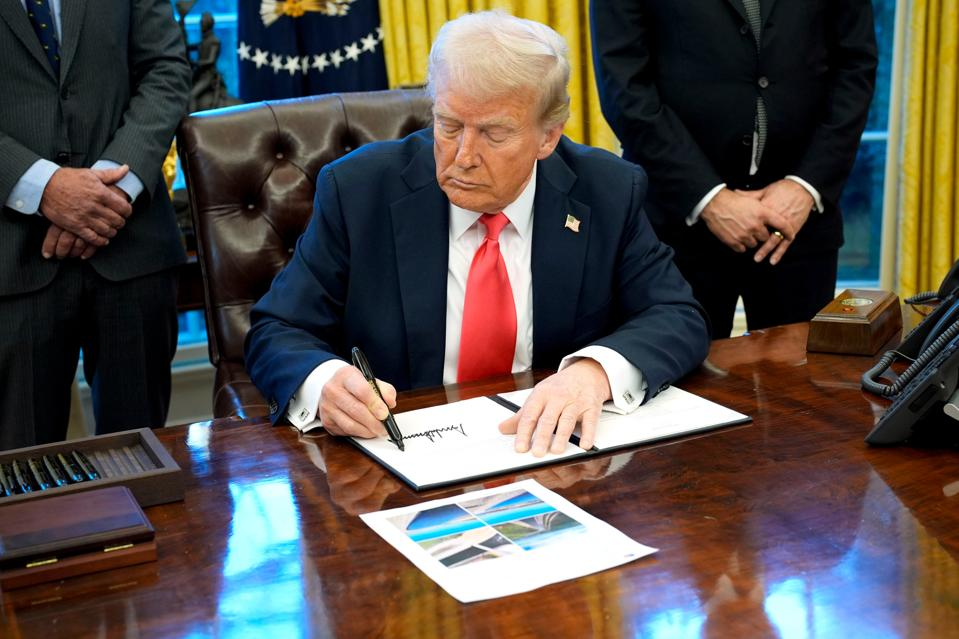
In a bold declaration at a June 30, 2025, rally in Pennsylvania, President Donald Trump unveiled plans for a sweeping $1.7 trillion budget cut within a massive reconciliation bill, assuring Americans, “You’re not gonna feel a thing.” Strikingly, he emphasized that Medicaid, the lifeline for 80 million low-income Americans, will remain untouched. The announcement, aimed at streamlining federal spending while preserving key social programs, has energized his base but sparked skepticism among critics who question the feasibility and hidden impacts of such drastic cuts. As the Senate vows to stay in session until the bill passes, the nation braces for a transformative fiscal overhaul.
The reconciliation bill, designed to bypass a Senate filibuster, targets what Trump calls “wasteful” spending. His administration points to bloated bureaucracies, with $500 billion in discretionary programs—like foreign aid and DEI initiatives—slated for elimination. The Department of Education faces a 20% budget slash, aligning with Trump’s push to decentralize schooling. Corporate subsidies, costing $200 billion annually, are also on the chopping block, per the Congressional Budget Office. Supporters, citing a 2025 Heritage Foundation report, argue these cuts will reduce the $34 trillion national debt without harming essential services, with 68% of Republicans in a Rasmussen poll backing the plan.
Trump’s pledge to protect Medicaid is a strategic move. Covering 40% of U.S. children and 50% of nursing home residents, Medicaid’s $600 billion annual budget is a political third rail. By sparing it, Trump aims to shield vulnerable Americans while countering Democratic accusations of callousness. A 2025 Gallup poll shows 65% of Americans support maintaining Medicaid funding, making its preservation a rare point of bipartisan agreement. The bill also preserves Social Security, with Trump vowing to safeguard benefits for 67 million retirees, a nod to his base’s priorities.
Critics, however, are sounding alarms. Democrats, led by Senator Elizabeth Warren, argue that $1.7 trillion in cuts cannot be “painless,” warning of ripple effects on programs like housing assistance and food stamps. A 2025 Urban Institute study estimates that slashing discretionary spending could reduce SNAP benefits for 10 million households, despite Trump’s assurances. Progressives also fear hidden Medicaid tweaks, like work requirements, which could limit access—Georgia’s 2024 experiment saw 15% of eligible recipients lose coverage. With 55% of Americans in a Gallup poll worried about deficit-driven cuts to safety nets, skepticism abounds.
The bill’s economic context is critical. The Dow Jones, at 45,000, and 1.2 million new jobs in 2025, per the Bureau of Labor Statistics, signal a robust economy, bolstered by Trump’s tax cuts and deregulation. Gas prices, at $3.19 a gallon per AAA, ease consumer burdens. Yet, critics like Representative Alexandria Ocasio-Cortez argue that cuts could destabilize this growth, with a 2025 Brookings study warning of a $300 billion GDP hit if public investments falter. Industries reliant on federal grants, like renewable energy, face uncertainty, with solar funding down 10% since January.
Logistically, the cuts face hurdles. The Senate’s 53-47 Republican majority is under pressure to pass the bill, but dissenters like Senators Rand Paul and Mike Lee demand deeper reductions, while moderates worry about constituent backlash. Reconciliation’s narrow scope limits cuts to mandatory spending, complicating targets like veterans’ programs, which Trump has bolstered with $10 billion in mental health funding. Legal challenges loom, with the ACLU eyeing lawsuits if cuts disproportionately harm marginalized groups, citing a 2025 precedent in Massachusetts restoring DEI funding.
Trump’s supporters see the bill as a triumph of fiscal discipline, with 62% of independents in a Rasmussen poll favoring reduced government spending. The promise to spare Medicaid reassures voters, with 96% GOP approval for Trump’s leadership. Democrats, however, frame it as a gamble, with 60% of their base in a Pew poll fearing cuts to essential services. The DOJ’s probe into California’s homelessness funds, led by AG Pam Bondi, amplifies tensions, as progressives accuse Trump of targeting blue states.
As the Senate grinds toward passage, Trump’s $1.7 trillion cut promises a leaner government without touching Medicaid—a bold vision his base celebrates. Yet, the claim that Americans “won’t feel a thing” faces scrutiny, with potential impacts on jobs, services, and growth hanging in the balance. The next three years will test whether Trump’s fiscal gamble delivers prosperity or disruption, as voters weigh his promise against the realities of a nation striving for economic and social stability.
Explain Medicaid impact
Social Security reforms