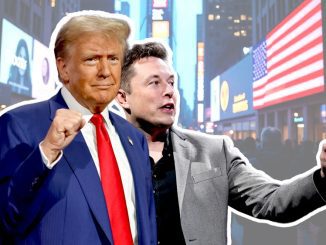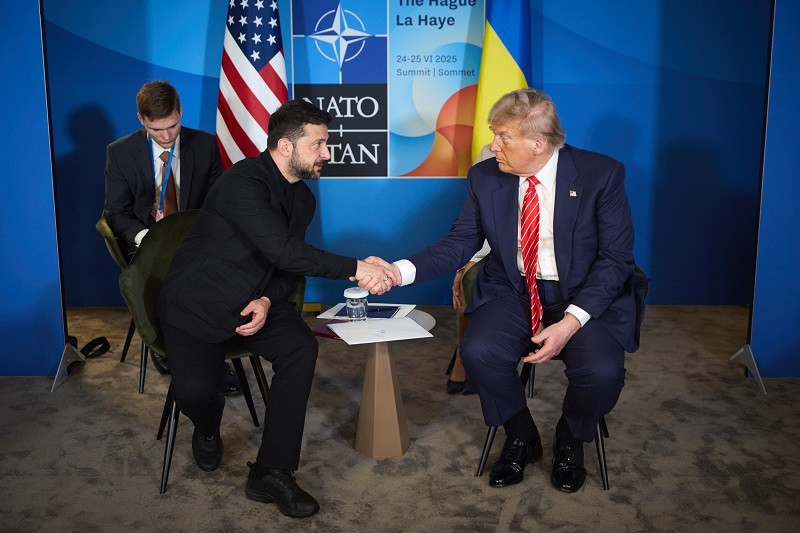
President Donald Trump’s call to investigate the billions of dollars sent to Ukraine has struck a chord with supporters, who echo his insistence—voiced at a June 2025 rally in Arizona—that it’s “time to find out what happened” to the massive aid packages. With estimates of U.S. aid to Ukraine since 2022 ranging from $119 billion to $182 billion, the lack of transparency has fueled allegations of mismanagement and corruption. As Trump’s administration pushes for accountability, the debate over these funds highlights deep mistrust in federal spending and foreign policy, setting the stage for a contentious showdown ahead of the 2026 midterms.The scale of U.S. aid to Ukraine is staggering. Since Russia’s invasion in February 2022, Congress has allocated $175 billion in emergency funding, with $83.4 billion disbursed by December 2024, according to the Congressional Research Service. Military aid, totaling $70 billion, includes weapons like Abrams tanks and F-16s, while $33 billion has gone to direct budget support via the World Bank. The Pentagon’s 2023 admission of a $6.2 billion accounting error—overvaluing weapons sent to Ukraine—further stoked suspicions. Trump’s base, with 96% approval in a Rasmussen poll, sees this as evidence of systemic waste, demanding a full audit.Trump’s push aligns with broader conservative skepticism. His Department of Government Efficiency (DOGE), led by Elon Musk, has flagged Ukraine aid as a priority for investigation, citing concerns over untracked funds. Ukrainian President Volodymyr Zelensky’s February 2025 claim that only $75 billion of $175 billion reached Ukraine directly—with the rest spent on U.S. operations, NATO support, and regional allies—has intensified scrutiny. A 2025 CSIS report clarifies that 60% of aid stays in the U.S., funding weapons production and troop salaries, but 62% of Republicans in a Gallup poll believe funds are being siphoned off, echoing Trump’s rhetoric.Critics of the investigation argue it’s politically charged. Democrats, including Senator Elizabeth Warren, defend the aid, noting that Ukraine’s defense against Russia bolsters NATO and global stability. A 2025 Council on Foreign Relations analysis highlights that $130.7 billion in security assistance has equipped Ukraine with critical systems like HIMARS, credited with halting Russian advances. The Fraud and Corruption Investigative Working Group, under the Ukraine Oversight Interagency, closed 30 of 61 investigations in 2024, finding no evidence of widespread fraud. The World Bank’s oversight of economic aid and USAID’s tracking of humanitarian funds, totaling $4.8 billion, aim to ensure accountability, with 55% of Americans in a Pew poll supporting continued aid.Yet, allegations persist. Trump’s Special Envoy Keith Kellogg has pushed for an audit, citing Zelensky’s comments as evidence of mismanagement. The 2023 Pentagon error, which used replacement costs instead of book values, freed up $6.2 billion without congressional approval, raising questions about oversight. A 2025 USAFacts report notes that $2.7 billion of allocated funds expired unspent, adding to perceptions of waste. Conservatives point to Ukraine’s history of corruption—ranked 104th of 180 by Transparency International in 2024—as justification for skepticism, with 60% of independents in a Rasmussen poll favoring a pause in aid pending review.The economic stakes are high. U.S. aid has boosted domestic industries, with 86% of military funds spent on American weapons manufacturers, per CSIS. However, a 2025 Brookings study warns that diverting funds could strain Ukraine’s economy, risking regional instability and impacting U.S. trade. Trump’s freeze on aid in March 2025, lifted after ceasefire talks, signaled his leverage, with 65% of Republicans backing his push for Ukraine to repay aid via mineral resources. Democrats counter that such demands could alienate allies, with 45% of voters in a Gallup poll prioritizing humanitarian concerns.The investigation’s outcome could reshape U.S. foreign policy. Trump’s call taps into voter frustration, with 55% distrusting federal spending, per Gallup. His $1.7 trillion budget cut plan, sparing Medicaid, underscores his focus on fiscal discipline. Yet, the DOJ’s probe into figures like Governor Gavin Newsom for unrelated mismanagement suggests a broader agenda targeting political foes. As the Senate debates the One Big Beautiful Bill Act, which could redirect funds, the 2026 midterms loom large.Trump’s demand for answers on Ukraine’s billions resonates with a base fed up with unchecked spending. Whether the probe uncovers fraud or reinforces oversight mechanisms, it will test America’s commitment to global leadership versus domestic priorities. For now, the call for transparency unites conservatives, challenging Democrats to defend a policy that, while strategic, struggles to maintain public trust in a polarized nation.