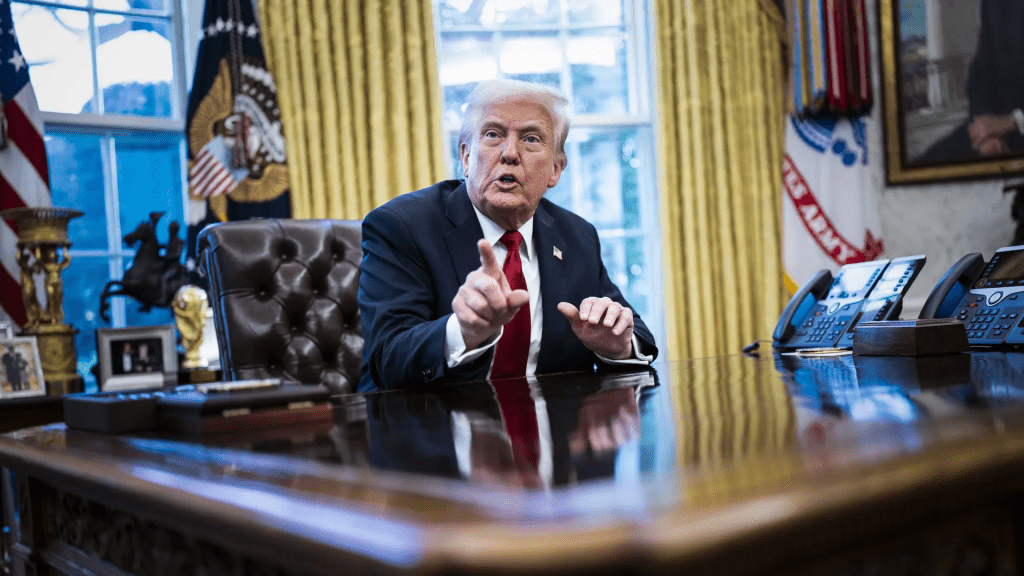
In a bold move that escalates tensions between the White House and California’s leadership, President Donald Trump has announced the creation of a full-scale criminal task force to investigate allegations of fraud, waste, and corruption in Governor Gavin Newsom’s homelessness programs. The initiative, led by newly appointed U.S. Attorney Bill Essayli, targets the mismanagement of billions in federal and state funds allocated to address California’s escalating homelessness crisis, particularly in Los Angeles County. The announcement, made on June 2, 2025, signals a aggressive push by the Trump administration to hold state officials accountable and reshape the national approach to homelessness.The Homelessness Fraud and Corruption Task Force, based in the Central District of California, will scrutinize the use of taxpayer dollars and private donations intended to alleviate homelessness across seven counties, including Los Angeles, Orange, Riverside, San Bernardino, San Luis Obispo, Santa Barbara, and Ventura. With a homeless population exceeding 75,000 in Los Angeles County alone—45,000 within the city limits—the region has been a focal point of criticism for its handling of the crisis. Despite California spending over $24 billion in the past five years, including $100 million in federal emergency aid during the COVID-19 pandemic and $200 million from the Department of Housing and Urban Development in 2025, the state has failed to curb the growing number of people living on the streets.The task force, comprising federal prosecutors from the Major Frauds, Public Corruption, and Civil Fraud sections of the U.S. Attorney’s Office, will work alongside the FBI, HUD’s Office of Inspector General, and IRS Criminal Investigation unit. Its mission is to uncover any misappropriation of funds, including fraudulent schemes involving private donations meant to support homeless services. A recent court-ordered audit highlighted “disjointed” services, poor data quality, and inadequate financial controls in Los Angeles’ homelessness programs, fueling the administration’s rationale for the investigation. U.S. Attorney Essayli, a former Republican state lawmaker and vocal critic of Newsom, emphasized that arrests will follow if federal laws are found to have been violated. “Taxpayers deserve answers for where their hard-earned money has been spent,” he stated, noting that $2 billion remains unaccounted for.The announcement has drawn mixed reactions. Supporters, including Los Angeles County Supervisor Kathryn Barger, hailed the task force as a necessary step toward accountability, especially after audits revealed lax oversight at the Los Angeles Homeless Services Authority (LAHSA). Barger called the move “long overdue,” aligning it with recent county efforts to address financial mismanagement. However, critics argue that the task force is a politically motivated attack aimed at undermining Newsom, a prominent Democrat and potential 2028 presidential contender. They point out that no specific evidence of fraud has been presented, and the investigation risks diverting resources from direct aid to the homeless.Newsom’s office responded cautiously, with a spokesperson stating that the governor supports accountability and expects local governments to use funds responsibly to deliver results. This comes amid Newsom’s own efforts to address the crisis, including a $920 million funding plan in 2024 and the “CARE Court” initiative to mandate treatment for mental health and addiction issues. However, his recent vetoes of bills requiring greater transparency in homelessness spending have drawn scrutiny, potentially lending credence to the task force’s mission.The investigation also aligns with Trump’s broader shift away from the “Housing First” model, which prioritizes permanent housing without requiring treatment. The administration has proposed mandatory treatment programs and encampment crackdowns, a stance that has sparked alarm among advocates who argue that criminalizing homelessness and cutting housing funds will exacerbate the crisis. With 187,000 homeless individuals in California—nearly a quarter of the national total—the stakes are high.As the task force begins its work, it faces the challenge of untangling complex financial trails while navigating a politically charged environment. For Trump, the investigation serves as both a policy tool and a symbolic strike against Democratic strongholds like California. For Newsom, it poses a test of his leadership and ability to defend his state’s efforts against federal scrutiny. As the nation watches, the outcome of this probe could redefine how America addresses homelessness, with implications for both policy and politics in the years ahead.