In a directive issued on July 3, 2025, Transportation Secretary Sean Duffy ordered all 50 governors to eliminate “political artwork” from public roadways, specifically targeting rainbow-painted streets associated with LGBTQ Pride celebrations. The move, part of the Trump administration’s broader push to curb progressive symbols, has ignited a firestorm of controversy, with supporters praising it as a return to neutrality in public spaces and critics decrying it as an attack on free expression and inclusivity. As states grapple with compliance, the order underscores America’s deepening cultural divide.
Duffy’s directive, sent from the Department of Transportation, mandates the removal of “any pavement markings conveying political, social, or cultural messages,” citing rainbow crosswalks and murals as primary examples. These displays, common in cities like San Francisco, Seattle, and Washington, D.C., emerged as symbols of support for the LGBTQ community, often painted during June’s Pride Month. Duffy argues that such artwork politicizes public infrastructure, violates federal highway safety standards, and distracts drivers. The order threatens to withhold federal highway funds—$50 billion annually across states—if governors fail to comply by September 1, 2025.
The directive aligns with President Trump’s cultural agenda, which has included ending diversity initiatives, defunding gender-affirming care for minors, and proposing July as “American Pride Month.” Supporters, including conservative lawmakers like Senator Ted Cruz, applaud the move, arguing that public spaces should remain neutral and free of ideological displays. They point to a 2025 Heritage Foundation report claiming that rainbow crosswalks “confuse drivers” and increase pedestrian accidents, though no peer-reviewed data supports this. For many in Trump’s base, where 94% of voters express no regret per a July 2025 poll, the order is a victory against “woke” overreach, reinforcing policies like mass deportations and tax cuts.
Critics, however, see the directive as a targeted assault on marginalized communities. Rainbow crosswalks, first painted in West Hollywood in 2012, symbolize acceptance and safety for LGBTQ individuals, who face higher rates of discrimination and violence. The Human Rights Campaign condemned the order, noting that 70% of Americans support Pride displays, per a 2024 Gallup poll. Cities like Philadelphia, with its rainbow and transgender flag crosswalk, have vowed to fight the mandate, citing local control over municipal streets. California Governor Gavin Newsom called the directive “federal overreach,” arguing it violates First Amendment protections for symbolic speech, a stance backed by a 2015 Supreme Court ruling on public displays.
Compliance poses logistical and political challenges. States like New York and Oregon, with Democratic governors, are exploring legal options, including lawsuits arguing that the Department of Transportation lacks authority to regulate local street art. Meanwhile, red states like Texas and Florida, where Governor Ron DeSantis has already banned similar displays, are likely to comply swiftly. The financial stakes are high: California alone receives $4 billion in federal highway funds annually, and losing them could cripple infrastructure projects. Smaller cities, like Key West, Florida, which repaints its rainbow crosswalk yearly, face budget strains if forced to remove it.
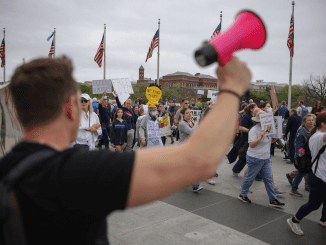
The order’s timing—days after the closure of a transgender youth clinic in Los Angeles—has fueled accusations of a coordinated effort to erase LGBTQ visibility. Protests erupted in Seattle and Atlanta, with activists painting temporary rainbow murals in defiance. Legal scholars warn that enforcement could face hurdles, as federal highway standards typically govern safety, not aesthetics. A 2023 case in Florida, where a judge upheld a city’s right to a Pride mural, suggests courts may side with local governments. However, Trump’s Supreme Court appointees could tilt future rulings toward federal authority.The debate reflects broader tensions over America’s identity. Supporters argue that removing political artwork restores fairness, aligning with efforts like the no-tax-on-Social-Security bill to prioritize broad appeal. Critics, including groups like the People’s Unity Project, see it as part of a pattern—alongside welfare cuts and immigration raids—that marginalizes vulnerable groups. With the 2026 midterms looming, the issue could sway voters in battleground states like Michigan, where cultural issues resonate.As the September deadline approaches, governors face a stark choice: comply and risk local backlash or resist and jeopardize federal funds. The order’s outcome will test the balance between federal power and local expression, shaping not just America’s streets but its cultural landscape. Whether rainbow crosswalks vanish or endure, Duffy’s directive has already deepened the divide over what symbols—and whose values—define the nation.