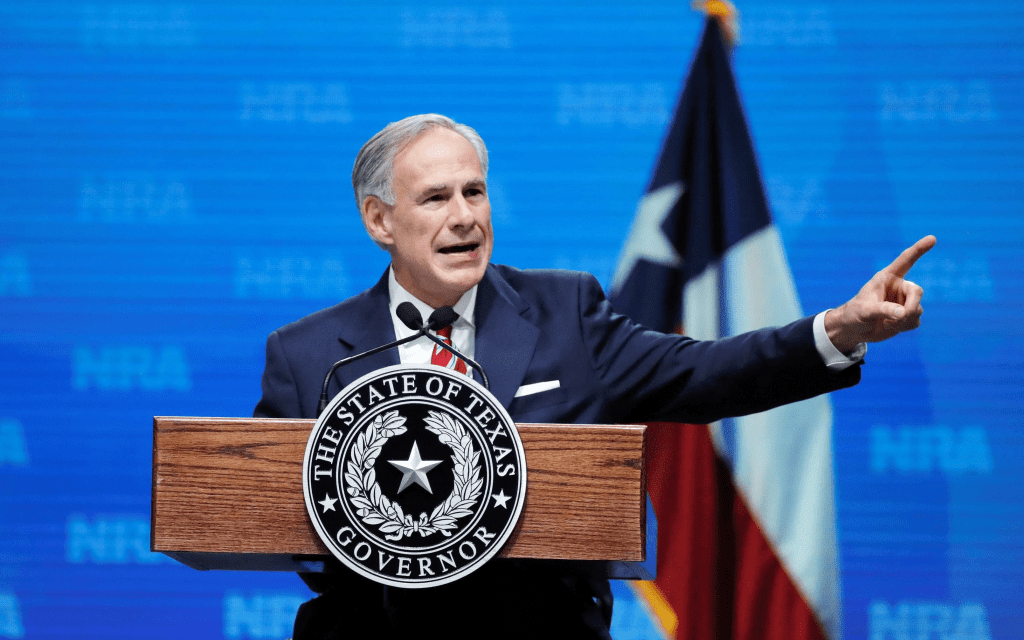
On July 1, 2025, Texas Governor Greg Abbott signed House Bill 5115 into law, elevating vote tampering to a second-degree felony, a move hailed by supporters as a critical step to safeguard election integrity. The legislation, authored by Representative Matt Shaheen and Senator Bob Hughes, makes counting invalid votes or refusing to count valid votes an election fraud offense, carrying penalties of up to seven years in prison and a $10,000 fine. As the bill takes effect, it has ignited a national conversation, with advocates urging Congress to adopt similar measures at the federal level to protect the sanctity of American elections.The new law strengthens Texas’s already robust election security framework, building on previous reforms like Senate Bill 1 (2021), which criminalized voter registration fraud, and House Bill 1243, which made illegal voting a second-degree felony. Abbott, speaking at a signing ceremony in Austin, emphasized that the measure ensures “trust and confidence” in elections, a priority echoed by Lieutenant Governor Dan Patrick and House Speaker Dustin Burrows. The bill addresses concerns over irregularities, such as those alleged in Harris County during the 2020 election, where Republicans claimed mismanagement undermined voter trust. A 2025 Rasmussen Reports poll shows 78% of Texans support stricter election fraud penalties, reflecting widespread demand for accountability.
Proponents argue that federalizing such a law would create a uniform standard to combat election fraud nationwide. They point to high-profile cases, like the 2018 North Carolina ballot harvesting scandal, as evidence of vulnerabilities that require stronger deterrents. With 94% of Trump voters expressing unwavering support in a June 2025 poll, the push for federal legislation aligns with President Donald Trump’s agenda, including his call for voter ID laws and paper ballots. Supporters, including Texas Attorney General Ken Paxton, contend that felony penalties would deter bad actors, ensuring elections reflect the will of legal voters. The law’s passage comes amid other Texas reforms, like Senate Bill 1113, which empowers the Secretary of State to withhold funds from counties failing to remove noncitizens from voter rolls.Critics, however, question the necessity and enforcement of the law, arguing it could intimidate election workers or disproportionately target Democratic-leaning areas. Democrats, including Representative Chris Turner, warn that the felony designation risks over-penalizing minor errors, such as clerical mistakes by poll workers, while doing little to address systemic issues like voter access. A 2024 Texas Politics Project survey found 55% of Democrats believe election integrity laws unfairly suppress minority voters, citing Texas’s history of restrictive measures like Senate Bill 1, which limited mail-in voting and expanded poll watcher powers. Critics also note that Attorney General Paxton has reduced some voter fraud charges to misdemeanors, raising doubts about consistent enforcement.
The call for federal legislation faces significant hurdles. Election laws are primarily a state responsibility, and the U.S. Constitution grants states broad authority over their electoral processes. Federalizing vote tampering as a felony would require congressional action, likely through amendments to the Voting Rights Act or new legislation, a challenging prospect in a divided Congress. A 2012 Supreme Court ruling in Arizona v. United States reaffirmed federal primacy in certain areas but upheld state authority over election administration, complicating efforts to standardize penalties. Moreover, Democrats argue that existing federal laws, like the 1965 Voting Rights Act, already address fraud, making additional measures redundant.The debate reflects broader national tensions over election integrity, amplified by Trump’s policies like the census redo and mass deportations. Advocates for federal action argue that a uniform felony standard could deter foreign interference or coordinated fraud, citing a 2025 FBI report warning of cyberattacks targeting voter databases. Opponents counter that such laws could chill voter turnout, particularly among marginalized groups, and point to studies showing voter fraud is rare—less than 0.0003% of votes in a 2014 Brennan Center analysis.As Texas implements its new law, the push for federal adoption will likely shape 2026 midterm campaigns. Republicans, buoyed by successes like the “Big Beautiful Bill,” see it as a model for national reform, while Democrats warn of voter suppression. The law’s impact in Texas—where 1,155 bills were signed this session, per Abbott’s office—sets a precedent, but its national viability remains uncertain, testing America’s resolve to balance security with democratic access.