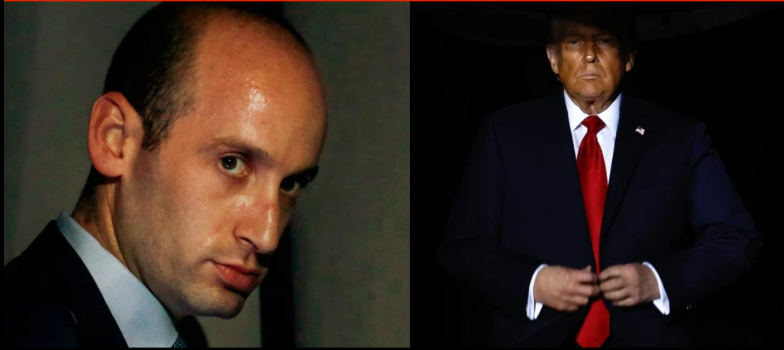
Washington, D.C., May 10, 2025 — White House Deputy Chief of Staff Stephen Miller sent shockwaves through the nation today, revealing that the Trump administration is “actively looking at” suspending the writ of habeas corpus—a constitutional right allowing individuals to challenge their detention in court. Speaking to reporters outside the White House, Miller justified the potential move by claiming the U.S. Constitution permits such a suspension “in a time of invasion,” framing undocumented immigration as a national security threat. The statement has ignited fierce backlash, with critics warning it could lead to unchecked government power and the erosion of democratic principles.
Habeas corpus, a cornerstone of American law, ensures that no one can be detained without judicial oversight. The Constitution allows its suspension only in extreme cases of “rebellion or invasion” when public safety demands it, a measure invoked just four times in U.S. history—during the Civil War, Reconstruction, a 1905 insurrection in the Philippines, and after Pearl Harbor in 1941. Miller’s comments come amid the administration’s aggressive immigration policies, which have already faced legal challenges for deporting migrants without due process, including sending alleged Venezuelan gang members to El Salvador for imprisonment.
Miller’s invocation of an “invasion” echoes the administration’s rhetoric, which has likened illegal border crossings to a wartime crisis. In March, Trump invoked the Alien Enemies Act to deport over 230 immigrants, a move courts have since blocked, ruling that immigration does not constitute an invasion by a hostile foreign power. Legal experts are sounding the alarm, arguing that only Congress, not the president, can suspend habeas corpus. Georgetown University law professor Steve Vladeck noted that Miller’s interpretation is “slippery,” emphasizing that the Constitution’s default is to preserve judicial review unless a dire emergency clearly justifies suspension—which, he argues, this is not.
The implications of Miller’s proposal are chilling. Suspending habeas corpus would allow the government to detain migrants—or potentially anyone—without justifying their imprisonment, effectively enabling authorities to “disappear” people at will. This aligns with the administration’s broader efforts to bypass judicial oversight, as seen in their defiance of court orders to return deported immigrants like Kilmar Armando Ábrego García. Critics see this as a dangerous step toward authoritarianism, with one Democratic aide telling The Hill, “No one in their right mind would take [Miller’s] advice seriously, but sanity is in short supply in this administration.”
Public reaction has been swift and polarized. On X, posts reflect deep alarm, with users like
@CalltoActivism calling it a “major democracy alarm” and warning that the administration is “destroying our country’s foundation.” Others, like
@DailyNoahNews, support Miller, arguing that the border crisis justifies “extraordinary measures.” The controversy underscores the administration’s ongoing battle with the judiciary, which Trump has repeatedly attacked, accusing judges of orchestrating a “judicial coup” when rulings block his policies.
Legal scholars warn that any unilateral suspension by Trump would face immediate court challenges. Historically, even President Lincoln’s suspension during the Civil War was later deemed unlawful without congressional approval. Chief Justice John Roberts, speaking in Buffalo on May 7, stressed the judiciary’s role as a coequal branch, a subtle rebuke to the administration’s actions. Yet Miller’s comments suggest the White House may proceed if courts don’t “do the right thing”—a phrase he left ominously undefined.
As the administration ramps up deportations, the threat to habeas corpus raises broader questions about democratic norms. The U.S. has never suspended this right to address immigration, and doing so now could set a precedent for targeting other groups, including citizens, under vague national security pretexts. For now, Miller’s statement serves as a stark warning: the Trump administration is willing to push constitutional boundaries to achieve its goals, leaving many to wonder how far they’ll go—and whether the courts can hold the line.