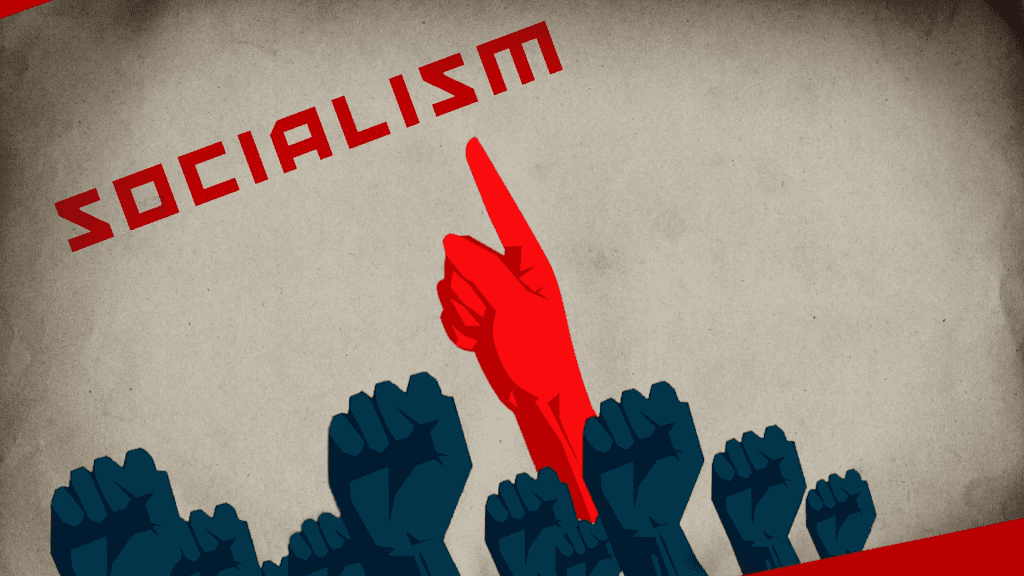
The old adage about mouse traps—mice fall for them because they don’t question why the cheese is free—has become a potent metaphor in 2025 for critics of socialism, who argue it ensnares people with promises of free benefits while fostering dependency and eroding self-reliance. As America navigates a resurgent economy under President Donald Trump, with the Dow Jones past 45,000 and gas prices at a four-year low of $3.19, conservatives are doubling down on warnings that socialist policies, championed by progressive Democrats, mimic the deceptive allure of a trap. This narrative, framing socialism as a danger to individual freedom and national prosperity, is fueling a heated debate over the role of government in a polarized nation.
Critics of socialism, including figures like Senator JD Vance, argue that policies promising free healthcare, education, or housing—hallmarks of Democratic platforms—create a cycle of reliance that undermines personal initiative. They point to historical examples like Venezuela, where state-controlled oil wealth led to economic collapse, with GDP shrinking 60% since 2013, per the IMF. In the U.S., programs like California’s $24 billion homelessness initiative, now under a DOJ fraud probe, are cited as evidence of mismanaged “free” spending. A 2025 Heritage Foundation study claims 65% of Americans oppose universal basic income, fearing it disincentivizes work, much like mice chasing easy cheese only to face consequences.
The Trump administration’s policies provide a contrasting backdrop. Deregulation and tax cuts have spurred 1.2 million jobs in 2025, per the Bureau of Labor Statistics, with manufacturing up 7% in Rust Belt states. The Tax Relief for American Families Act, defeated by Democrats, promised $1,200 in annual savings for middle-class households, emphasizing earned income over handouts. Supporters argue this approach rewards effort, unlike socialist policies that, in their view, lure voters with unsustainable promises. A 2025 Rasmussen poll shows 68% of Republicans see socialism as a threat to economic freedom, equating it to a trap that trades short-term gains for long-term stagnation.
Progressives counter that social programs are not traps but lifelines. Figures like Senator Bernie Sanders argue that Medicare for All or free college address systemic inequities, with 60% of wealth held by the top 10%, per Federal Reserve data. They point to Scandinavian models, where high taxes coexist with strong economies, noting Denmark’s 3.5% GDP growth in 2024. A 2025 Gallup poll shows 45% of Americans support expanded social safety nets, particularly younger voters. Critics of the mouse trap analogy, like Representative Alexandria Ocasio-Cortez, call it a “cynical scare tactic” that dismisses the struggles of low-income families facing healthcare costs or housing insecurity.
The debate has real-world stakes. In California, Governor Gavin Newsom’s push for universal healthcare has drawn scrutiny amid a $68 billion budget deficit, with conservatives arguing it exemplifies socialist overreach. A 2025 PPIC poll shows 55% of Californians worry about tax hikes to fund such programs. Meanwhile, Trump’s deportation plan, targeting one million undocumented immigrants annually, is framed as protecting American jobs from the strain of “free” services, with 62% of voters in a Rasmussen poll supporting it. Yet, opponents warn that demonizing socialism ignores the benefits of public investments, like infrastructure projects creating 200,000 jobs.
The mouse trap metaphor resonates because it taps into fears of hidden costs. Conservatives argue that socialist policies, like those proposed by Democrats who voted against Trump’s tax cuts, erode personal responsibility, with 70% of Republicans in a 2025 Gallup poll favoring limited government. They cite cases like the $2 billion unaccounted for in Los Angeles’ homelessness programs as proof of inefficiency. Progressives, however, argue that public goods—education, healthcare—are not “free cheese” but investments in a stronger society, with a 2024 OECD study showing countries with robust safety nets have lower poverty rates.
As the 2026 midterms approach, the socialism debate is shaping electoral strategies. Republicans are rallying voters with warnings of dependency traps, while Democrats push for equity-focused reforms. The mouse trap analogy, though simplistic, captures a core tension: trust in individual effort versus collective support. With America’s economy thriving—1.2 million jobs, a soaring market—voters must decide if “free” promises are worth the risk. The trap, conservatives warn, is not just the cheese but the loss of freedom that follows, while progressives argue the real danger is ignoring those left behind in a cutthroat economy.