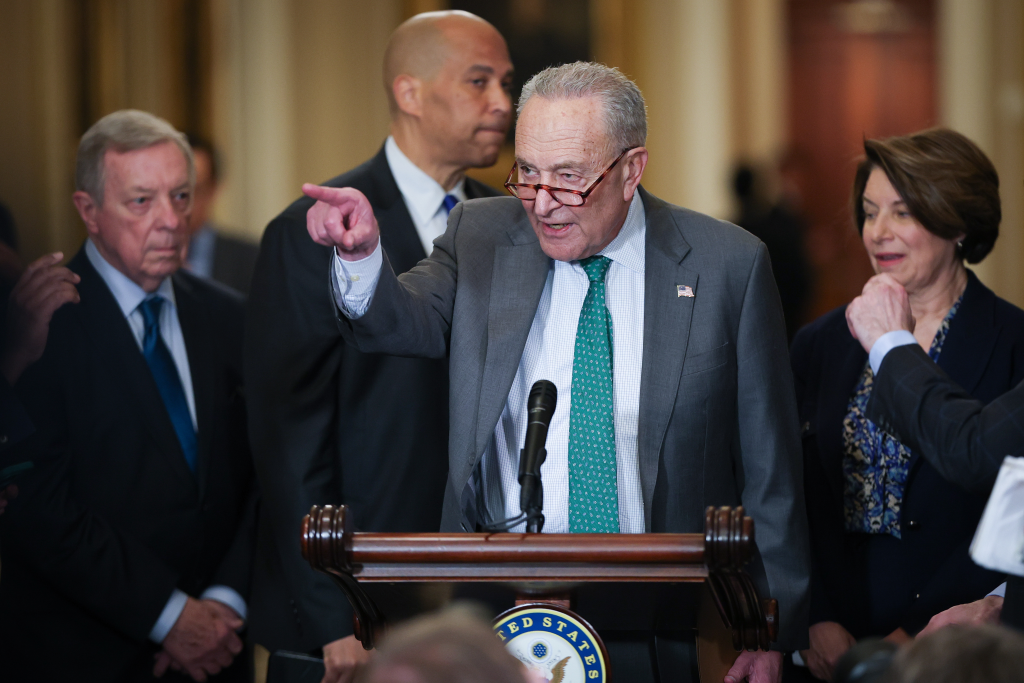
Washington, D.C. – Senate Democrats, led by Sen. Jacky Rosen (D-Nev.), made a surprise attempt on May 20, 2025, to pass the No Tax on Tips Act via unanimous consent, aiming to eliminate federal income taxes on tips for service and hospitality workers, according to Axios. The move, which echoes a campaign promise first championed by President Donald Trump and later adopted by Vice President Kamala Harris in 2024, reflects Democrats’ efforts to reclaim political ground on an issue popular with working-class voters. However, Republicans are expected to block the proposal, highlighting the contentious politics surrounding tax policy as the 2026 midterms approach.
The No Tax on Tips Act, originally introduced by Sen. Ted Cruz (R-Texas) in January with bipartisan support from Sens. Rosen and Catherine Cortez Masto (D-Nev.), allows a 100% tax deduction for cash tips, including those paid via credit cards and checks, for workers in traditionally tipped roles like servers and bartenders. The bill, mirrored by House Bill 482 from Rep. Vern Buchanan (R-Fla.), aims to ease financial burdens for the 6 million U.S. workers reliant on tips, particularly in states like Nevada, where hospitality drives the economy. Rosen, a former waitress, emphasized the bill’s potential to “put more money in workers’ pockets,” per a statement on her website.
Posts on X, including from
@stephen_neukam and
@ResisttheMS, reflect the urgency of the Democratic push, framing it as a response to Trump’s claim of ownership over the policy. Trump, who proposed the idea in June 2024 after a Las Vegas server’s complaint, accused Harris of copying him when she endorsed it, posting on Truth Social, “This was a TRUMP idea.” Democrats counter that their version includes guardrails, like income limits, to prevent high earners from exploiting the policy as tax avoidance, a concern raised by the Economic Policy Institute (EPI).
Critics, including economists from the EPI and the Tax Foundation, warn the policy could backfire. The EPI argues it benefits few workers—37% of tipped workers already pay no federal income tax due to low earnings—and risks encouraging employers to shift more jobs to tip-based pay, undermining minimum wage efforts. The federal tipped minimum wage remains $2.13, unchanged since 1993. The Committee for a Responsible Federal Budget estimates a $250 billion revenue loss over a decade, potentially straining Social Security’s trust fund.
Republicans, holding a 53-47 Senate majority, are likely to block the Democrats’ unanimous consent request, requiring just one objection to halt it. Senate Minority Leader Brian W. Jones (R-Calif.) called the move a “political stunt,” noting the House’s February budget resolution, which passed 217-215 without Democratic support, laid the groundwork for Trump’s tax cuts, including no tax on tips. However, that resolution was a framework, not law, and the policy awaits further legislation.
Democrats’ push, backed by Nevada’s Culinary Union, signals a strategic pivot to appeal to service workers, a key demographic in swing states. Yet, with Republicans poised to counter with their own tax agenda, the bill’s fate hinges on Senate negotiations and Trump’s final approval. As the debate unfolds, the no-tax-on-tips proposal remains a flashpoint in the broader fight over economic fairness.