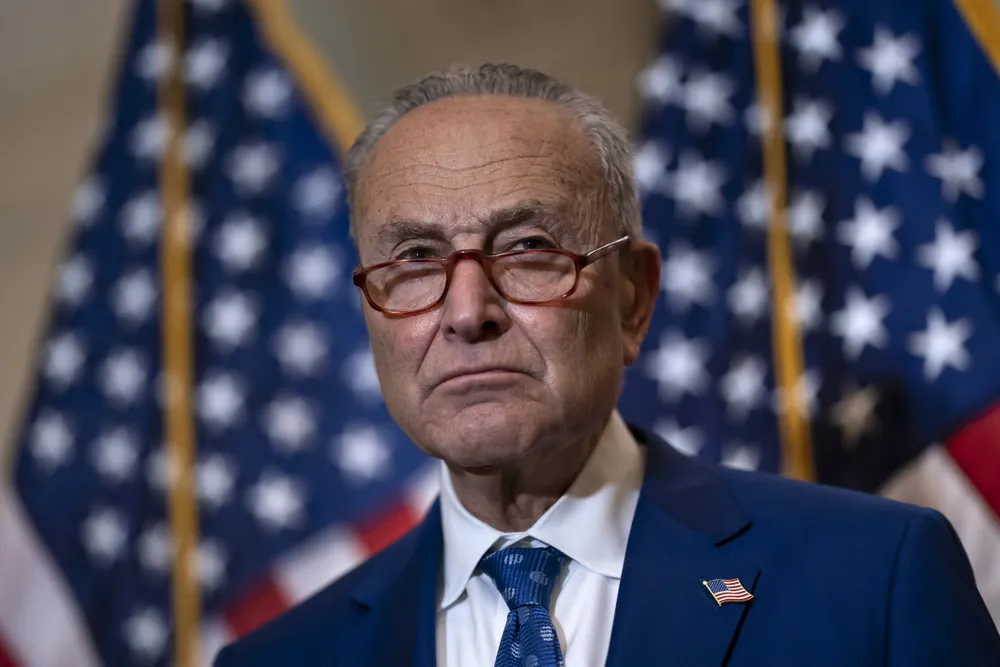
Senate Minority Leader Chuck Schumer (D-N.Y.) is under fire following reports that he accepted thousands of dollars in campaign contributions from Jeffrey Epstein, the disgraced financier and convicted sex offender. Financial records from OpenSecrets reveal Schumer received donations across seven campaign cycles, totaling over $22,000 between 1992 and 2006. The revelations, resurfaced in July 2025, have fueled accusations that Schumer, a prominent Democrat, was complicit in Epstein’s influence peddling, prompting calls for accountability.
Critics argue the donations, made when Schumer served in the House and Senate, raise questions about his ties to Epstein, who died in 2019 while awaiting trial on sex-trafficking charges. Schumer has not directly addressed the contributions but has led efforts to force the release of Epstein’s files, invoking a 1928 law to compel the Justice Department to disclose documents by August 15, 2025. He insists transparency is critical, citing potential national security risks if foreign adversaries access unreleased files.
Republicans, including Senator John Kennedy, dismiss Schumer’s push as a political stunt, pointing to his past acceptance of Epstein’s money as evidence of hypocrisy. Democrats counter that Schumer’s actions reflect a commitment to exposing the truth, not deflecting blame. The controversy coincides with broader debates over Epstein’s influence, with Schumer’s critics demanding he explain the donations’ context.
The allegations add to public distrust in Congress, already at a historic low of 16% approval per a 2025 Gallup poll. As Schumer navigates this scandal, his leadership and the Democratic Party’s credibility face intense scrutiny.