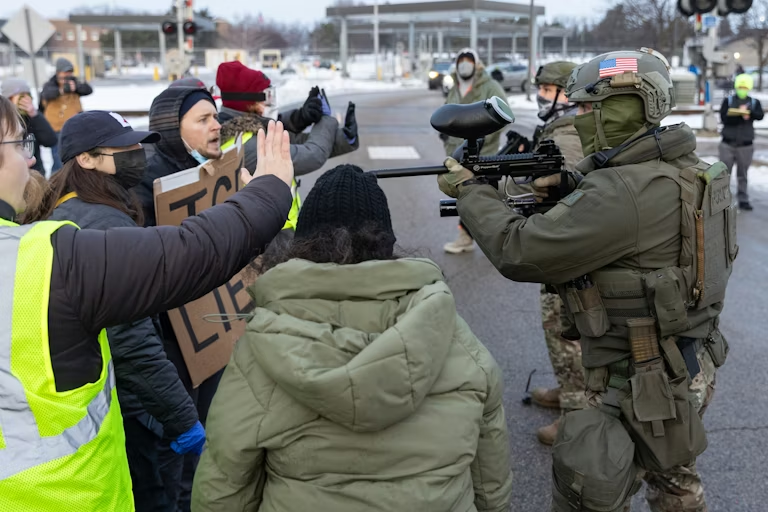
A viral call to action is sweeping social media: “Raise your hand if you agree that ICE and our federal agents have the right to defend themselves.” The phrase has gained traction amid heated debates over immigration enforcement, particularly following a fatal shooting in Minneapolis on January 7, 2026, where an ICE officer killed 37-year-old Renee Nicole Good during a raid. Federal officials maintain the agent acted in self-defense after Good allegedly attempted to strike him with her vehicle. Local leaders and protesters dispute this, citing video evidence and demanding accountability.
The incident has reignited a broader national conversation about the use of force by federal agents. Supporters argue that law enforcement officers face constant danger during high-risk operations and must be allowed to protect their lives when threatened. “They put their lives on the line every day—self-defense is a basic right,” one commentator said, echoing widespread sentiment among conservative voters and law-and-order advocates.
Critics, including immigrant rights groups and Minneapolis officials, counter that aggressive enforcement tactics escalate situations and lead to unnecessary tragedies. They demand transparency, independent investigations, and stricter oversight to prevent overuse of lethal force, especially in communities already distrustful of federal agencies.
Attorney General Pam Bondi has reinforced the administration’s position, warning protesters not to cross the “red line” of violence against agents while affirming their right to self-defense. The FBI is now leading the investigation into the shooting, with tensions still high in Minneapolis as demonstrations continue.
The viral rallying cry highlights deep divisions over immigration policy, law enforcement authority, and public safety in a polarized era. As the debate intensifies, one question remains: when does self-defense cross into overreach? For many, the answer is clear—agents deserve the same protections as any citizen facing imminent danger.