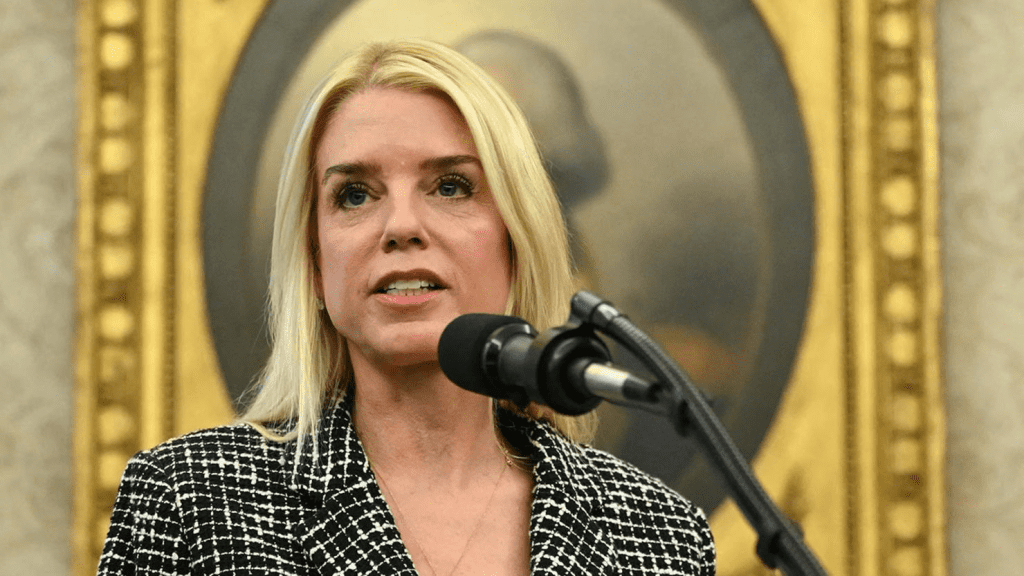
In a provocative move, U.S. Attorney General Pam Bondi has joined a chorus of Republican voices demanding the denaturalization and deportation of Zohran Mamdani, the Democratic nominee for New York City mayor. Mamdani, a 33-year-old democratic socialist who won a stunning upset over former Governor Andrew Cuomo in the Democratic primary, now faces a firestorm of accusations targeting his U.S. citizenship. Born in Uganda to Indian parents and naturalized as a U.S. citizen in 2018, Mamdani has become a lightning rod for right-wing criticism, with Bondi’s call intensifying a debate steeped in allegations of extremism, Islamophobia, and political overreach.
The controversy erupted following Mamdani’s primary victory, which positioned him as a frontrunner to become New York City’s first Muslim and Indian-American mayor. Bondi, echoing sentiments from Tennessee Representative Andy Ogles and the New York Young Republican Club, has urged the Department of Justice to investigate whether Mamdani obtained his citizenship through fraud, specifically citing alleged ties to terrorism. The basis for these claims stems from a 2017 rap lyric in which Mamdani, then a hip-hop artist, referenced the “Holy Land Five,” a group convicted in 2008 for funneling money to Hamas. Critics argue this lyric suggests sympathies that Mamdani may have concealed during his naturalization process, grounds they claim justify revoking his citizenship under federal law.
Legal experts, however, question the validity of such a move. Denaturalization is a rare and complex process, requiring clear evidence of fraud or deliberate misrepresentation during citizenship proceedings. The Communist Control Act of 1954, cited by some Republicans as a legal tool, has been largely unenforced and faces constitutional challenges, rendering it a shaky foundation for deportation. Mamdani, who moved to New York at age seven, has denied any ties to extremism, emphasizing his commitment to American values and his role as a state assemblyman representing Queens since 2020. His supporters argue that the attacks are rooted in Islamophobia and fear of his progressive platform, which includes rent freezes, public grocery stores, and ending immigration enforcement in the city.
The rhetoric surrounding Mamdani’s citizenship has escalated tensions in an already polarized political landscape. Bondi’s involvement, as a high-profile Trump administration official, signals a broader strategy to frame Mamdani’s victory as a symptom of unchecked immigration and radicalism. This narrative aligns with comments from White House Deputy Chief of Staff Stephen Miller, who called Mamdani’s win a “warning” of failed migration policies, and Border Czar Tom Homan, who vowed intensified deportation efforts in sanctuary cities like New York. Such statements have fueled accusations of fearmongering, with Mamdani himself decrying the “torrent of Islamophobic bigotry” aimed at undermining his candidacy.
Mamdani’s rise has unsettled both Republicans and establishment Democrats. His platform, backed by progressive figures like Alexandria Ocasio-Cortez, champions bold reforms that challenge the status quo, from taxing the wealthy to fund social programs to abolishing prison systems. This has drawn ire from business leaders like hedge fund managers Bill Ackman and Daniel Loeb, who reportedly met with Mayor Eric Adams to strategize against Mamdani’s campaign. Meanwhile, some Democrats, including Senator Kirsten Gillibrand, have distanced themselves, falsely claiming Mamdani supports “global jihad” based on his refusal to condemn the phrase “global intifada.” These attacks, Mamdani argues, misrepresent his stance on international issues, particularly his criticism of U.S. foreign policy regarding Israel and Palestine.
The legal and political hurdles to denaturalizing Mamdani are significant. Even if his citizenship were revoked—an unlikely outcome given the lack of concrete evidence—he would revert to permanent resident status, not automatic deportation. A separate legal process would be required, further complicating the effort. Critics of Bondi’s demand argue it sets a dangerous precedent, weaponizing citizenship against political opponents and stoking division in a city known for its diversity.
As the November 2025 mayoral election approaches, Mamdani remains defiant, framing the attacks as a backlash against New York’s multicultural identity. His campaign continues to gain traction among young voters, bolstered by a savvy social media presence and grassroots support. Whether Bondi’s call gains traction or fizzles under legal scrutiny, it underscores a deepening rift in American politics—one where citizenship, identity, and ideology collide with unprecedented intensity. The nation watches as New York City grapples with its future.