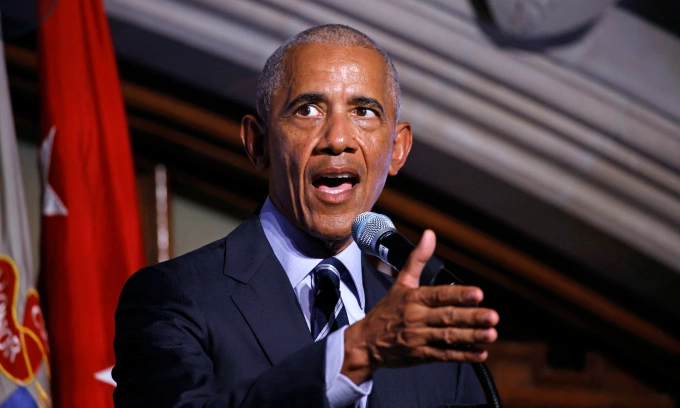
Barack Hussein Obama, the 44th President of the United States, made history as the first president in over a century to remain in Washington, D.C., after his term ended in January 2017. Unlike most former presidents who return to their home states or retreat from the political spotlight, Obama and his family leased a 1928 Kalorama mansion, citing the need for their daughters, Malia and Sasha, to complete their education at Sidwell Friends School. The decision, however, has fueled speculation about his post-presidential intentions.
Critics argue Obama’s D.C. presence allowed him to maintain influence over Democratic politics, with some alleging he undermined President Donald Trump’s first term and guided aspects of President Joe Biden’s administration. Supporters counter that his choice reflects practical family considerations and a desire to engage in civic life, as evidenced by his work with the Obama Foundation. Historical precedent shows former presidents like William Howard Taft, who stayed in D.C. as a Supreme Court Justice in the 1920s, but such cases are rare.
Obama’s ongoing visibility, including his role in Democratic strategy and public appearances, contrasts with the tradition of former presidents adopting lower profiles. The move has sparked debate about whether it signals an intent to shape political narratives or simply a personal choice. As Trump’s second term unfolds, Obama’s D.C. residence continues to draw attention, with some questioning its implications for political dynamics.
The Kalorama home, valued at $5.3 million, remains a hub for Obama’s post-presidential activities, raising questions about the evolving role of ex-presidents in a polarized era.