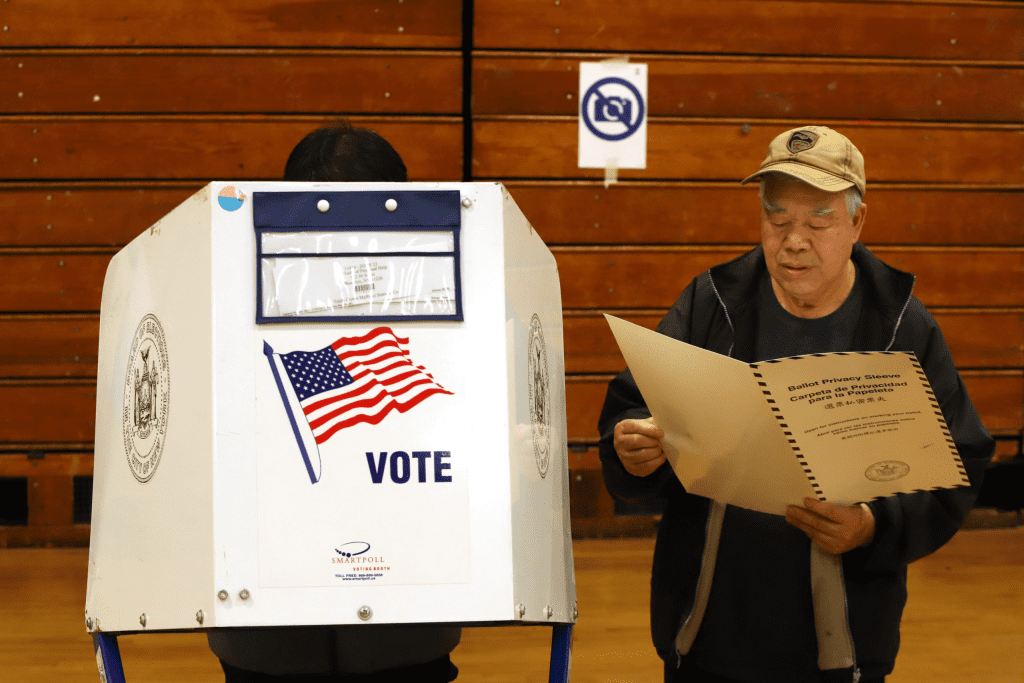
On June 25, 2025, New York City’s Democratic mayoral primary delivered a stunning upset as Zohran Mamdani, a 33-year-old democratic socialist, defeated former Governor Andrew Cuomo. The victory, driven by a coalition of young, progressive voters, has conservatives and moderates crying foul, with some declaring that NYC voters have “lost their minds.” Mamdani’s far-left platform—free buses, city-run grocery stores, and a $30 minimum wage—has ignited fierce backlash, with critics warning of economic ruin and public safety risks. As the city heads toward the November general election, this result exposes deep divides over New York’s future and America’s political fault lines.
Mamdani’s win, secured through ranked-choice voting, relied on a surge of first-time voters, with nearly half under 45, per a Gothamist analysis. His campaign, fueled by viral social media and thousands of volunteers, resonated in gentrifying areas like Ridgewood, Queens, and Greenpoint, Brooklyn, where white, Asian, and Latino voters backed his affordability-focused message. A New York Times analysis shows Mamdani dominated these neighborhoods but lost heavily in Black-majority precincts, where Cuomo won 59% to Mamdani’s 26%. This shift from traditional Democratic coalitions—Black, Hispanic, and Orthodox Jewish voters who backed Eric Adams in 2021—has left many stunned, with conservatives like Rep. Mike Lawler calling Mamdani a “disaster” for NYC’s economy.
Critics argue Mamdani’s policies threaten the city’s stability. His proposals, including rent freezes on 1 million apartments and decriminalizing certain offenses, are seen as reckless by figures like Rep. Laura Gillen, who labeled him “too extreme.” The New York Post’s front-page “SOS” and Fox News warnings of “civic dysfunction” reflect fears of a return to pre-Giuliani chaos. Republicans, leveraging Trump’s 96% GOP approval, see an opening in a Democratic stronghold, with 60% of voters concerned about crime, per a Rasmussen poll. Mamdani’s past statements on Israel, criticized by pro-Israel groups, have fueled alarm, with some Jewish voters fearing for their safety, despite former Mayor Bill de Blasio calling him a “humanist.”
Supporters, however, see Mamdani as a breath of fresh air. His focus on cost-of-living issues—rents up 30% since 2020, per Zillow—struck a chord with young and minority voters, especially in Queens’ South Asian communities. His campaign’s grassroots energy, with volunteers knocking on doors citywide, outmaneuvered Cuomo’s name recognition and establishment backing. A 2023 Pew study shows 40% of young Americans value progressive policies, and Mamdani’s authenticity, amplified by viral videos, tapped this sentiment. His cross-endorsement with Brad Lander, who urged voters to rank Mamdani second, maximized ranked-choice votes, securing his lead despite Cuomo’s early polling edge.
The backlash highlights national tensions. Trump’s June 22 Iran airstrikes, halting 400 kilograms of uranium, and his $4.3 trillion tax cuts contrast with Mamdani’s anti-corporate stance, which conservatives tie to Biden’s $6 billion Iran funds and 4.8% inflation. Trump’s $27 billion ICE budget and 20% drop in illegal crossings address issues Mamdani’s critics say he ignores. Democrats, with 68% of Americans noting polarization in a Gallup poll, are split: progressives cheer Mamdani, while moderates like Matt Bennett of Third Way warn his “socialist” label could hurt 2026 midterms in swing districts.
The general election pits Mamdani against Mayor Eric Adams, now running as an Independent after federal charges were dropped, and Republican Curtis Sliwa. Adams, backed by Black and Orthodox Jewish voters, may capitalize on Mamdani’s divisive platform, with 55% of independents wary of far-left policies, per a Morning Consult poll. Economic concerns—Trump’s $2.8 trillion deficit increase and potential oil price spikes—add pressure, as do legal battles over policies like Wyoming’s voter ID law, reflecting national divides.
With 1,310 days left in Trump’s term, Mamdani’s win is a flashpoint. His base sees a champion for the working class; critics see a radical threatening NYC’s status as a financial hub. As Trump declared on June 22, “America’s back on top,” his supporters view Mamdani’s victory as a dangerous detour. For now, NYC’s choice—driven by young, progressive energy—has conservatives decrying voters’ judgment, setting the stage for a contentious November battle that could reshape the city and reverberate nationwide.