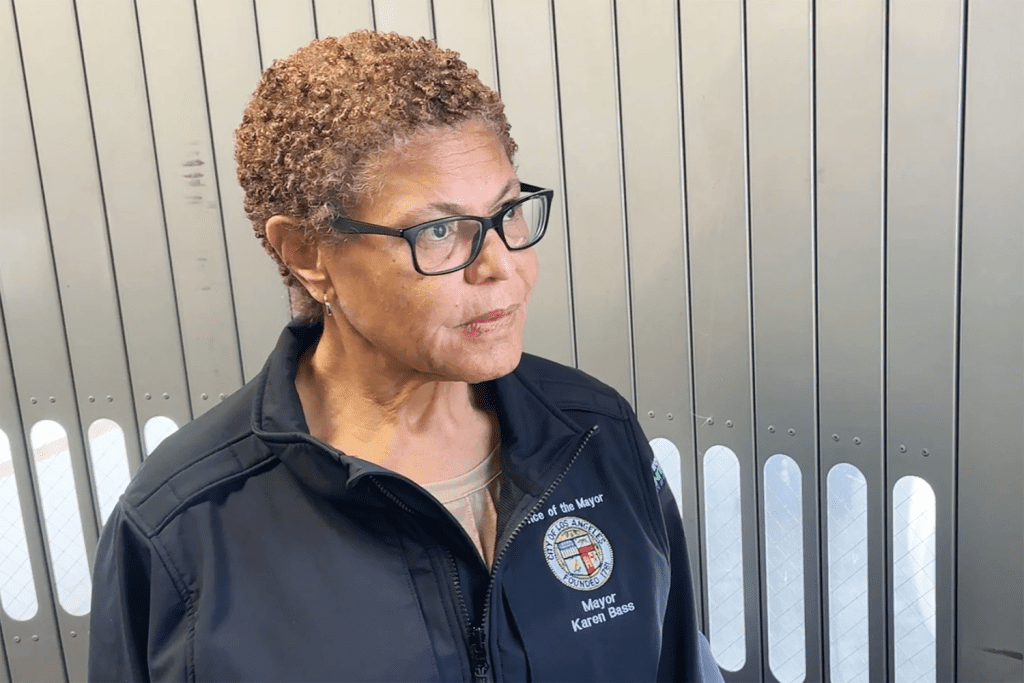
Los Angeles, June 17, 2025—Mayor Karen Bass, once heralded for her progressive promises to tackle homelessness and pollution, is now at the center of a burgeoning scandal dubbed “legalized corruption” by critics. Revelations of hush money payments, inflated salaries, and questionable endorsements have rocked City Hall, intensified by the city’s mishandling of recent wildfires. As public trust erodes, Bass’s administration faces accusations of perpetuating a pay-to-play culture, drawing comparisons to Los Angeles’s storied history of political misconduct.
The controversy gained traction in January 2025 after reports surfaced that Bass’s administration slashed $17 million from the Los Angeles Fire Department’s budget, leaving it ill-equipped to combat wildfires that devastated Malibu and Pacific Palisades. Scrutiny of her leadership uncovered a web of scandals, including ties to former City Attorney Mike Feuer, investigated by the FBI for allegedly lying about a hush money payment to conceal a litigation scandal in his office. Feuer, who ran against Bass for mayor in 2022 before endorsing her, was never prosecuted but remains a lightning rod for critics. Bass’s reciprocal endorsement of Feuer’s failed 2023 congressional bid has raised eyebrows.
Further fueling outrage is Bass’s appointment of Janisse Quinones as CEO of the Los Angeles Department of Water and Power (DWP), with a $750,000 salary—double her predecessor’s. Quinones, a close ally, has been blamed for failing to repair broken hydrants during the wildfires, exacerbating the crisis. The DWP, long criticized as a “slush fund” for city officials, is controlled by the mayor and council, with little oversight. Consumer Watchdog president Jamie Court called the agency’s unchecked power “Chinatown revisited,” referencing the 1974 film exposing LA’s corrupt water politics.
Bass’s deputy mayor, Brian Williams, appointed in 2023 to oversee critical departments, is under FBI investigation for allegedly making a bomb threat against City Hall in September 2024. The FBI raided his home in December, identifying him as the “likely” source. Additional allegations target council members accused of embezzlement, perjury, and bribery, painting a picture of systemic corruption. Susan Shelley of the Southern California News Group described LA’s political culture as “legalized corruption,” citing $1.8 million in “behested payments” from companies like AT&T to the Mayor’s Fund for Los Angeles.
Bass’s defenders argue she inherited a troubled system and has taken steps to address homelessness and emissions, as promised. Her office issued a statement denying involvement in hush money schemes and emphasizing her commitment to transparency. Supporters note that Feuer faced no charges and that Quinones’s salary reflects market rates for utility executives. However, a Rasmussen Reports poll shows 54% of Angelenos disapprove of Bass’s handling of the scandals, with 62% believing corruption hinders effective governance.
The wildfires, which destroyed hundreds of homes, have amplified calls for accountability. Firefighters issued urgent pleas for off-duty personnel, underscoring the department’s underfunding. Legal challenges are mounting, with Consumer Watchdog and the Los Angeles Times suing to unseal warrants tied to an extortion scheme involving the DWP and City Attorney’s Office. Governor Gavin Newsom has called for a state audit of LA’s emergency preparedness, signaling broader scrutiny.
As Bass navigates this crisis, comparisons to past LA scandals— from the 2020 bribery probe of councilman Jose Huizar to the 2022 racist audio leak— underscore a city long plagued by misconduct. Whether Bass can restore public confidence or become another casualty of LA’s “pay-to-play” culture remains uncertain. For now, the mayor’s office stands accused not just of mismanagement, but of perpetuating a legacy of corruption that threatens the city’s future.