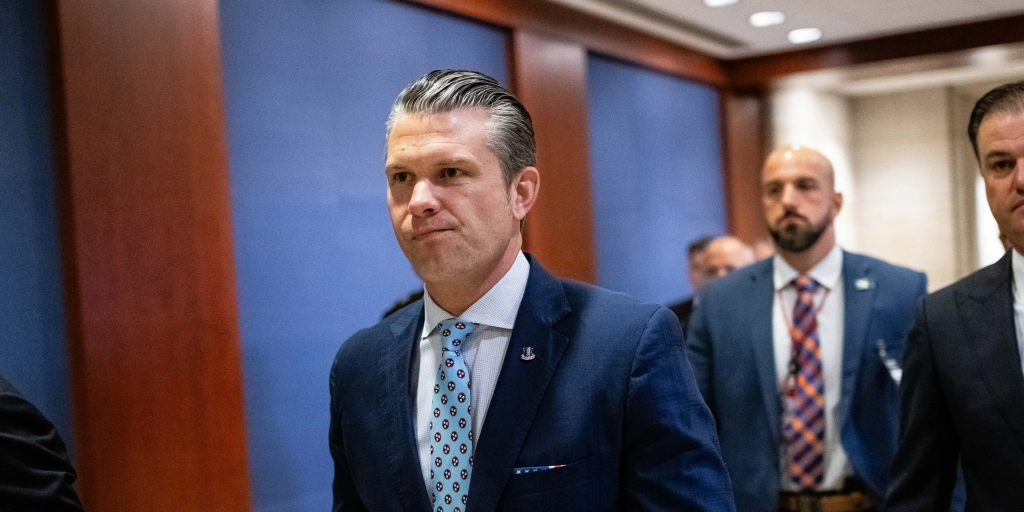
On May 8, 2025, Defense Secretary Pete Hegseth issued a directive ordering all transgender service members to leave the U.S. military, setting a deadline of June 6 for active-duty troops and July 7 for reservists to voluntarily separate or face involuntary discharge. The move, following a Supreme Court ruling allowing President Donald Trump’s executive order to ban transgender troops, has ignited a firestorm of debate. For supporters, the policy fulfills a campaign promise to prioritize military readiness, while critics decry it as discriminatory and harmful to national security, raising questions about the balance between ideology and military inclusivity.Hegseth’s memo, rooted in Trump’s January 27 executive order, argues that transgender individuals with gender dysphoria—estimated at 1,000 to 4,240 of the 1.3 million active-duty and reserve personnel—do not meet the “rigorous standards” for military service. The order halts new enlistments for those with a history of gender dysphoria and stops gender-affirming care, including hormone therapy and surgeries, for current service members. Hegseth has framed the policy as essential for “military excellence,” echoing Trump’s claim that transgender identity conflicts with the “honorable, truthful, and disciplined lifestyle” required of soldiers. The directive aligns with broader administration efforts, including the “Big Beautiful Bill” funding mass deportations and a census redo excluding noncitizens.Supporters view the policy as a return to merit-based standards, arguing that gender dysphoria poses mental and physical challenges incompatible with military demands. They cite a 2025 Gallup poll showing only 58% of Americans support transgender military service, down from 71% in 2019, with just 23% of Republicans in favor. Proponents, including figures like Stephen Miller, argue that the policy ensures unit cohesion and readiness, pointing to the $15 million spent on gender-affirming care for 1,892 troops between 2016 and 2021 as a wasteful distraction. The administration’s swift action, backed by a 5-4 Supreme Court ruling in Shilling v. Trump, reflects a mandate from Trump’s 2024 voters, 94% of whom stand by their choice, per a Rasmussen Reports poll.Critics, including 14 Senate Democrats led by Tammy Duckworth, argue that the ban is “soaked in animus” and undermines recruitment at a time when the Army struggles to retain soldiers. A 2018 Palm Center study estimated 14,700 transgender troops serve, many in critical roles like pilots and explosives experts, with no evidence of reduced effectiveness. Advocacy groups like the Human Rights Campaign and GLAD Law, representing six active-duty transgender plaintiffs, have filed lawsuits, citing violations of equal protection and free speech. They argue that forcing out experienced troops, like Army Major Kara Corcoran, a 17-year veteran, wastes training and expertise. A federal judge in Talbott v. Trump called the policy discriminatory, though the Supreme Court’s ruling allows its enforcement while litigation continues.The policy’s implementation poses logistical challenges. The Pentagon is reviewing medical records to identify transgender troops, a process critics warn could lead to privacy violations and errors. Those who self-identify by the deadlines may receive separation pay, but involuntary discharges could exclude bonuses, creating financial hardship. The Army’s guidance, which instructs personnel to address transgender troops by their birth sex rather than preferred pronouns, contradicts Hegseth’s pledge to treat them with “dignity and respect,” drawing accusations of hostility. Transgender service members like Navy veteran Timberlake, who spoke to PBS News, expressed frustration, noting the loss of careers and benefits they’ve earned.The broader context of Trump’s agenda—curbing DEI programs, reinstating vaccine-refusing troops, and limiting press access at the Pentagon—frames the ban as part of a cultural reset. Critics argue it alienates a diverse talent pool, with 21 attorneys general, including New York’s Letitia James, condemning it as a “bigoted attack.” Supporters counter that it aligns with voter priorities, as seen in the administration’s economic wins like record-high markets. As the 2026 midterms approach, the ban will likely fuel partisan battles, with Democrats leveraging it to rally moderates and Republicans doubling down on cultural conservatism. The policy’s outcome—whether upheld or struck down—will shape the military’s inclusivity and America’s broader debate over identity and service.