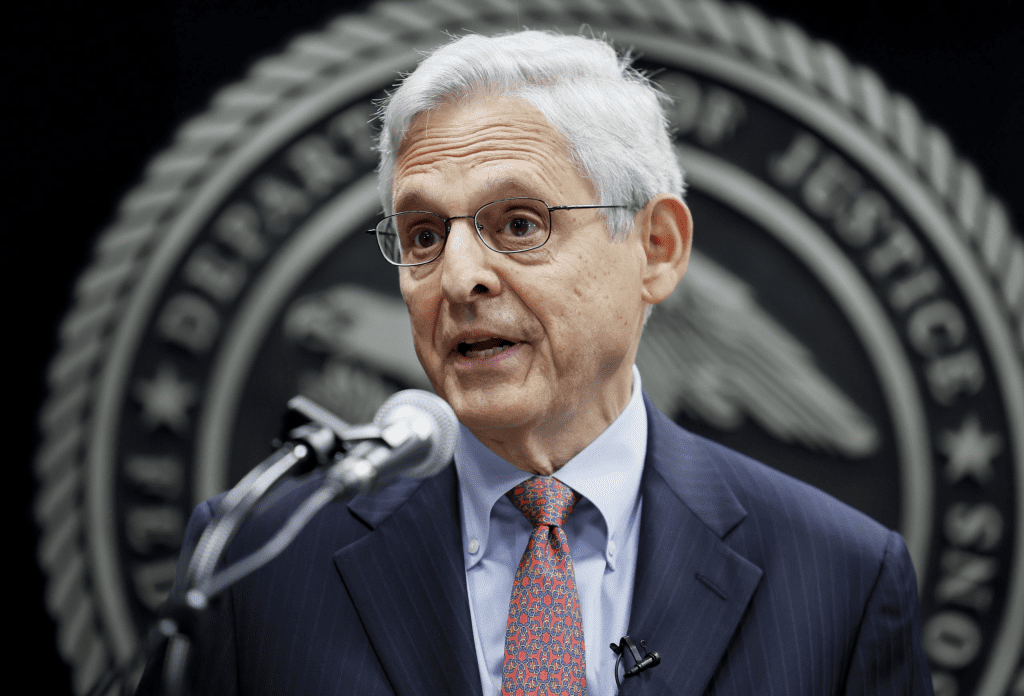
A fiery sentiment circulating on June 2, 2025, asserts that if former Attorney General Merrick Garland had “done his job,” the controversies of President Donald Trump’s second term—from tariffs to pardons—could have been avoided. The claim, echoed by critics in outlets like MSNBC, pins responsibility on Garland’s tenure for failing to hold Trump accountable for alleged crimes, allowing his 2024 comeback. While the argument resonates with Democrats frustrated by Trump’s resurgence, it oversimplifies a complex legal and political landscape, raising questions about prosecutorial discretion and its consequences.
Garland, appointed by President Joe Biden in 2021, faced intense pressure to pursue charges against Trump for actions tied to the January 6 Capitol riot, classified documents, and election interference. Critics argue his cautious approach—emphasizing independence and deliberation—enabled Trump to evade accountability. A 2022 Justice Department investigation into January 6 resulted in over 1,200 convictions, but Trump himself faced no federal charges before 2024, per The New York Times. The delayed appointment of Special Counsel Jack Smith until November 2022, per CNN, meant key cases, like the Mar-a-Lago documents probe, lagged, with indictments coming too late to impact Trump’s campaign.
The critique suggests that decisive action by Garland could have disqualified Trump or swayed voters. Trump’s 2024 conviction on 34 counts of falsifying business records in New York, per AP News, did not bar him from running, as the Constitution permits felons to serve as president, per a 2024 Supreme Court ruling. Federal charges, had they materialized earlier, might have shifted public perception, with 53% of Americans in a 2025 Pew poll saying a conviction would have deterred their vote. Instead, Trump’s narrative of being “persecuted” fueled his base, securing a 52% “right track” Rasmussen rating, per Fox News.
Garland’s defenders, including former DOJ officials, argue he faced unprecedented challenges. A 2021 Politico report noted his commitment to depoliticizing the Justice Department after Trump’s tenure, avoiding perceptions of partisan overreach. Legal constraints, like the Office of Legal Counsel’s stance against indicting a sitting president, limited early action, per Reuters. The January 6 committee’s late 2022 referral of Trump for insurrection, per The Washington Post, gave Garland little time to build a case before the campaign. A 2025 Brennan Center analysis suggests rushing charges risked acquittals, weakening accountability.
Yet, the consequences of inaction are stark. Trump’s second term has unleashed a 96% federal court loss rate in May, per a Stanford analysis, pardons for allies like Michael Grimm, and the deportation of a U.S. citizen toddler, per NPR. His tariffs, driving a 1.5% price hike, per the Bureau of Labor Statistics, and DOGE’s cuts, linked to 300,000 deaths, per a Boston University study, reflect unchecked power critics tie to Garland’s restraint. Rep. Jamie Raskin (D-MD) told MSNBC, “Justice delayed empowered chaos.”
The White House, via Karoline Leavitt, dismissed the critique as “Democrat revisionism,” citing a 93% drop in border crossings, per CBP data, as evidence of Trump’s mandate. But with 54% of Americans in an NBC poll distrusting his leadership, the “Garland failed” narrative persists. It overlooks, however, the GOP-controlled Congress’s resistance to conviction and voters’ choice in 2024. Blaming Garland simplifies a systemic issue: a polarized nation where accountability struggles against political loyalty.