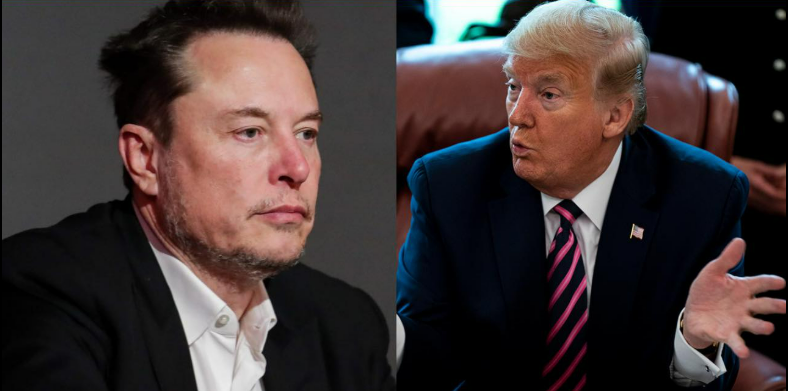
In a dramatic turn, Elon Musk announced his departure from his role as a special government employee leading the Department of Government Efficiency (DOGE) on May 28, 2025, just one day after publicly criticizing President Donald Trump’s signature tax bill. The billionaire’s exit, confirmed by a White House official to Reuters, marks the end of a contentious tenure that promised to slash $2 trillion in federal spending but faced accusations of chaos and overreach. Musk’s abrupt resignation, decided at a “senior staff level” without a direct conversation with Trump, has sparked fierce reactions, with critics labeling him a “miserable, irresponsible” figure whose influence will not be missed.
Musk’s criticism of Trump’s “Big, Beautiful Bill” centered on its $4 trillion cost, which he told CBS’s Sunday Morning would balloon the federal deficit and undermine DOGE’s mission to cut waste. The bill, narrowly passed by the House, includes tax cuts, border security funding, and Medicaid restrictions, but the Congressional Budget Office estimates it will add $3.8 trillion to the deficit by 2034. Musk’s remarks, echoing fiscal conservatives like Sen. Rand Paul, frustrated some Republicans, with Rep. Nancy Mace telling Fox News that Musk had “no place in Congress” dictating policy. Trump, responding at a White House event, brushed off the critique, saying he would negotiate the bill’s terms in the Senate while defending its tax cuts as “beautiful.”
DOGE, under Musk’s leadership, claimed $175 billion in savings, including $3.4 billion from canceled diversity contracts and the elimination of 12.3 million outdated Social Security records. However, critics, per a Brennan Center report, argue these cuts disrupted services, with longer wait times at Social Security offices and veterans’ hospitals. Courts blocked some DOGE actions, like mass firings, and a 2025 NPR report noted a lawsuit alleging Musk wielded unconstitutional power will proceed. Musk’s initial $2 trillion goal was scaled back to $150 billion, with fact-checkers like PolitiFact questioning the validity of his savings claims.
The timing of Musk’s exit, coinciding with his 130-day term limit as a special government employee, suggests deeper tensions. The Guardian reported that Musk’s disillusionment grew after Congress failed to codify DOGE’s cuts and his $25 million Wisconsin judicial candidate lost, per The New York Times. Musk’s focus has shifted to his businesses, with Tesla’s stock down 25% since January and SpaceX facing scrutiny after a failed Starship launch, per Reuters. A White House source told SBS News that Musk’s departure was decided by senior staff, not Trump directly, hinting at strained relations.
Critics see Musk’s tenure as a reckless power grab, with NPR noting his closure of USAID and firing of 260,000 federal workers caused chaos without delivering promised savings. Supporters, however, argue he exposed systemic waste, aligning with Trump’s 52% “right track” Rasmussen poll rating. Musk vowed DOGE’s mission would continue, with staff embedded across agencies, per CNN. As he returns to Tesla and SpaceX, the fallout from his exit underscores a fractured GOP and a polarized nation grappling with his legacy of disruption.