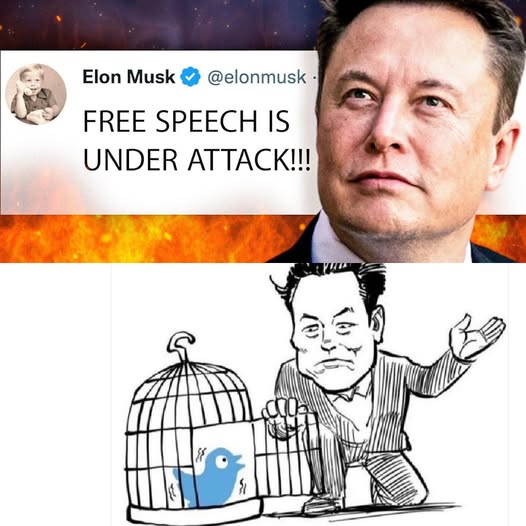
San Francisco, CA – Elon Musk’s unwavering support for free speech has thrust him into the center of a contentious debate over the role of social media in democratic discourse, a stance that has defined his tenure as the owner of Twitter (now X) since its acquisition in October 2022. On May 14, 2025, as Musk continues to shape the platform’s policies, his vision of free speech as a “cornerstone of democracy” remains both a rallying cry for supporters and a lightning rod for critics, highlighting the complex balance between open dialogue and the risks of misinformation.
Musk’s commitment to free speech was evident from the moment he took over Twitter, purchasing the platform for $44 billion after months of legal battles. In a November 2022 post on X, Musk declared, “Freedom of speech is the bedrock of a functioning democracy, and Twitter is the digital town square where matters vital to the future of humanity are debated.” He quickly moved to loosen content moderation policies, reinstating previously banned accounts, including those of former President Donald Trump and conservative figures like Marjorie Taylor Greene, arguing that such actions fostered open debate. By January 2023, X had rolled back many of its previous censorship measures, reducing the moderation team by 50% and introducing a “freedom of speech, not freedom of reach” policy, where controversial content could be posted but not amplified, as detailed in a company blog post.
This approach, however, has not been without challenges. Musk has acknowledged the difficulties of managing misinformation, particularly during high-stakes events like the 2024 U.S. election. A 2023 study by the Center for Countering Digital Hate found that hate speech on X increased by 30% after Musk’s takeover, with misinformation about election fraud spreading rapidly. Musk has defended his stance, arguing in a May 2024 interview with The Wall Street Journal that “censoring speech to combat misinformation often leads to a slippery slope where only one narrative survives.” He has instead pushed for community-driven moderation through features like Community Notes, which allow users to fact-check posts, a system that, while innovative, has been criticized for inconsistency, with some notes taking hours or days to appear, per a 2024 TechCrunch analysis.
Musk’s views have made him a polarizing figure. Supporters, including free speech advocates like the Electronic Frontier Foundation, praise his resistance to what they see as overzealous censorship by tech giants. On X, users like
@FreeSpeechNow have lauded Musk for “giving a voice back to the silenced,” pointing to the reinstatement of accounts as proof of his commitment. Critics, however, argue that his policies have emboldened harmful content. The Anti-Defamation League reported in April 2025 that antisemitic posts on X rose by 61% since 2022, attributing the spike to reduced moderation. Progressive figures, including Sen. Elizabeth Warren, have called for stricter regulations, warning on May 13 that “Musk’s version of free speech is a free-for-all that endangers democracy.”
Musk’s influence extends beyond X, as his role in the Trump administration—recently stepping back from the Department of Government Efficiency—has amplified his voice on free speech issues. His recent appearance at the Saudi-U.S. Investment Forum on May 13, where he discussed innovation with Crown Prince Mohammed bin Salman, further underscores his global platform, though it raises questions about aligning with regimes criticized for suppressing dissent, as noted by Human Rights Watch.
The debate over Musk’s free speech advocacy reflects broader tensions in the digital age. While his push for open dialogue challenges the status quo of tech censorship, the rise in misinformation and hate speech on X suggests that unfettered speech comes with risks. As Musk continues to navigate this delicate balance, his vision for a “digital town square” remains a work in progress—one that could either redefine democratic discourse or deepen societal divides.