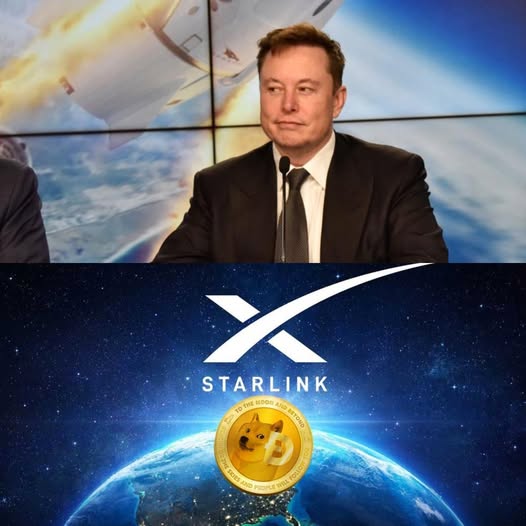
Boca Chica, TX – On May 15, 2025, at 10:34 PM +07, Elon Musk announced a groundbreaking decision: Starlink, SpaceX’s satellite internet service, will now accept Dogecoin as a payment method for subscriptions, marking a significant step in Musk’s vision for a decentralized, space-based economy. The move, shared via Musk’s X account, sent Dogecoin’s market price soaring by 45% within hours, per CoinMarketCap data, while igniting a fierce debate about the future of cryptocurrency and its role in space innovation.
Musk, who has had a rollercoaster relationship with digital currencies since 2021, has long championed Dogecoin, a meme-based token he once called “the people’s crypto.” His past endorsements—ranging from Tesla accepting Dogecoin for merchandise in 2022 to his 2023 X posts calling for its adoption—have repeatedly driven market volatility. This latest decision, however, positions Dogecoin as the de facto payment method for Starlink, which now serves over 4 million users globally, according to SpaceX’s Q1 2025 report. Musk framed the move as a step toward making space accessible, stating on X, “Dogecoin for Starlink subscriptions is about democratizing space—making it affordable for everyone, everywhere.”
The financial implications are immediate. Dogecoin, trading at $0.12 before the announcement, spiked to $0.17, adding $7 billion to its market cap, per Bloomberg. Analysts like Sarah Tran of CryptoCompare predict this could legitimize Dogecoin as a transactional currency, potentially paving the way for a broader space-based economy. “Musk is creating a blueprint for decentralized finance in space,” Tran told CNBC on May 15, noting that Starlink’s global reach could drive crypto adoption in underserved regions. Some envision a future where Dogecoin powers transactions on Mars, aligning with Musk’s goal of colonizing the Red Planet by 2030.
Critics, however, warn of heightened volatility in an already unpredictable crypto market. The 2021-2023 crypto boom and bust, which saw Dogecoin crash 80% after Musk’s “Saturday Night Live” appearance, looms large. Financial analyst Mark Palmer of Fidelity cautioned on May 15 that Musk’s influence could exacerbate market instability, stating, “This move might fuel speculative bubbles, leaving retail investors exposed.” Regulatory concerns also persist—SEC Chair Gary Gensler, speaking at a May 14 conference, reiterated that cryptocurrencies like Dogecoin lack the oversight needed to protect consumers, a sentiment echoed by posts on X decrying Musk’s “reckless” crypto push.
Musk’s decision ties into his broader SpaceX ambitions. Starlink, which generated $4.2 billion in revenue in 2024, aims to fund SpaceX’s Mars missions, with Musk estimating a $250 billion cost for colonization. By integrating Dogecoin, Musk not only diversifies Starlink’s payment ecosystem but also signals a shift toward a decentralized financial model for space ventures. This aligns with recent SpaceX developments, like Starbase’s incorporation as a privatized city on May 3, where Musk is testing sustainable governance models, as reported earlier this week.
The move also reflects Musk’s growing influence in global markets, fresh off his Saudi-U.S. Investment Forum appearance on May 13, where Starlink gained approval for maritime and aviation use in the kingdom. Yet, critics argue that Musk’s crypto advocacy often serves his own interests—Dogecoin’s spike benefits his personal holdings, estimated at $1 billion by Forbes in 2024, raising ethical questions about market manipulation. The SEC has investigated Musk’s crypto tweets since 2021, though no formal charges have been filed as of May 2025.
As Dogecoin surges and Starlink subscriptions open to crypto payments, Musk’s vision of a space-based economy takes a bold step forward. But the line between innovation and instability remains thin, leaving the crypto landscape—and Musk’s legacy—at a critical juncture.