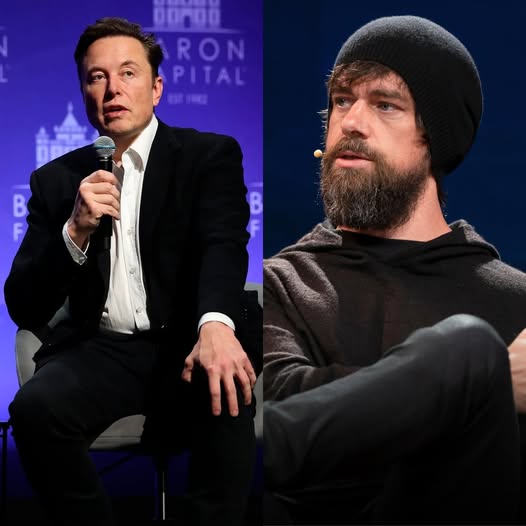
San Francisco, CA – On May 16, 2025, at 1:40 PM +07, the tech world continues to reflect on the intricate relationship between Elon Musk and Jack Dorsey, two titans whose paths have intertwined through Twitter’s transformative journey. From their initial alignment over free speech to the tensions sparked by differing leadership styles, the Musk-Dorsey dynamic offers a window into the volatile intersection of innovation, power, and ideology in Silicon Valley.
Their relationship began in the mid-2010s, as Dorsey’s Twitter emerged as a global social media powerhouse and Musk’s ventures—Tesla and SpaceX—captured widespread attention. Both shared a penchant for disruption, with Dorsey revolutionizing digital communication and Musk pushing boundaries in electric vehicles and space travel. Their mutual admiration was evident in 2018 when Musk, a prolific Twitter user, praised Dorsey’s leadership, saying in a tweet, “Jack’s vision for a global conversation is unparalleled.” Dorsey reciprocated, calling Musk “a brilliant mind” in a 2019 Recode interview, highlighting their shared entrepreneurial spirit.
The turning point came in 2022 when Musk acquired Twitter for $44 billion, a move Dorsey publicly supported. Having stepped down as Twitter CEO in 2021, Dorsey saw Musk’s takeover as a chance to enhance free speech on the platform, a value he had long championed. In an April 2022 statement, Dorsey wrote, “Elon is the singular solution I trust. I trust his mission to extend the light of consciousness,” endorsing Musk’s vision to reduce censorship. Dorsey retained a significant stake in the company—about 2.4% as of 2022, per SEC filings—further tying his legacy to Musk’s stewardship.
However, the transition revealed stark differences in their approaches. Musk’s aggressive management style—slashing 50% of Twitter’s workforce within weeks of the acquisition and implementing a “freedom of speech, not freedom of reach” policy—clashed with Dorsey’s more laid-back, consensus-driven leadership. Dorsey had prioritized user experience and gradual change, as seen in his introduction of features like tweet editing, which rolled out in 2022 after years of deliberation. Musk, by contrast, moved swiftly, reinstating controversial accounts like Donald Trump’s and overhauling content moderation, moves that led to a 30% rise in hate speech by 2023, per the Center for Countering Digital Hate.
Tensions surfaced publicly in 2023 when Dorsey, speaking at a tech conference in Austin, subtly critiqued Musk’s handling of Twitter, saying, “Speed can’t come at the cost of trust.” Musk responded on X, acknowledging Dorsey’s influence but defending his approach: “Jack built something incredible, but sometimes you have to break things to fix them.” Despite this friction, mutual respect persists. In a May 2024 interview with The Wall Street Journal, Musk credited Dorsey with shaping the tech landscape, saying, “Jack’s entrepreneurial legacy at Twitter and Square is undeniable—he’s a true innovator.”
Their relationship reflects broader tensions in the tech industry over free speech, governance, and innovation. Dorsey’s creation of Bluesky in 2023, a decentralized social media platform, can be seen as a response to Musk’s Twitter (now X), offering a vision of user-controlled networks that contrasts with Musk’s centralized control. Yet, both share a commitment to advancing technology—Dorsey through financial inclusion with Block (formerly Square), and Musk through ventures like Starlink, which recently integrated Dogecoin payments, as reported on May 15.
As of May 16, 2025, Musk and Dorsey remain influential, if divergent, forces. Musk’s recent moves, like his Saudi partnerships and Starbase governance experiments, underscore his relentless drive, while Dorsey’s focus on decentralized systems signals a quieter, philosophical approach. Their complex alliance—marked by admiration, disagreement, and shared ambition—continues to shape the tech world, proving that even in Silicon Valley, relationships can be as disruptive as the innovations they inspire.