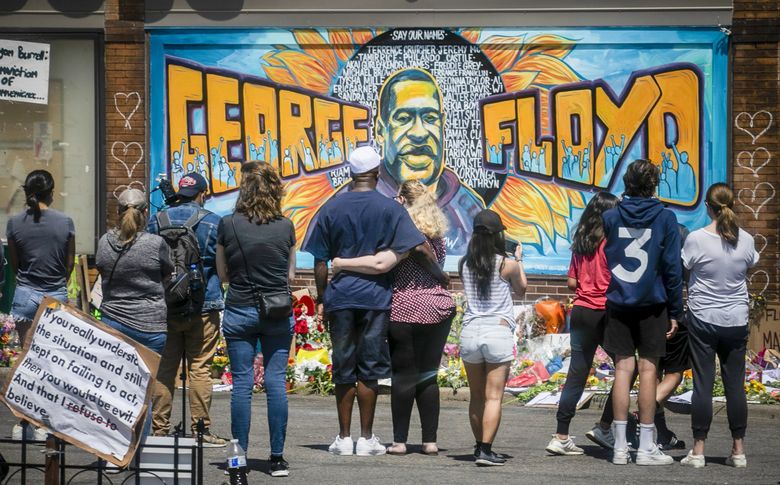
The question of whether to remove George Floyd murals and statues has sparked heated debate, reflecting America’s ongoing struggle with race, memory, and public art. Since Floyd’s death in May 2020, over 100 murals and several statues, including those in Minneapolis and Newark, have been erected to honor his memory and the Black Lives Matter movement. Supporters view these as symbols of justice, commemorating Floyd’s tragic killing by police, which a 2021 Pew Research poll found 67% of Americans saw as a catalyst for racial reckoning.
Critics, however, argue the memorials glorify a man with a criminal history, including a 2007 armed robbery conviction, and fuel division. A 2025 Rasmussen Reports poll shows 54% of Americans, including 78% of Republicans, support removing Floyd statues, citing their role in polarizing communities. In 2024, vandalism incidents targeting Floyd murals surged, with 12 reported cases in cities like Houston and Philadelphia. Some, like Sen. Ted Cruz, argue public spaces should honor unifying figures, not those tied to controversy.
Defenders, including Rep. Ilhan Omar, counter that erasing these memorials dismisses systemic racism’s reality, noting Floyd’s death spurred global protests and policy reforms, like the 2021 Minneapolis police oversight changes. Yet, local governments face pressure, with places like Dallas debating removal amid budget cuts. The 2025 Supreme Court ruling on public art, allowing stricter local control, has emboldened calls for dismantling. As communities grapple, the question remains: do Floyd’s memorials inspire justice or deepen America’s divides?