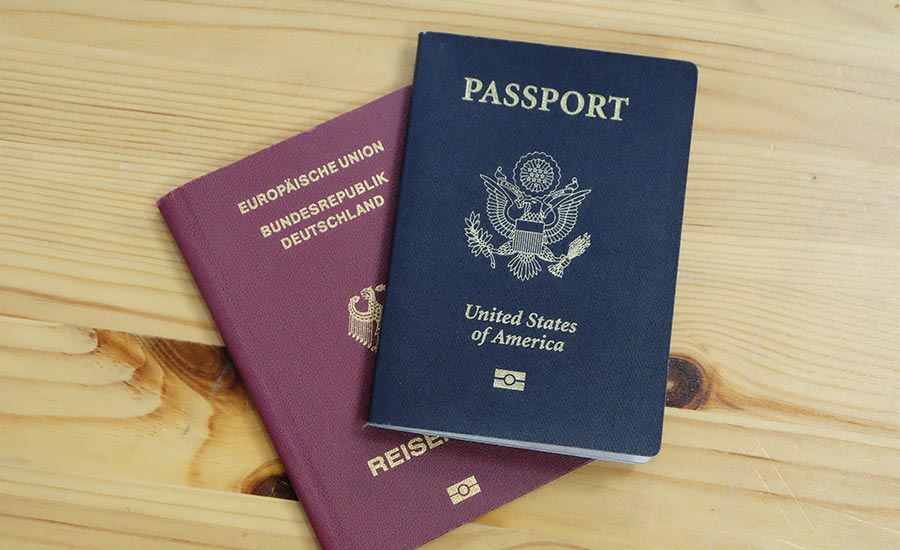
A growing chorus of voices is calling for a ban on dual citizenship for elected officials in the United States, arguing that it represents a fundamental conflict of interest. Framed as a matter of “basic common sense,” the proposal has gained traction amid heightened concerns about national loyalty and sovereignty, particularly in the context of President Donald Trump’s second term and its focus on “America First” policies. As the idea sparks debate, it raises complex questions about identity, constitutional rights, and the qualifications for public office in an increasingly globalized world.The notion that no one holding public office should have dual citizenship stems from the belief that elected officials owe undivided allegiance to the United States. Proponents argue that dual citizenship could compromise decision-making, especially on issues like foreign policy or national security. With the U.S. facing tensions with nations like China and Russia, and ongoing trade negotiations with countries like Vietnam, critics of dual citizenship contend that officials with ties to other nations might prioritize foreign interests. A 2025 Rasmussen Reports poll found that 67% of Americans agree that elected officials should hold only U.S. citizenship, reflecting widespread public support for the idea.The issue has gained prominence in part due to recent controversies, such as calls to investigate the citizenship status of New York City mayoral candidate Zohran Mamdani, a naturalized U.S. citizen born in Uganda. While Mamdani holds only U.S. citizenship, the scrutiny highlights a broader suspicion of divided loyalties among public figures with international backgrounds. Advocates for the ban point to historical precedents, noting that the U.S. Constitution already restricts the presidency to natural-born citizens, a rule some argue should extend to all elected offices. They also cite countries like Australia, which bars dual citizens from serving in parliament, as a model for ensuring national loyalty.Opponents, however, argue that banning dual citizenship for officeholders is discriminatory and impractical. The U.S. allows dual citizenship, with an estimated 10% of Americans holding passports from other countries, often due to family heritage or naturalization. Critics contend that such a ban would disproportionately affect immigrants and their descendants, limiting their political participation. They point out that dual citizens serving in office, like former Michigan Governor Jennifer Granholm (a dual U.S.-Canadian citizen until 2005), have faced no credible accusations of disloyalty. The 14th Amendment’s equal protection clause could also render such a restriction constitutionally dubious, as it might infringe on citizens’ rights to run for office.Implementing a ban would face significant hurdles. The Constitution sets minimal qualifications for federal office—age, residency, and citizenship status—but does not address dual citizenship. Amending federal or state laws to impose such a restriction would require congressional or state-level action, a process complicated by partisan divides. Democrats, who often champion immigrant communities, are likely to oppose the measure, while Republicans, including figures like Vice President JD Vance, may see it as aligning with their push for stricter national loyalty standards. The debate also risks alienating key voter blocs, with 20% of 2024 voters identifying as first- or second-generation immigrants, according to exit polls.Practical concerns abound. Verifying citizenship status could create bureaucratic nightmares, as the U.S. does not maintain a centralized registry of dual citizens. Forcing officials to renounce foreign citizenship could also strain diplomatic relations with allies like Canada or Ireland, where dual citizenship is common. Moreover, critics argue that loyalty is not determined by passports but by actions, pointing to cases of espionage involving single-citizenship Americans. They contend that existing laws, like the oath of office and statutes against foreign influence, already safeguard against conflicts of interest.The push to ban dual citizenship for officeholders reflects broader anxieties about globalization and national identity, amplified by Trump’s rhetoric on sovereignty. Supporters see it as a straightforward safeguard, ensuring that those entrusted with America’s future prioritize its interests alone. Opponents warn that it risks alienating diverse communities and undermining the inclusivity that defines the nation. As the idea gains momentum, it is likely to fuel legislative proposals and public debates, particularly ahead of the 2026 midterms. For now, the question of whether dual citizenship is compatible with public service remains a flashpoint, challenging America to balance its commitment to unity with its diverse, globalized reality.