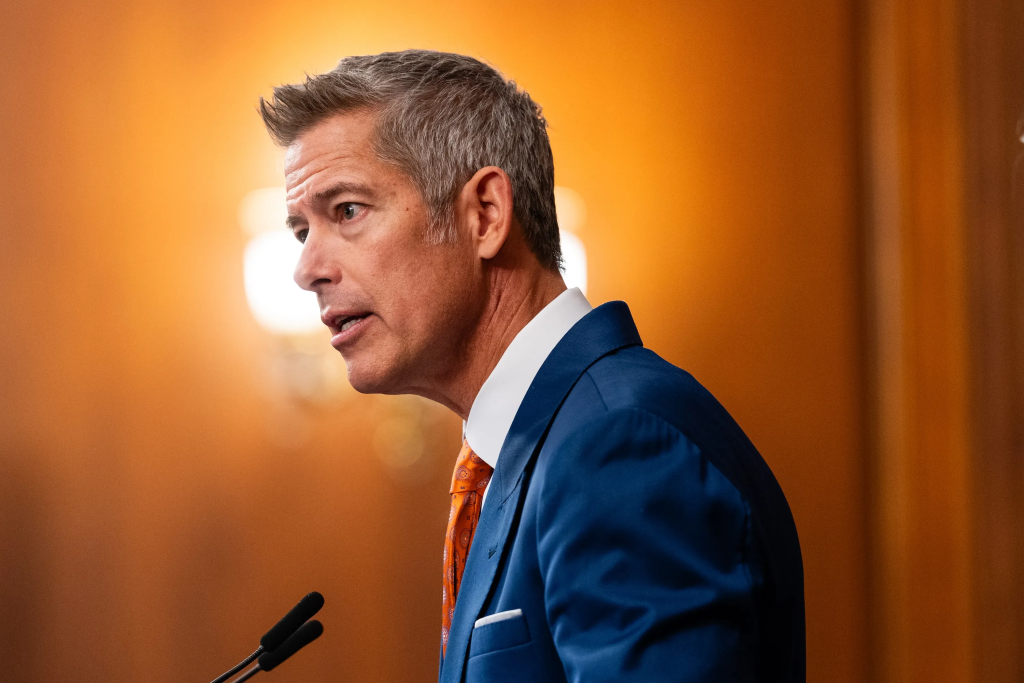
In a sweeping enforcement drive, Transportation Secretary Sean Duffy has overseen the removal of approximately 9,500 commercial truck drivers from U.S. roads for failing English proficiency tests, a policy reinstated under the Trump administration.
Announced in December 2025, the crackdown targets foreign-born drivers, emphasizing safety and compliance with federal regulations mandating basic English for communication during inspections and emergencies.
Duffy celebrated the milestone on social media, declaring it a victory for enforcing “our national language.”
Supporters argue the measure enhances highway safety, preventing misunderstandings that could lead to accidents. Trucking industry veterans and conservative lawmakers praise it as long-overdue enforcement of existing laws, dating back to the 1990s but laxly applied under previous administrations. “Lives are at stake when drivers can’t read signs or communicate with authorities,” one safety advocate stated. The policy aligns with broader immigration reforms, potentially reducing unlicensed operations tied to border crossings.
Critics, including labor unions and immigrant rights groups, decry it as discriminatory and economically damaging. They warn of exacerbating driver shortages, already at 80,000 vacancies, which could spike freight costs and disrupt supply chains.
Democratic leaders label it xenophobic, arguing many affected drivers are legal residents or citizens who’ve operated safely for years. “This isn’t about safety; it’s about exclusion,” a union spokesperson said. Reports suggest disproportionate impacts on Latino and Asian communities, fueling lawsuits over civil rights violations.
As of January 2026, the Department of Transportation continues inspections, with states like California facing funding threats for non-compliance.
Public polls show division: 55% support stricter rules, per recent surveys, but urban areas lean against, citing inclusivity. With trucking vital to the economy, the policy’s long-term effects—on safety versus workforce—remain contentious. Stakeholders urge balanced reforms, but in polarized times, compromise seems distant.