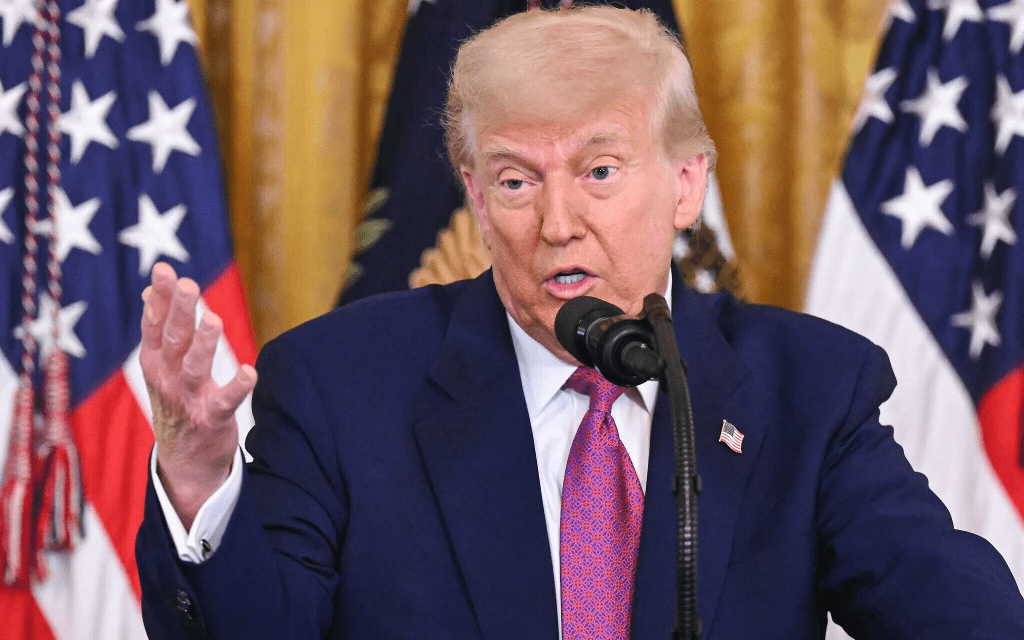
President Donald Trump has raised the prospect of U.S. involvement in the escalating conflict between Israel and Iran, stating in a June 15, 2025, interview with ABC News, “It’s possible we could get involved.” The comment, made amid Israel’s ongoing airstrikes on Iranian nuclear and military sites, marks a shift from his administration’s earlier insistence on staying out of the fray. As the Middle East teeters on the brink of wider war, Trump’s words have sparked intense debate over America’s role in a volatile region.
Israel’s attacks, launched early Friday, targeted Iran’s Natanz nuclear facility and ballistic missile sites, killing 78 people, including senior military officials and scientists. Iran retaliated with missile strikes on Tel Aviv, claiming one Israeli life and wounding dozens. Prime Minister Benjamin Netanyahu, defying Trump’s push for a nuclear deal with Tehran, vowed to continue strikes “for as many days as it takes.” The raids, involving over 200 Israeli jets, have imperiled Trump’s diplomatic efforts, with Iran canceling scheduled talks in Oman. Trump’s “60-day ultimatum” for Iran to negotiate expired, prompting his claim that Israel’s “excellent” strikes may force a deal.
Trump’s administration has emphasized non-involvement, with Secretary of State Marco Rubio calling Israel’s actions “unilateral.” The U.S. has provided defensive support, intercepting Iranian missiles and supplying Israel’s Iron Dome with munitions. Military assets, including B-52 bombers at Diego Garcia and destroyers in the Mediterranean, are positioned to protect American forces, not join offensive operations. Yet, Trump’s openness to involvement—coupled with his refusal to set a new deadline for Iran—suggests a willingness to escalate if diplomacy fails. A senior U.S. official noted Iran has not targeted Americans, a red line for deeper engagement.
Supporters, with 48% of Americans backing Trump’s foreign policy, see his stance as pragmatic, balancing support for Israel with restraint. They argue his $45 million military parade and ICE raids, netting 32,809 arrests, show decisive leadership. Critics, however, fear entanglement in another Middle East war, citing the 2003 Iraq invasion’s $2 trillion cost and 4,500 U.S. deaths. With 52% of blue-state voters opposing escalation, Democrats like Senator Tim Kaine praise Trump’s diplomacy but warn of risks to 70,000 U.S. troops in the region. Iran’s threat to target U.S. bases if America aids Israel heightens the stakes.
The conflict’s roots lie in Iran’s nuclear ambitions and Israel’s determination to thwart them. Trump’s withdrawal from the 2015 nuclear deal in 2018, urged by Netanyahu, led to Iran’s uranium enrichment at 60%, close to weapons-grade. Recent Israeli intelligence alleging a secret Iranian program fueled the strikes, though U.S. assessments find no active weaponization. A wider war could disrupt 20% of global oil through the Strait of Hormuz, spiking prices already up 7%. Los Angeles riots over ICE raids, costing $5.2 million, show how domestic unrest could compound foreign crises.
Trump’s “possible” involvement signals a delicate balancing act: supporting Israel, pressuring Iran, and avoiding a war his base, wary of foreign entanglements, opposes. As missiles fly and diplomacy falters, the world watches to see if America will step into the crossfire or broker peace in a region on edge.