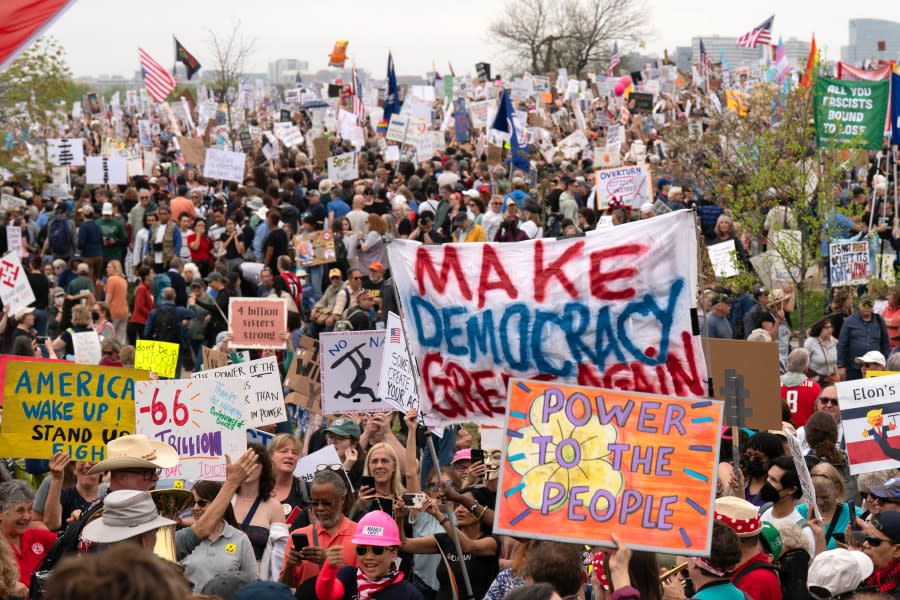
In June 2025, a fervent demand to deploy overwhelming military force—whether 500 Marines or the entire U.S. Army—to suppress what some call a “communist uprising” has emerged among President Donald Trump’s supporters. Sparked by violent protests in Los Angeles and New York against ICE raids, this rhetoric labels demonstrators, including those waving Mexican flags or advocating for undocumented immigrants, as threats to national order. As Trump’s second term drives 142,000 deportations and a record 2,200 arrests in a single day, the call for military action intensifies a polarized debate over security, dissent, and America’s future.
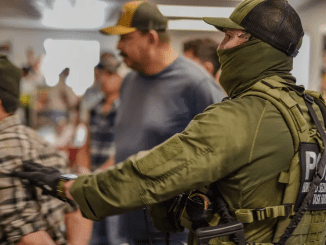
The sentiment reflects Trump’s aggressive “America First” agenda, with policies like the Safeguard American Voter Eligibility Act and Wyoming’s proof-of-citizenship voting law resonating with 90% of 2016 Trump voters, per a 2025 Gallup poll. Protests in Los Angeles, where 70-80 migrants were detained, and a New York courtroom clash, where ICE agents were allegedly assaulted, are framed as Marxist insurrections by supporters. The deployment of 2,000 National Guard troops to Los Angeles, bypassing Gov. Gavin Newsom’s objections, and Trump’s suggestion to arrest Newsom fuel demands for harsher measures. A 2024 Pew survey shows 62% of Americans favor stricter enforcement, amplifying calls to “stop the uprising.”
Critics, including Sen. Alex Padilla, denounce the rhetoric as authoritarian and baseless. Labeling protests as “communist” lacks evidence, with most demonstrators seeking immigrant rights, not ideological revolution, per a 2025 NBC News report. The Supreme Court’s 1989 Texas v. Johnson ruling protects protest as free speech, and the ACLU, citing 35 wrongful detentions in 2025, warns of constitutional violations. Deporting 11 million undocumented immigrants would cost $315 billion, per a 2024 American Immigration Council study, and disrupt industries like construction, where 34% of workers are undocumented, per a 2022 Kaiser study. A 2025 Pew poll shows 55% of Americans view Trump’s policies as excessive.
Historical parallels raise alarms. Weak history education—only 13% of eighth graders proficient per a 2023 NAEP report—obscures lessons from 1960s crackdowns on anti-war protests or 1950s Red Scares. Trump’s 2020 call to shoot protesters, refused by Mark Esper, and 2025 actions like pardoning 1,500 Capitol rioters echo authoritarian tactics. The Indiana teacher’s “8647” shirt incident and calls to defund sanctuary cities underscore the charged climate. Deploying Marines or the Army, as Defense Secretary Pete Hegseth has suggested, would require invoking the Insurrection Act, a rare step last used in 1992.
Economic and legal hurdles loom. Tariffs, raising household costs by $1,300 annually per a 2025 Brookings study, strain public support, while lawsuits against protester arrests and visa revocations for suspected Hamas sympathizers challenge enforcement. The Posse Comitatus Act limits military use in domestic law enforcement, complicating calls for mass deployment.
As the 2026 midterms approach, the demand to crush a so-called “communist uprising” energizes Trump’s base but risks alienating moderates, with 19% of 2020 Trump voters undecided, per a 2025 CNN poll. The Los Angeles and New York protests—marked by tear gas and arrests—highlight a nation divided. The call for military force tests America’s balance between order and liberty, with no clear resolution in sight.