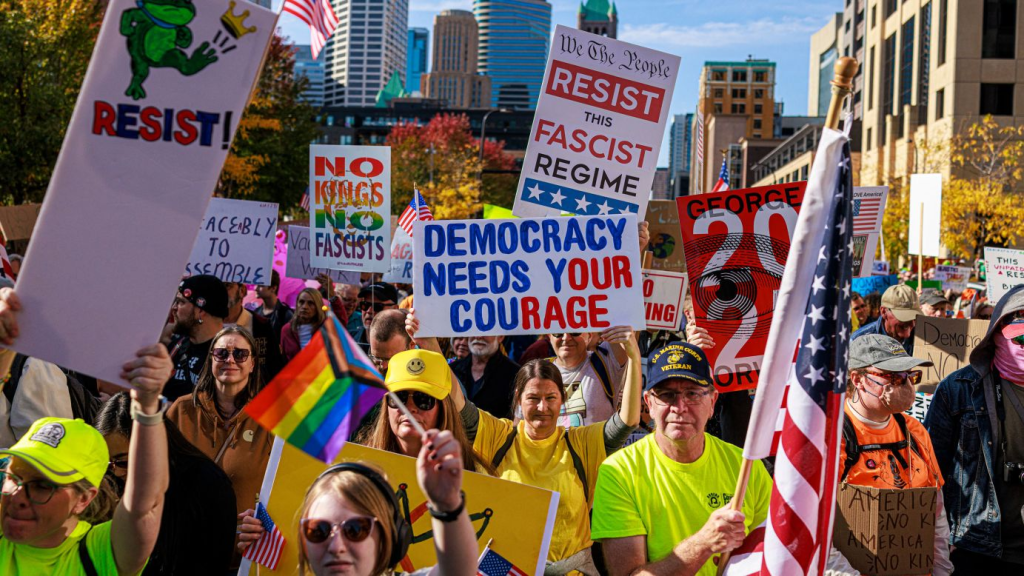
WASHINGTON, D.C. – Waves of yellow-clad demonstrators flooded streets from Times Square to San Francisco’s Ocean Beach on October 18, marking the largest single day of protest in U.S. history as “No Kings” rallies drew an estimated 7 million participants across all 50 states. Organized by a coalition of over 200 progressive groups—including Indivisible, 50501, and MoveOn—the second wave of nationwide actions targeted President Donald Trump’s second-term agenda, branding it a slide into “authoritarian excess” and billionaire-fueled corruption. From whimsical frog costumes in Portland to human chains spelling “No King!” on California sands, the rallies blended fury with festivity, but protesters shared a unified cry: safeguard democracy before it’s too late.
At the heart of the mobilization were grievances over Trump’s immigration crackdown, which has deported over 500,000 since January, and federal spending slashes amid the ongoing government shutdown furloughing 800,000 workers. In Washington, D.C., where 50,000 gathered on Pennsylvania Avenue, Sen. Bernie Sanders slammed tech titans like Elon Musk and Jeff Bezos as “multibillionaires sitting behind Trump at his inauguration,” accusing them of enriching themselves at democracy’s expense. “No more selling out to kings in suits,” Sanders roared, as the crowd waved signs vowing “No Kings, No Tyrants.”
Personal stories cut deep. In San Pablo, California, Maria Floriano, a first-time protester wearing a butterfly-themed hat, likened migration to “an act of courage,” decrying family separations as “cruelty without compassion.” “I came for my neighbors—ICE raids tear families apart,” she said, her voice steady amid chants. In Los Angeles, 72-year-old Ginny Eschbach donned a SpongeBob SquarePants costume for her 42nd anti-Trump march: “It’s whimsical, but deadly serious. Trump’s gutting healthcare while we fight for survival.” From her 70th birthday vantage in Flint, Michigan, retired federal worker Peggy Cole worried aloud: “Can we survive three more years? So many jobs lost to his chaos.”
The rallies remained largely peaceful, with no major arrests reported, though Republican leaders like House Speaker Mike Johnson dismissed them as “hate America” spectacles prolonging the shutdown. For participants like Hayley Wingard, a Statue of Liberty-costumed newcomer in San Francisco, the message was hope amid horror: “I’ve never protested before, but Trump feels like a dictator. This is our stand—no kings, just us.” As night fell, the movement’s coordinators vowed sustained resistance, warning that without momentum, “we lose the fight.” In a polarized nation, the “No Kings” roar echoes: not just anger, but a pledge to reclaim the republic, one unified step at a time.