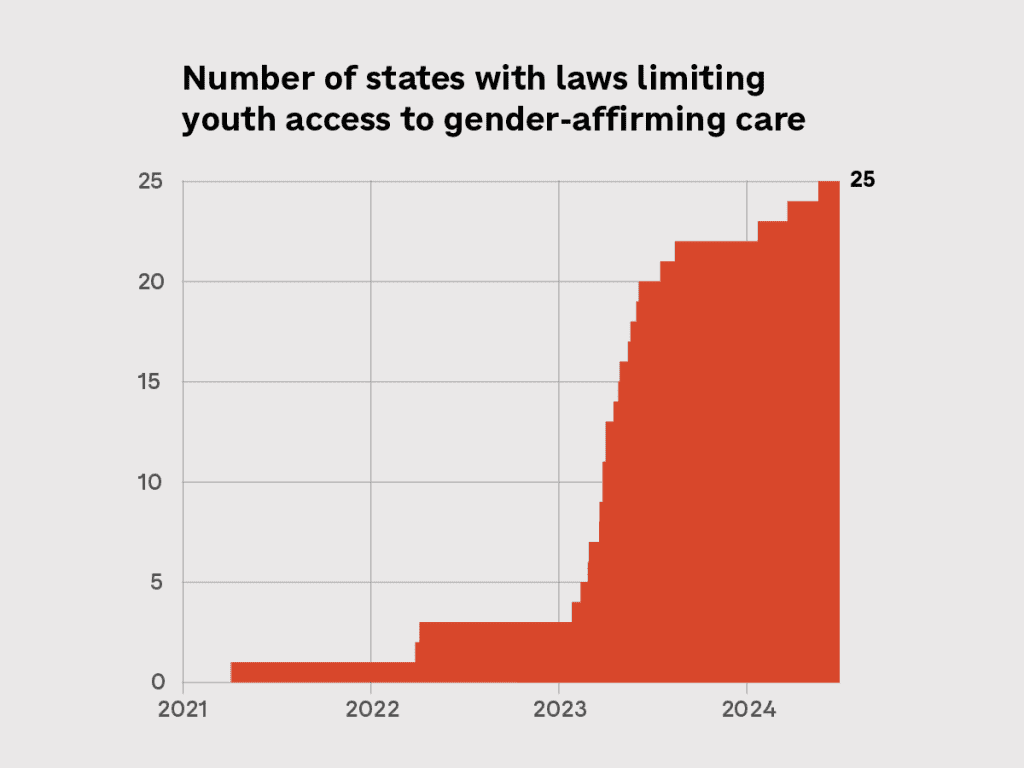
As of July 2025, 25 states have enacted laws prohibiting gender-affirming surgeries for minors, a move celebrated by advocates who argue it protects children from irreversible decisions. The sentiment that every state should follow suit reflects a growing conservative push to regulate medical interventions for transgender youth. As a journalist, I explore the rationale behind these bans, the opposition they face, and the call for nationwide adoption.
These laws, upheld by the U.S. Supreme Court in United States v. Skrmetti (June 2025), ban procedures like mastectomies and genital surgeries for those under 18, citing concerns about long-term consequences and lack of comprehensive data on outcomes. States like Texas and Florida also restrict puberty blockers and hormone therapies, with exemptions for intersex conditions or early puberty. Supporters, including groups like the Alliance Defending Freedom, argue that minors lack the maturity for such decisions, pointing to European restrictions and polls showing 59% of voters view these surgeries as child abuse. They urge all 50 states to adopt similar measures to safeguard youth.
Opponents, including the American Medical Association, counter that gender-affirming care is medically necessary, reducing suicide risk among trans youth. A 2022 Trevor Project survey found trans and nonbinary youth are twice as likely to attempt suicide without support. Critics argue bans strip away bodily autonomy and ignore medical consensus, with 20 states and D.C. filing briefs opposing restrictions. In states like California, shield laws protect access to care, highlighting a national divide.
The call for universal bans taps into broader cultural battles, from immigration to Supreme Court ethics. As America wrestles with identity and governance, the debate over transgender youth care remains a flashpoint, with 25 states leading a charge that could reshape national policy.