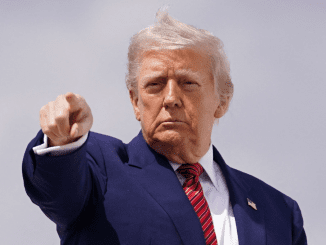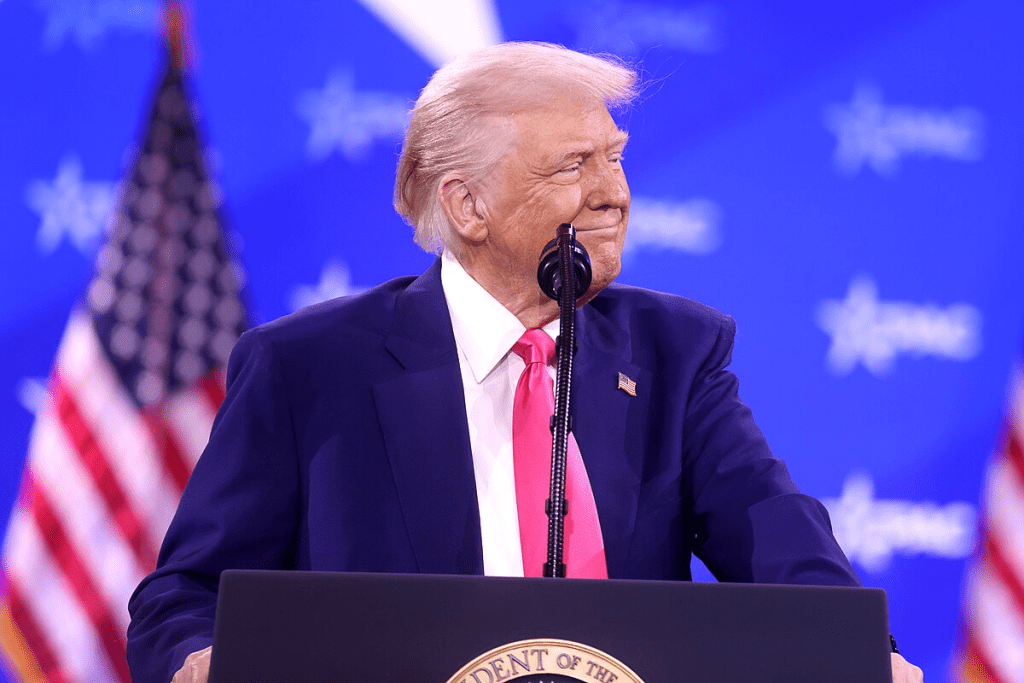
Washington, D.C., June 16, 2025—The idea that President Donald Trump would face little opposition if he were a Democrat has become a provocative talking point among his supporters, reflecting the deep partisan divide in American politics. With protests raging over his mass deportation policies and military deployments, some argue that Trump’s brash style and populist agenda would be celebrated rather than vilified if he carried a “(D)” next to his name. This claim, while speculative, underscores the role of party loyalty in shaping public perception and highlights the polarized lens through which Americans view their leaders.
Trump’s 2024 landslide victory—312 electoral votes and 50.2% of the popular vote—has not quelled opposition, with millions joining “No Kings Day” protests on June 14 to denounce his immigration crackdowns and perceived authoritarianism. Supporters argue that policies like expanded oil drilling or border enforcement, which align with working-class priorities, would be hailed as bold leadership under a Democratic banner. “If Trump were a Democrat, the media would call him a hero for the people,” said a Texas rallygoer, echoing a sentiment that Democratic voters might embrace his outsider persona if it served their agenda.
Historical parallels lend some credence to this view. Democratic presidents like Bill Clinton, who championed tough-on-crime policies, or Barack Obama, who oversaw significant deportations, faced less progressive backlash than Trump does for similar actions. Political scientist David Faris suggests that party affiliation often trumps policy substance. “Democrats forgave Obama’s drone strikes and deportations because he was their guy,” Faris noted. A 2025 Pew Research poll shows 62% of Democrats support strong immigration enforcement when framed as a Democratic policy, compared to 35% when tied to Trump.
Critics, however, reject the notion that Trump’s controversies stem solely from his Republican label. His defiance of court orders, inflammatory rhetoric, and use of Marines in Los Angeles to secure federal assets have drawn ire across party lines. Senator Bernie Sanders (I-VT) argued, “It’s not about the ‘R’ or ‘D’—it’s about actions that erode democracy.” Democrats point to Trump’s unique style—his rejection of political norms and polarizing language—as fueling opposition, not just his policies. A Gallup poll finds 71% of Democrats disapprove of Trump’s leadership style, even when they agree with specific policies like energy expansion.
The thought experiment also ignores structural realities. Trump’s base—evangelicals, rural voters, and working-class whites—aligns with Republican values, while his policies, like tax cuts for corporations, clash with Democratic priorities. A Democratic Trump would likely face resistance from his own party’s progressive wing, as seen in tensions over Joe Biden’s centrism. Political analyst Rachel Blum notes, “Trump’s appeal relies on conservative grievances. As a Democrat, he’d lose his core support and still face scrutiny from progressives.”
Recent events highlight the partisan filter. Trump’s push for mass deportations, detaining 150,000 undocumented immigrants, has 55% approval among Republicans but only 28% among Democrats, per Rasmussen Reports. Yet, when asked about deportation under a hypothetical Democratic president, Democratic support rises to 46%. This suggests party loyalty shapes reactions, but Trump’s personal controversies—legal battles, impeachments, and a conviction—amplify his unpopularity beyond partisanship. “It’s not just the ‘R’—it’s the man,” said a Philadelphia protester.
As protests continue and Trump’s second term unfolds, the “Democratic Trump” hypothesis reveals more about America’s tribal politics than about the president himself. While some policies might find broader appeal under a different label, Trump’s polarizing persona ensures he remains a lightning rod. The notion that a party switch would erase his critics oversimplifies a nation divided not just by ideology, but by trust, values, and vision for the future.