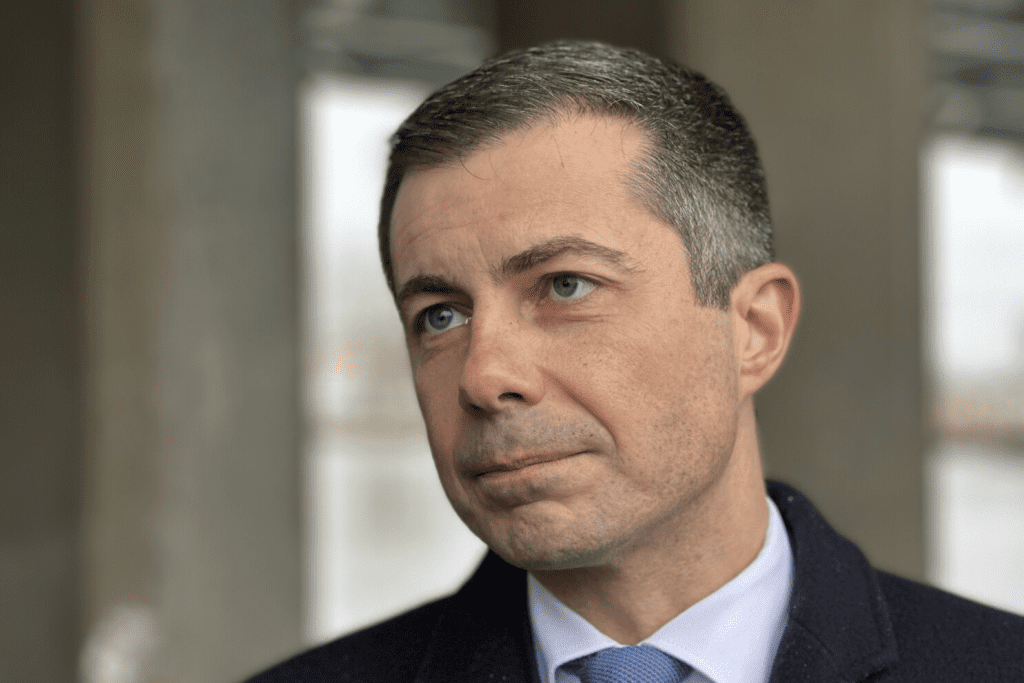
The political arena is a brutal place, where alliances shift like sand and loyalty is often a luxury. When news broke that Nancy Pelosi, one of the most powerful figures in American politics, wants Pete Buttigieg out, it sent shockwaves through Washington. The former House Speaker’s influence remains formidable, even in her waning years, and her reported desire to see Buttigieg sidelined as Transportation Secretary speaks volumes—not about his failures, but about his potential. If Pelosi, a master of the political game, sees Buttigieg as a threat, then he’s doing something right. And that’s why he deserves our support.
Buttigieg, the 43-year-old former mayor of South Bend, Indiana, burst onto the national stage during his 2020 presidential run. Young, articulate, and unapologetically progressive, he represented a new generation of leadership. His appointment as Transportation Secretary in 2021 was historic—not just because he was the first openly gay Cabinet member, but because it signaled a shift toward fresh faces in a government long dominated by entrenched power. Yet, it’s precisely this freshness that seems to unnerve the old guard.
Pelosi’s reported push to oust Buttigieg isn’t about policy missteps or incompetence. By most accounts, he’s been a competent steward of a sprawling department. Under his watch, the Biden administration has funneled billions into infrastructure, from bridges to broadband, breathing life into a long-neglected priority. The 2021 Bipartisan Infrastructure Law, a cornerstone of Biden’s legacy, owes much of its rollout to Buttigieg’s ability to navigate complex federal-state partnerships. Sure, there have been hiccups—supply chain snarls and airline delays drew criticism—but these are systemic issues, not personal failings. If anything, Buttigieg’s willingness to step into the spotlight during crises, from the East Palestine train derailment to port backlogs, shows a leader unafraid to face the heat.
So why does Pelosi want him gone? The answer lies in power dynamics. Buttigieg isn’t just a Cabinet secretary; he’s a rising star with presidential ambitions. His youth, charisma, and knack for media make him a formidable contender for 2028 or beyond. For Pelosi, whose career has been defined by consolidating influence within the Democratic Party, a figure like Buttigieg represents disruption. He’s not beholden to the same networks that propelled her generation. He speaks directly to voters, bypassing traditional gatekeepers. In short, he’s a threat to the status quo—and that’s exactly why he’s worth defending.
This isn’t to say Buttigieg is flawless. Critics on the left argue he’s too moderate, too polished, a product of McKinsey consulting rather than grassroots activism. His handling of labor disputes, like the 2022 railroad strike negotiations, drew ire from unions. On the right, he’s a lightning rod for culture wars, with detractors seizing on his identity or mocking his paternity leave. But these critiques miss the bigger picture: Buttigieg is a bridge-builder in a fractured political landscape. His ability to appeal to both centrists and progressives, while articulating a vision for the future, is a rare skill. In a party grappling with its post-Biden identity, he’s a figure who can unify without compromising.
Pelosi’s move against him, if true, is a reminder of how fiercely the old guard clings to control. It’s not about what’s best for the country or the party—it’s about preserving influence. But the Democratic Party, and America, need leaders who challenge the system, not perpetuate it. Buttigieg’s rise isn’t just about one man’s career; it’s about whether the next generation can break through the barriers erected by those who came before. If he’s making enemies among the powerful, it’s because he’s shaking the right trees.
Standing with Buttigieg means standing for progress over politics-as-usual. It means betting on a leader who’s proven he can handle the spotlight, the scrutiny, and the stakes. Pelosi may see him as a rival to be neutralized, but for many Americans, he’s a symbol of what’s possible when talent and vision trump entrenched power. The fight for Buttigieg’s future isn’t just his—it’s ours. And it’s one worth winning.