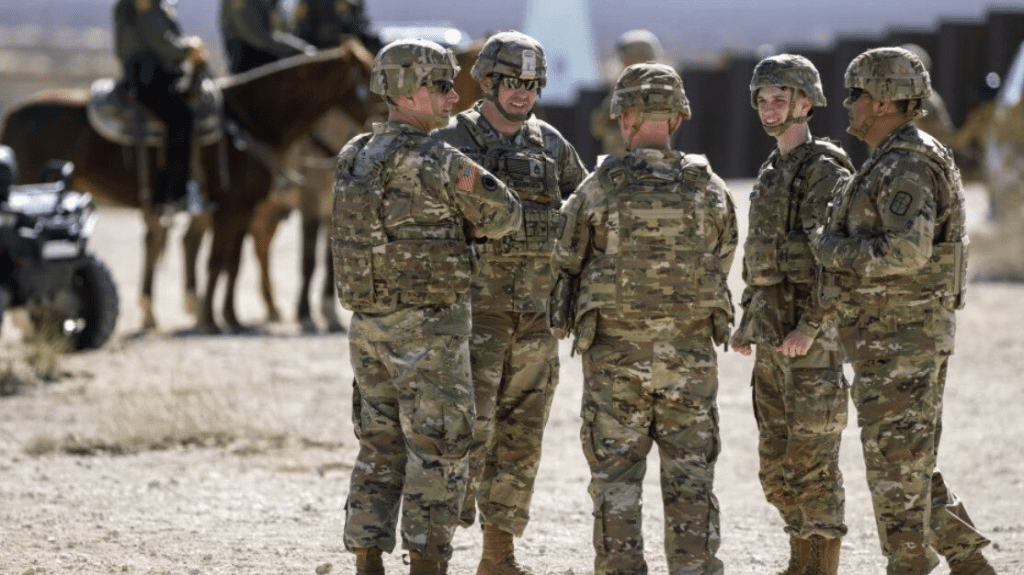
The U.S. southern border is under unprecedented lockdown as the military expands its enforcement zones to cover nearly one-third of the U.S.-Mexico boundary, signaling a dramatic escalation in the Trump administration’s immigration crackdown. As of July 2025, over 8,500 troops are deployed, empowered to arrest anyone crossing illegally, with officials declaring the border effectively closed. This bold move, part of a broader strategy to curb illegal immigration, has slashed border crossings to historic lows but sparked fierce debate over its implications.
The Department of Defense, in coordination with the Department of Homeland Security, has designated vast swaths of federal land as National Defense Areas, stretching across Texas, New Mexico, and Arizona. These zones, covering roughly 600 miles of the 1,933-mile border, allow soldiers to detain migrants for trespassing, a charge carrying up to 18 months in prison alongside illegal entry penalties. Since April, over 1,400 migrants have faced such charges, with most transferred to Customs and Border Protection for deportation. Border Patrol arrests plummeted to 8,725 in May 2025, a 93% drop from the 117,905 recorded in May 2024, reflecting the impact of these measures.
The administration’s strategy, rooted in Executive Order 14167 and a national emergency declaration, prioritizes “complete operational control” of the border. Military vehicles patrol areas like El Paso and the Rio Grande Valley, where new barriers and surveillance equipment are being installed. The policy shift has ended “catch-and-release,” with zero illegal immigrants released into the U.S. last month, a stark contrast to the 62,000 released in May 2024. Acting CBP Commissioner Pete Flores credits the administration’s tough stance, including cooperation with Mexico, which seized 1,500 kilograms of fentanyl in a historic bust.
Critics, however, decry the militarization as an overreach. Federal public defenders have challenged the zones’ legality, arguing they bypass the Posse Comitatus Act, which limits military involvement in domestic law enforcement. The designation of public lands as military zones without congressional approval has been called “unprecedented” and risks escalating tensions with local communities. In Columbus, New Mexico, where crossings are rare, residents report minimal disruption but question the necessity of such heavy-handed tactics.
The human toll is evident in courtrooms, where migrants, including a Guatemalan woman charged with trespassing, face jail time before likely deportation. While supporters argue the measures deter cartels and traffickers, opponents warn of humanitarian costs, noting that asylum seekers face near-insurmountable barriers. The CBP One app, once used for asylum screenings, is offline, leaving thousands stranded in Mexico. As legal challenges mount, the administration’s aggressive posture shows no signs of relenting, with plans to expand zones near Yuma, Arizona. For now, the border is a fortress, but the debate over its closure—effective or excessive—continues to divide the nation.