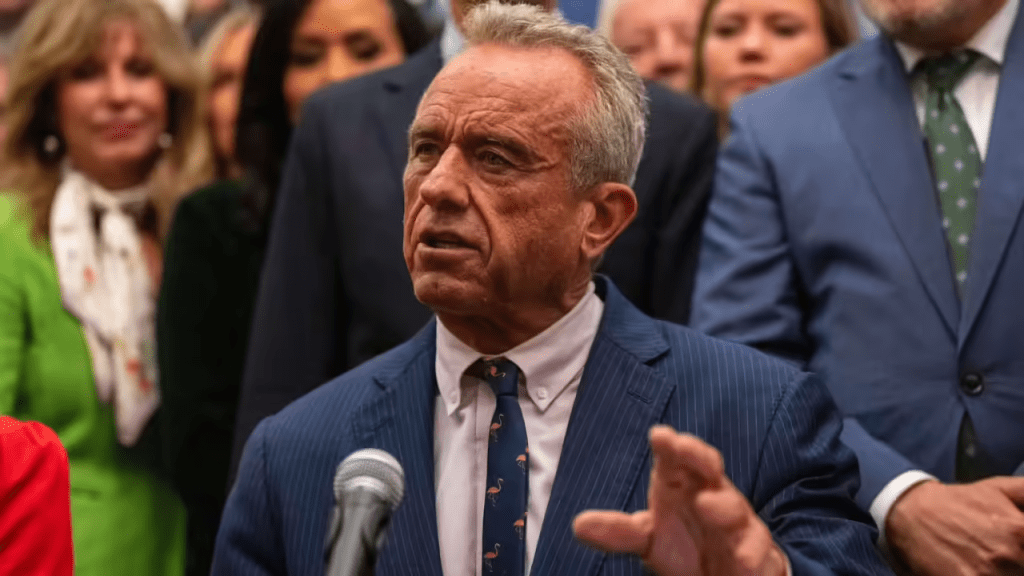
Robert F. Kennedy Jr.’s recent statement labeling the U.S. as the “sickest country in the world” and demanding firings at the CDC has ignited fierce debate. The environmental lawyer and activist argues that the nation’s health system is failing, pointing to rising chronic illnesses and obesity rates as evidence. His provocative claim targets the CDC, accusing it of mismanagement and prioritizing bureaucracy over public welfare.
Kennedy’s remarks come amid growing public skepticism about health institutions. He contends that the CDC’s leadership has failed to address root causes of America’s health decline, including poor nutrition, environmental toxins, and overreliance on pharmaceuticals. His call for drastic action—firing key figures—has drawn both applause and criticism. Supporters see it as a necessary shake-up, while detractors argue it risks destabilizing an already strained public health system.
Data paints a grim picture: over 40% of Americans are obese, and chronic diseases like diabetes and heart disease are surging. Critics of Kennedy question whether firing CDC staff would solve these issues or merely create chaos. Others, however, share his frustration, citing the agency’s handling of past crises as evidence of systemic flaws.
Kennedy’s rhetoric taps into a broader distrust in institutions, amplified by recent health policy controversies. While his solution is polarizing, it forces a conversation about reforming how America tackles its health crisis. Whether his ideas gain traction remains to be seen, but they’ve undeniably struck a nerve.