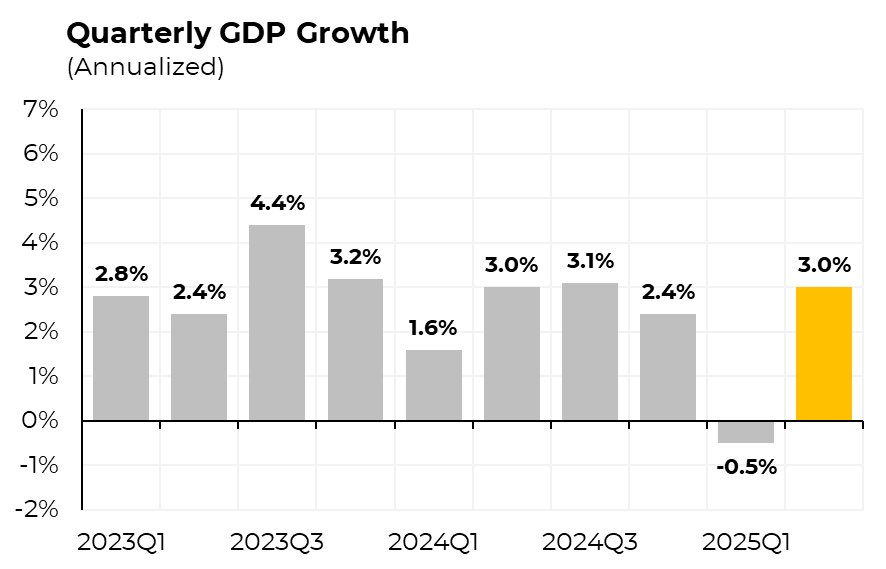
The U.S. economy roared back in the second quarter of 2025, posting a 3% annualized GDP growth rate, according to the Bureau of Economic Analysis’s advance estimate on July 30, 2025. This robust rebound, following a 0.5% contraction in Q1, exceeded economists’ forecasts of 2.4%, stunning analysts and prompting President Donald Trump to declare his economic policies a resounding success. The surge was driven by a 30.3% drop in imports, reversing a 37.9% Q1 spike as businesses adjusted to Trump’s tariffs, alongside a 1.4% rise in consumer spending, up from 0.5% in Q1.
Trump hailed the figures, posting, “2Q GDP JUST OUT: 3%, WAY BETTER THAN EXPECTED!” while pressing the Federal Reserve to cut interest rates. However, economists like EY’s Gregory Daco caution that the growth reflects an “economic mirage” from trade fluctuations, masking underlying weaknesses. Core GDP, measuring consumer and business spending, grew at a modest 1.2%, the slowest since Q4 2022, signaling caution amid tariff-driven uncertainty. Inflation eased, with the PCE price index at 2.1%, near the Fed’s 2% target, though core PCE rose 2.5%.
Despite the strong headline, private investment fell 15.6%, the largest drop since the COVID-19 crisis, and exports declined 1.8%. Economists warn that Trump’s ongoing trade policies, including 15% baseline tariffs, could reignite inflation and slow growth in Q3 and Q4, with projections as low as 1%. The Federal Reserve, meeting Wednesday, is expected to hold rates steady at 4.25%-4.5%, monitoring tariff impacts.