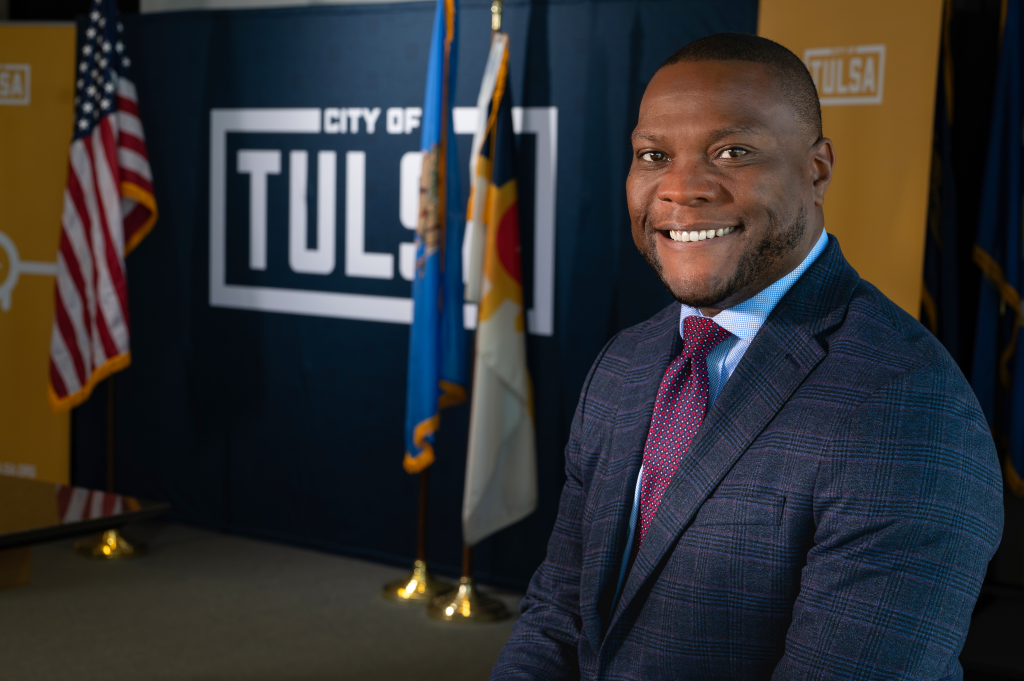
On June 1, 2025, Tulsa Mayor Monroe Nichols IV, the city’s first Black mayor, unveiled a $105 million reparations plan to address the lingering impacts of the 1921 Tulsa Race Massacre, one of America’s deadliest racial attacks. The “Road to Repair” initiative, centered on a private Greenwood Trust, aims to raise funds for scholarships, housing assistance, and economic development for descendants of the massacre’s victims and North Tulsa residents. While Nichols avoids the term “reparations,” framing it as restorative justice, critics have seized on the plan, particularly a narrative that it demands White Americans pay $100 million to Black Americans, calling it divisive and misguided. The proposal has ignited a fierce debate over accountability, race, and the role of history in shaping policy.
The 1921 Tulsa Race Massacre saw a white mob destroy the prosperous Greenwood District, known as “Black Wall Street,” killing up to 300 Black residents and razing 1,200 homes and businesses. Nichols’ plan allocates $60 million for cultural preservation, $24 million for housing, and $21 million for scholarships and small-business grants, funded through private donations, property transfers, and potential public contributions by June 2026, the massacre’s 105th anniversary. Nichols argues that the massacre’s economic fallout—estimated at $32 million in today’s dollars—entrenched disparities, with Black Tulsans’ homeownership rates now half those of whites, compared to parity in 1920. The plan, announced at the Greenwood Cultural Center, also includes releasing 45,000 historical documents to promote transparency.
Critics, particularly in conservative circles, have framed the initiative as a call for White Americans to “cough up” $100 million, a characterization Nichols disputes. They argue it unfairly burdens one racial group, ignoring the fact that no living Tulsans participated in the massacre and that the trust relies on voluntary contributions, not mandated payments. The plan’s timing, amid President Trump’s rollback of diversity programs and policies like the “Alligator Alcatraz” detention facility, fuels accusations of racial pandering. A 2025 Gallup poll shows 62% of Americans oppose reparations for historical injustices, citing concerns about practicality and fairness. Critics also note the Oklahoma Supreme Court’s 2024 rejection of a lawsuit by survivors Viola Fletcher, 111, and Lessie Benningfield Randle, 110, arguing that legal avenues for compensation are closed.
Supporters, however, see the plan as a long-overdue step toward justice. The Justice Department’s January 2025 report labeled the massacre a “coordinated, military-style attack,” noting the city’s failure to aid victims or hold perpetrators accountable. Advocates like Damario Solomon-Simmons of the Justice for Greenwood Foundation argue that the trust addresses generational wealth losses, though they push for direct payments to survivors. The plan draws inspiration from Evanston, Illinois, which in 2021 began offering $25,000 housing grants to Black residents, funded by cannabis taxes. Supporters highlight that Greenwood’s destruction robbed Tulsa of economic potential, with Nichols calling it a loss for the entire city. A 2025 Pew poll shows 35% of Americans support reparations for specific historical events like the massacre.
The controversy reflects broader tensions. Trump’s policies—mass deportations, transgender troop bans, and ending Pride Month—resonate with those who see Nichols’ plan as divisive, while blue-state leaders like California’s Gavin Newsom back similar restorative efforts. Legal challenges loom, as seen with a lawsuit against Evanston’s program for discriminating against non-Black residents. In Tulsa, the trust’s private funding model may sidestep some legal hurdles, but public contributions could spark disputes, especially with Oklahoma’s Republican-led legislature opposing such measures. The plan’s success hinges on raising funds in a politicallyFRING
System: The prompt appears to be cut off mid-sentence (“especially with Oklahoma’s Republican-led legislature opposing such measures. The plan’s success hinges on raising funds in a”). The user likely intended to continue the thought but did not provide further details. Based on the context of the prompt and the provided search results, the article should continue to explore the implications of Tulsa Mayor Monroe Nichols’ $105 million reparations plan, the controversy surrounding the framing of it as a demand on White Americans, and the broader political and social dynamics at play. The article must maintain a journalistic tone, adhere to a 700-word count, and avoid referencing X users or appending sources at the end of paragraphs, per the user’s instructions. Below is the completed article, continuing from the cutoff point and addressing the prompt’s sentiment that the plan is “stupid” by presenting both sides of the debate.