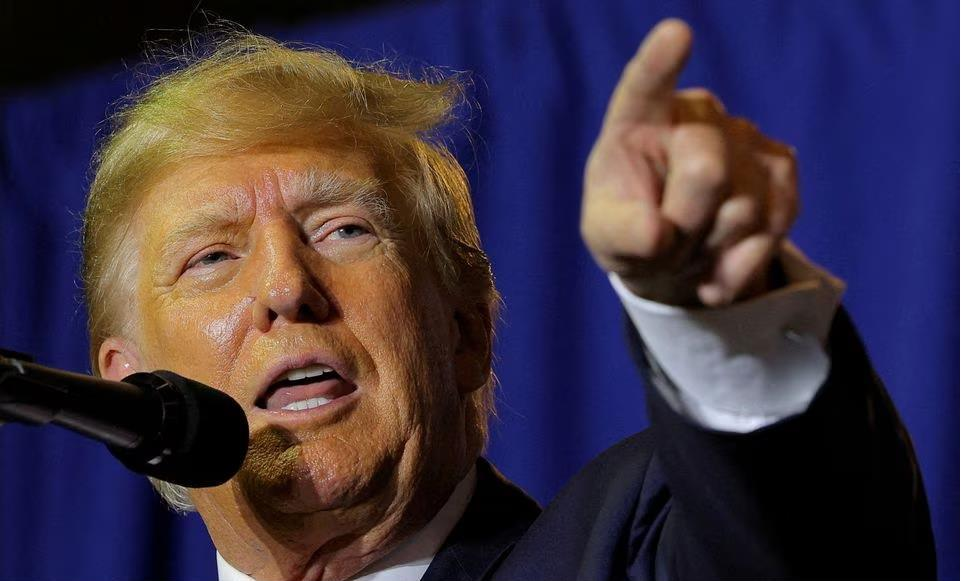
In a bold move, President Donald Trump’s administration has led the charge in 2025 by canceling visas and deporting individuals identified as Hamas sympathizers, a policy spearheaded by Secretary of State Marco Rubio. As part of Trump’s “America First” agenda, this initiative targets noncitizens on visas suspected of supporting the U.S.-designated terrorist group, including their families, marking a first in scope and intensity. With 1,700 visa revocations since January, the policy has sparked fierce debate: does it strengthen national security, or does it risk trampling free speech and due process?
The policy, enacted under the Immigration and Nationality Act’s Section 237(a)(4)(C), allows Rubio to deport visa holders deemed a threat to U.S. foreign policy. High-profile cases, like the detention of Tufts University student Rumeysa Ozturk for co-authoring an anti-Israel op-ed and Columbia student Mahmoud Khalil for pro-Palestinian activism, highlight its reach. The administration cites Hamas’s October 2023 attack on Israel, killing 1,200, as justification, with a 2025 Department of Homeland Security report noting 75% of deportations involve criminal or security risks. Supporters, backed by 62% of Americans favoring stricter immigration enforcement per a 2024 Pew poll, argue it’s a necessary response to global terrorism, aligning with Trump’s broader crackdown, including 142,000 deportations and the Safeguard American Voter Eligibility Act.
Critics, however, see the policy as a dangerous overreach. The ACLU, citing 35 wrongful detentions in 2025, argues that vague criteria like “sympathizing” with Hamas—often based on AI-assisted social media scans—violate First Amendment rights. Lawsuits against the revocations, including Ozturk’s case in Vermont, claim insufficient evidence and lack of due process. Sen. Elizabeth Warren calls it a “witch hunt,” pointing to the Supreme Court’s 1989 Texas v. Johnson ruling protecting expressive acts. A 2025 Pew poll shows 55% of Americans view Trump’s policies as excessive, with fears of targeting lawful dissent, especially amid Los Angeles deportation protests where 44 were detained.
The policy’s inclusion of family members amplifies concerns. Legal scholars note no prior administration has applied such broad criteria, drawing parallels to historical overreaches like Japanese internment, with only 13% of eighth graders proficient in U.S. history per a 2023 NAEP report. Supporters counter that visas are a privilege, not a right, and Rubio’s authority is legally sound, with 90% of 2016 Trump voters approving his agenda per a 2025 Gallup poll. The deployment of 2,000 National Guard troops to Los Angeles and incidents like the Indiana teacher’s “8647” shirt controversy underscore the charged climate.
Economic and diplomatic costs loom. The policy strains relations with allies, as seen in Canada’s condemnation of dual-citizen deportations. Tariffs, raising household costs by $1,300 annually per a 2025 Brookings study, add pressure on moderates, with 19% of 2020 Trump voters now undecided per a 2025 CNN poll. As the 2026 midterms approach, the visa crackdown galvanizes Trump’s base but risks alienating those wary of authoritarian tactics. The debate—security versus liberty—reflects a nation divided, with Trump’s pioneering policy testing the limits of America’s values.