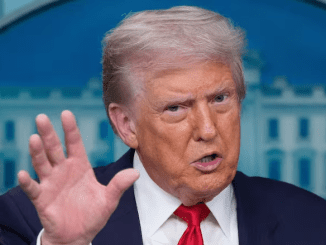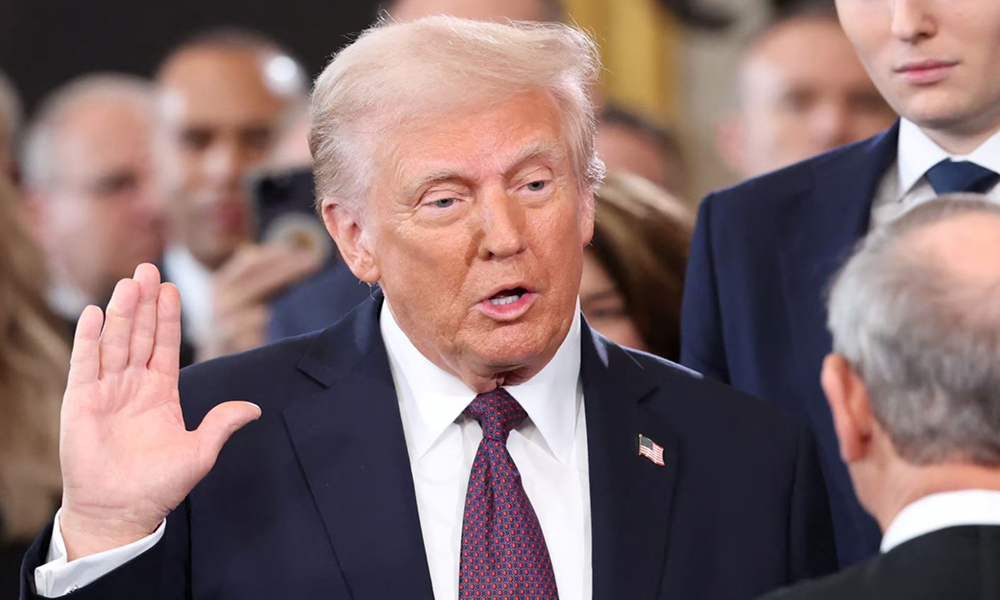
In a fiery June 7, 2025, speech, President Donald Trump declared that Biden administration officials who “allowed our border to be opened” should face treason charges, a provocative claim that has electrified his base and deepened America’s immigration divide. The statement, delivered at a Mar-a-Lago rally, targets policies from 2021-2024 that critics blame for record border crossings, with supporters cheering the call for accountability. As Trump’s second term intensifies enforcement, the treason rhetoric raises questions about legal feasibility, political strategy, and the limits of executive rhetoric.
Trump’s accusation centers on the Biden era’s border policies, which saw 2.5 million apprehensions of migrants at the southern border in 2023 alone, per Customs and Border Protection data. Policies like ending the “Remain in Mexico” program and halting border wall construction are cited as evidence of deliberate neglect. Trump specifically pointed to former Homeland Security Secretary Alejandro Mayorkas, accusing him of enabling an “invasion.” The administration’s 2025 actions—142,000 deportations, FBI arrests of over 10,000 undocumented migrants, and the Laken Riley Act mandating detention for migrant offenders—reflect a sharp reversal. A 2025 Pew Research poll shows 62% of Americans favor stricter enforcement, bolstering Trump’s stance.
Legal experts, however, dismiss the treason charge as untenable. Treason, defined under Article III, Section 3 of the Constitution, requires aiding enemies during wartime, a threshold unmet by immigration policy disputes. A 2023 Cato Institute analysis found no precedent for charging officials over border management, and the Supreme Court’s 1952 Cramer v. United States ruling set a high bar for treason convictions. Critics, including Sen. Elizabeth Warren, call Trump’s rhetoric a dangerous escalation, risking misuse of legal processes. The ACLU notes 35 wrongful detentions of U.S. citizens in 2025 immigration sweeps, warning of overreach fueled by such inflammatory language.
Supporters, undeterred, see the treason charge as a symbolic stand against perceived betrayal. The 2024 election, where Trump reclaimed swing states, reflected voter frustration with Biden’s border policies, with 68% of Americans in a 2023 YouGov poll distrusting federal handling of immigration. Measures like the Safeguard American Voter Eligibility Act and visa revocations led by Secretary of State Marco Rubio resonate with those demanding accountability. The “open border” critique also ties to incidents like Milwaukee Judge Hannah Dugan’s alleged aid to an undocumented migrant, amplifying calls for punishing enablers.
The rhetoric taps into deeper cultural divides. Trump’s base, unwavering since 2016, views his policies as restoring sovereignty, with 90% of his 2016 voters approving his performance, per a 2025 Gallup poll. Critics, however, draw historical parallels to authoritarian tactics, noting that weak history education—only 13% of eighth graders proficient in U.S. history, per a 2023 NAEP report—leaves voters vulnerable to exaggerated claims. The Indiana teacher’s “8647” shirt controversy, seen as a coded threat against Trump, underscores the charged atmosphere.
As the 2026 midterms approach, Trump’s treason charge is a calculated move to rally his base while pressuring opponents. Though legally dubious, it amplifies the narrative of betrayal, contrasting with Democratic advocacy for migrants, like the 2025 El Salvador trip. With tariffs raising household costs by $1,300 annually, per a 2025 Brookings study, and legal challenges mounting, the rhetoric risks alienating moderates. The debate over who bears responsibility for the border crisis will shape America’s political future, testing the line between accountability and division.