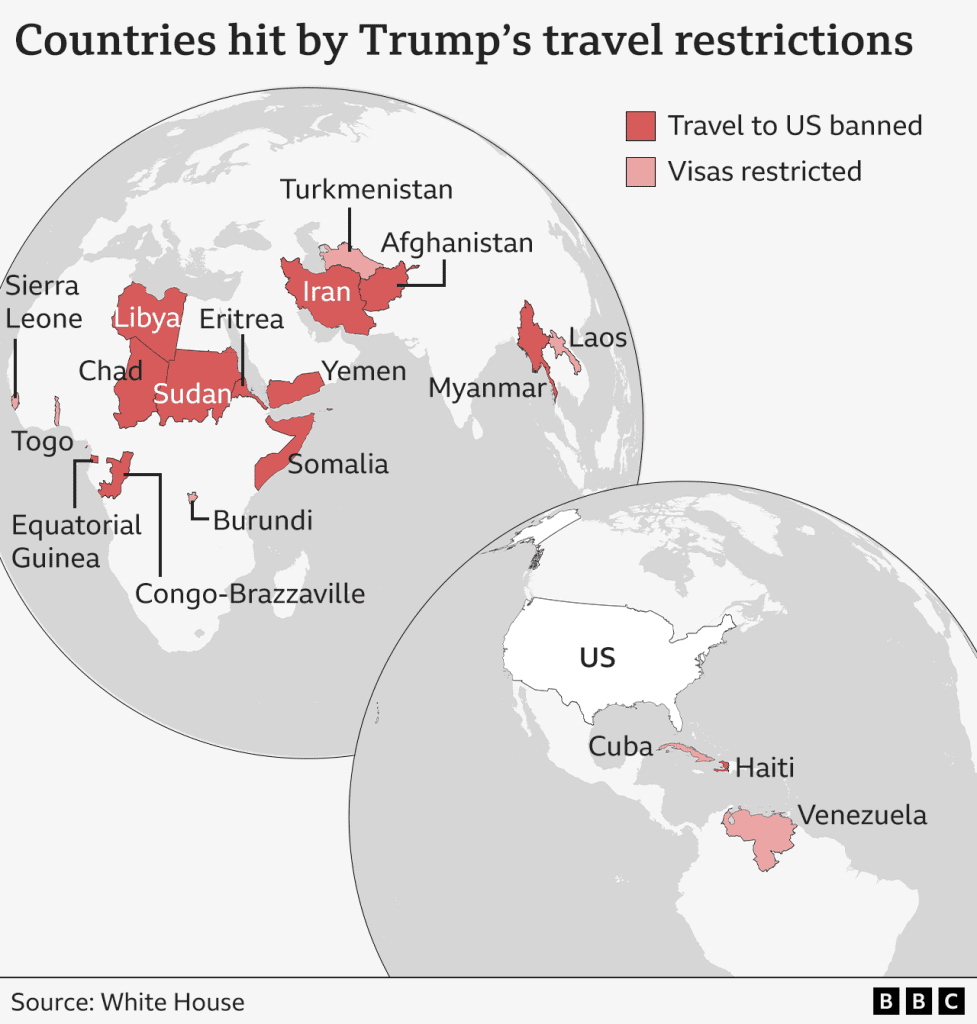
Washington, D.C. – President Donald Trump’s renewed travel ban on citizens from select “third-world” countries has ignited a fierce national debate, with supporters hailing it as a vital shield for American safety and critics decrying it as discriminatory overreach. Announced in November 2025, the executive order expands restrictions on travel from 19 nations deemed high-risk for terrorism and instability, including Somalia, Yemen, and Venezuela, barring visas and entries for most applicants. Trump framed the policy as essential to “protect U.S. citizens from threats pouring over our borders,” citing recent incidents like the D.C. National Guard shooting by an Afghan national as justification.
The ban, effective January 1, 2026, revives elements of Trump’s 2017 “Muslim ban” but broadens to encompass economic migrants and asylum seekers, with Rubio’s State Department revoking 85,000 visas since January. Proponents argue it deters criminal elements, pointing to DHS data showing 1,200 migrant arrests for violent crimes this year. “We support this 100%—it’s common sense to prioritize Americans,” said a Texas border resident, echoing polls where 58% approve of the measures amid fentanyl crises and strained resources.
Opponents, including the ACLU, warn of family separations and economic harm, noting many banned countries supply vital labor. Lawsuits are mounting, challenging the policy’s constitutionality under equal protection clauses. Democratic leaders like Rep. Pramila Jayapal called it “xenophobic fearmongering,” arguing it alienates allies and ignores root causes like poverty.
As deportations top 2.5 million, Trump’s ban tests his mandate: A necessary safeguard in a dangerous world, or a divisive wall against diversity? With midterms looming, the policy could solidify his base or fracture global ties. For now, it’s a bold stroke in America’s ongoing immigration saga.