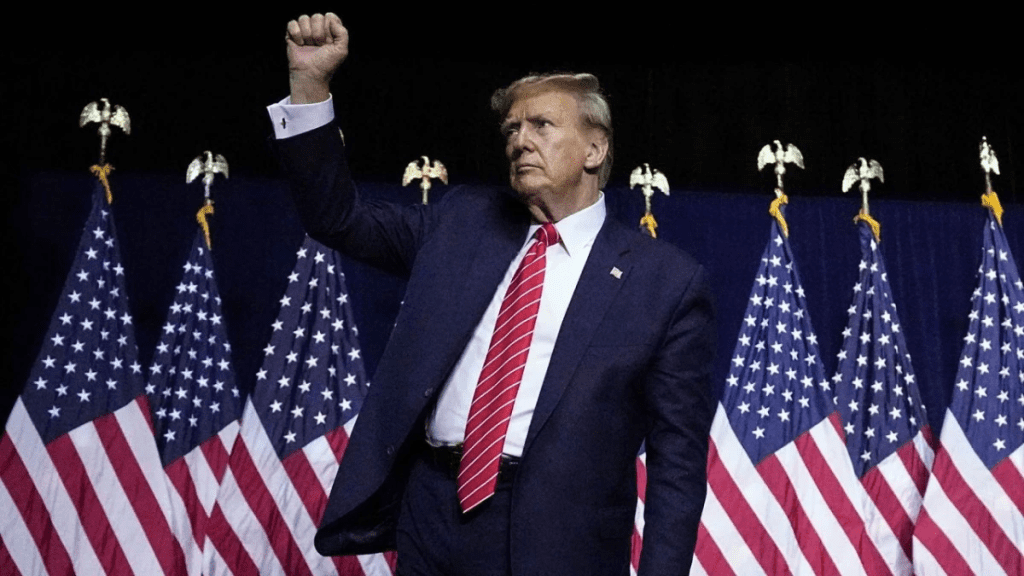
President Donald Trump has reignited a contentious debate by endorsing a one-year prison sentence for those who burn the American flag, a proposal that’s drawing both fierce support and sharp criticism. Framing the act as a direct affront to national pride, Trump’s stance aligns with his broader push to protect patriotic symbols, but it raises thorny questions about free speech and the limits of protest. As the nation grapples with this divisive idea, the question is: does punishing flag burning uphold American values or undermine them?
Trump’s call for jail time comes amid heightened tensions over public demonstrations, particularly in cities like Los Angeles, where protests against ICE operations have turned violent. Flag burning, a provocative act often tied to anti-government sentiment, has resurfaced as a flashpoint. The president argues that desecrating the flag—a symbol of sacrifice for millions—warrants serious consequences. His proposal, floated during a recent rally, would impose a mandatory one-year sentence, reviving a push he championed in his first term to criminalize the act.
Supporters see this as a bold defense of national unity. For many, the flag represents the sacrifices of veterans and first responders, and its destruction feels like a personal attack. Polls show 52% of Americans favor some form of punishment for flag burning, with Trump’s base particularly vocal. In battleground states like Texas, where patriotism runs deep, voters argue that a one-year sentence sends a clear message: disrespecting the flag won’t be tolerated. They point to recent incidents, like a burned flag left outside a veteran’s memorial in Ohio, as justification for tougher laws.
Opponents, however, view the proposal as a dangerous assault on free speech. The Supreme Court ruled in Texas v. Johnson (1989) that flag burning is protected under the First Amendment as expressive conduct, a decision reaffirmed in 1990. Legal scholars warn that Trump’s plan would face immediate constitutional challenges, likely failing in court. Civil liberties groups argue that punishing flag burning stifles dissent, especially for marginalized groups who use the act to protest systemic injustices. In San Francisco, activists burned flags during recent anti-ICE rallies, claiming it symbolizes resistance to policies they view as oppressive.
The practical hurdles are significant. Enacting such a law would require Congress to pass legislation that could withstand judicial scrutiny, a tall order given the Supreme Court’s precedent. Previous attempts, like the Flag Protection Act of 1989, were struck down, and even conservative justices have upheld free speech protections. Trump’s proposal could also inflame protests, with activists already vowing to burn flags in defiance. In Los Angeles, where riots caused $5.2 million in damages last month, such a law risks escalating tensions further.
Public sentiment is split. While Trump’s supporters see flag burning as akin to treason, others argue that protecting free speech, even when offensive, is what makes America strong. The debate echoes broader cultural divides, with 48% of Americans opposing any punishment, per recent surveys. For some, a one-year sentence seems excessive compared to penalties for vandalism or public disorder, which often carry lighter consequences.
Trump’s push taps into his knack for polarizing issues, rallying his base while alienating critics. Whether it gains traction depends on Congress and the courts, but the proposal is already reshaping the conversation around patriotism and protest. Is jailing flag burners a defense of American values or a step toward authoritarianism? The answer lies in how the nation balances freedom with reverence for its symbols.