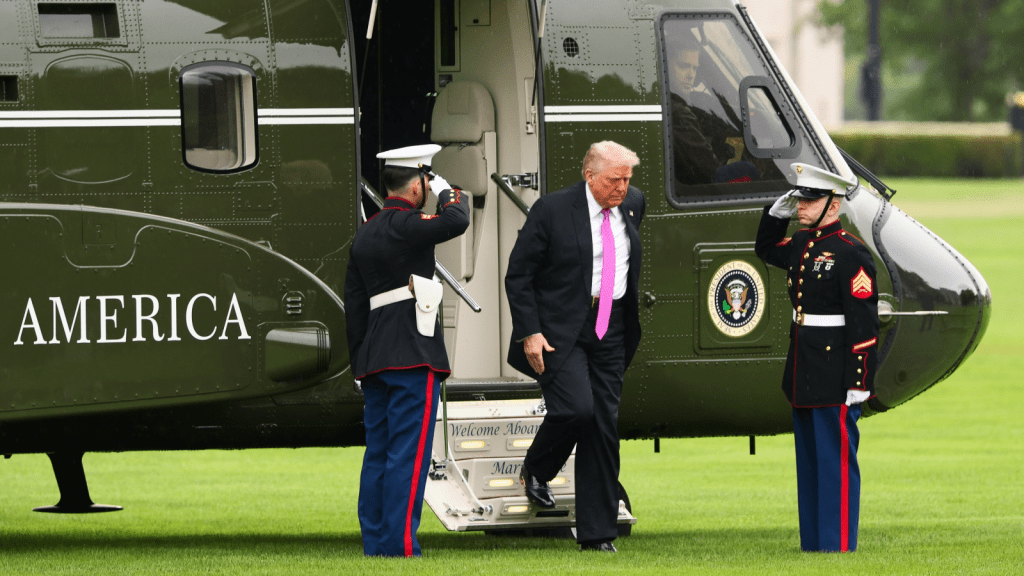
In a bold move that has ignited fierce discussion across the political spectrum, former President Donald Trump recently called for banning Pride Month in June and replacing it with a federally recognized Veterans Month. The proposal, aired during a campaign rally in Ohio, has drawn both fervent support and sharp criticism, highlighting the deep cultural and political divides in the United States as the 2025 political season heats up.
Trump’s remarks came during a speech to a packed audience of supporters, where he argued that June, traditionally recognized as Pride Month to celebrate LGBTQ+ rights and visibility, should instead honor the nation’s military veterans. “Our veterans deserve a month to celebrate their sacrifice, their courage, and their service,” Trump declared. “We need to focus on those who fought for our freedoms, not divisive cultural agendas.” He proposed that Veterans Month would include nationwide events, parades, and educational campaigns to spotlight veterans’ contributions and address issues like veteran homelessness and mental health.
The proposal aligns with Trump’s broader political strategy of appealing to his conservative base, which has long expressed skepticism about progressive cultural movements. Supporters argue that prioritizing veterans would unify the country around a shared value of patriotism. “Veterans have given everything for this nation, and they’re often forgotten,” said Mark Reynolds, a retired Marine and Trump supporter. “Pride Month feels like a celebration of a specific group, while veterans represent everyone.” Some conservative lawmakers have already signaled support, with Rep. Marjorie Taylor Greene (R-GA) tweeting, “It’s time to put America’s heroes first. Veterans Month is a no-brainer.”
However, the proposal has met fierce opposition from LGBTQ+ advocates and progressive leaders, who see it as an attack on hard-won cultural recognition. Sen. Elizabeth Warren (D-MA) called the idea “a cynical attempt to erase the progress of marginalized communities.” The Human Rights Campaign, a leading LGBTQ+ advocacy group, issued a statement condemning the proposal as “divisive and discriminatory,” arguing that Pride Month commemorates the 1969 Stonewall Riots and decades of activism for equality. “This isn’t about replacing one celebration with another—it’s about erasing a community’s visibility,” said HRC president Kelley Robinson.
Critics also point out that veterans are already honored in November during Veterans Day, a federal holiday, and question the need to supplant Pride Month rather than creating a new recognition period. “Veterans deserve every ounce of respect, but this proposal pits two groups against each other for no reason,” said political analyst Laura Chen. “It’s a manufactured culture war.” Meanwhile, some moderates have suggested a compromise, such as designating a different month for veterans or expanding existing veteran-focused initiatives without eliminating Pride Month.
The feasibility of Trump’s proposal remains unclear. While the president can issue proclamations recognizing specific months, establishing a new national observance typically requires congressional approval. Legal experts note that banning Pride Month outright could face constitutional challenges, particularly if it’s perceived as targeting a protected group. “The First Amendment protects free expression, and Pride Month is deeply tied to free speech and assembly,” said constitutional scholar Emily Hart. “Any attempt to suppress it would likely end up in court.”
Public reaction on social media platforms like X reflects the polarized response. Posts with hashtags like #VeteransMonth and #SavePrideMonth have trended, with users sharing personal stories about both veterans’ sacrifices and the importance of LGBTQ+ visibility. Polls circulating online suggest a split opinion, with roughly 45% supporting Veterans Month, 40% opposing the change, and 15% undecided, though these figures vary by source.
As the debate unfolds, Trump’s proposal underscores the ongoing tension between traditionalist and progressive visions for America’s cultural calendar. Whether it gains traction or fizzles out, the controversy ensures that June 2025 will be a flashpoint for national conversations about identity, patriotism, and who gets to define the nation’s values.