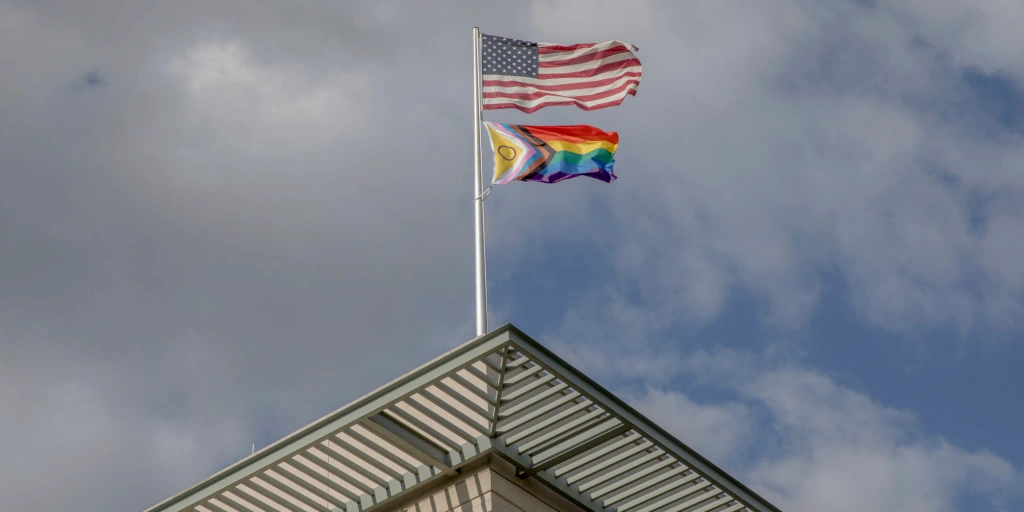
On January 20, 2025, President Donald Trump implemented the “One Flag Policy,” mandating that only the U.S. flag, along with the Prisoner of War/Missing in Action and Hostage and Wrongful Detainee flags, may be flown at U.S. government facilities, including embassies, domestically and abroad. The directive, issued by Secretary of State Marco Rubio, effectively bans LGBTQ+ Pride, Black Lives Matter, and other non-approved flags, reversing Biden-era practices where such flags were displayed to signal inclusivity. The policy cites the U.S. flag as a unifying symbol of “justice, liberty, and democracy,” with violations potentially leading to termination or reassignment for State Department employees.
The move has sparked polarized reactions. Supporters, including conservative lawmakers, praise it as a return to neutrality and patriotism, arguing that government buildings should not promote specific social movements. Critics, including Lambda Legal’s CEO Kevin Jennings, call it “petty and mean-spirited,” arguing that Pride flags signal inclusion and their removal diminishes LGBTQ+ visibility. The ACLU warns that the policy, part of broader anti-DEI efforts, may face legal challenges for targeting protected expression. During Biden’s term, Pride flags flew at the White House and embassies, notably in Brazil and Moscow, to mark Pride Month and Black History Month.
As states like Utah, Idaho, and Montana enact similar flag bans, the debate over symbols in public spaces intensifies, reflecting deeper cultural divides as Trump’s second term begins.