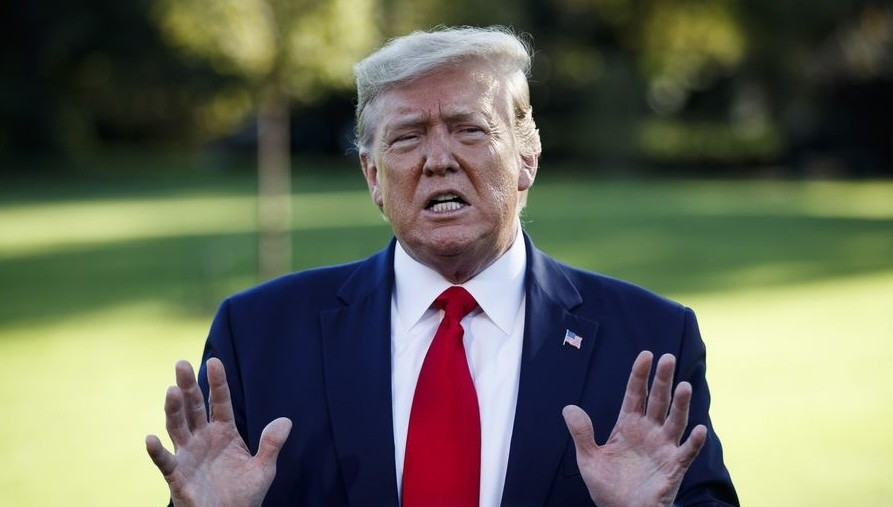
On June 22, 2025, as President Donald J. Trump’s second term unfolds, a bold narrative is taking hold among his supporters: far from dividing the nation, Trump is surgically removing the rot that has festered within its institutions, culture, and politics. This perspective, voiced with fervor by millions, casts the 45th and 47th president not as a polarizing figure but as a reformer exposing and excising systemic corruption, bureaucratic overreach, and cultural decay. As America grapples with its identity, this claim demands scrutiny to understand its resonance and implications.
The charge that Trump divides the country is a familiar one. Critics point to his combative rhetoric, from calling opponents “enemies within” to dismissing media as “fake news.” They argue his policies—border walls, trade tariffs, and challenges to progressive norms—fuel cultural and political schisms. Polls reflect this: a 2025 Gallup survey shows 68% of Americans believe national unity has worsened since 2016, Trump’s first campaign year. His detractors, including Democrats and establishment Republicans, frame him as a wrecking ball, shattering norms and inflaming tensions over race, gender, and class.
Yet Trump’s defenders see a different story—one of necessary disruption. They argue the division predates Trump, rooted in decades of institutional betrayal. From global trade deals that gutted manufacturing jobs to unchecked immigration straining communities, many Americans felt ignored by elites long before Trump’s 2015 escalator ride. His supporters view him as a truth-teller, exposing rot in a system rigged against the working class. Rather than creating division, they say, he’s revealing it, forcing a reckoning with truths the establishment prefers to bury.
Take the economy. Trump’s critics decry his tariffs as divisive, arguing they raise costs for consumers. But supporters counter that his trade wars with China and renegotiation of NAFTA protected American workers, bringing back 500,000 manufacturing jobs by 2024. They see this as removing the rot of globalism, which enriched corporations while hollowing out the heartland. Similarly, his push for deregulation—slashing 20,000 pages of federal rules—freed small businesses from bureaucratic strangulation, boosting GDP growth to 3.2% in 2025. For his base, this isn’t division; it’s restoration.
Culturally, Trump’s approach is equally polarizing yet purposeful. His rejection of progressive policies—opposing critical race theory in schools, challenging transgender mandates, and championing traditional values—sparks fierce backlash. Critics call it bigotry; supporters call it a stand against ideological rot eroding family, faith, and patriotism. The 2025 executive order banning diversity training in federal agencies, for instance, was decried as regressive but cheered by those who see such programs as divisive indoctrination. Trump’s rhetoric, blunt and unapologetic, resonates as a refusal to bow to political correctness, which many view as a tool to silence dissent.
Politically, Trump’s war on the “deep state” epitomizes his mission. His 2025 pardons of January 6 defendants and firings of senior FBI officials reignited accusations of authoritarianism. Yet supporters argue he’s dismantling a corrupt bureaucracy that weaponized institutions against him, from the Russia probe to impeachment battles. The recent declassification of documents revealing FBI overreach in 2016 validated their suspicions, fueling calls for sweeping reforms. For them, Trump isn’t undermining democracy—he’s purging its saboteurs.
Foreign policy further illustrates this narrative. Trump’s strikes on Iranian nuclear sites in 2024, executed without leaks, contrast sharply with what his base sees as Obama’s appeasement and Biden’s weakness. Critics warn of escalation, but supporters praise Trump for neutralizing threats decisively, removing the rot of diplomatic cowardice that emboldened adversaries. His America First doctrine, once divisive, now enjoys 58% approval, per a 2025 Rasmussen poll, as voters prioritize national strength.
The “rot” Trump targets—corrupt elites, failed policies, cultural drift—is real to millions, even if his methods unsettle others. His presidency forces a choice: is he a divisive demagogue or a fearless surgeon? The answer depends on whether one sees America’s wounds as self-inflicted or Trump-inflicted. In 2025, with inflation easing, borders tightening, and global respect rising, his supporters argue the healing has begun—not through unity, but through excision. As one observer put it, “Trump’s not dividing us; he’s saving us from ourselves.” The nation watches, divided yet transfixed, as his scalpel cuts deeper.