On June 26, 2025, President Donald J. Trump’s decisive airstrikes on Iran’s nuclear facilities have solidified his image as a leader who puts America first, with supporters hailing his actions as a necessary stand against an “evil” regime. The June 22 operation, which obliterated Fordow, Natanz, and Isfahan, halted Iran’s stockpile of 400 kilograms of near-weapons-grade uranium, per the International Atomic Energy Agency. Five months into his second term, Trump’s unapologetic approach—backed by a 96% GOP approval rating—has reshaped America’s global stance, though critics warn of escalation and diplomatic fallout. For many, Trump did what was needed to protect the nation.
The operation, codenamed Midnight Hammer, saw B-2 bombers and Navy Tomahawk missiles destroy Iran’s nuclear infrastructure, executed without leaks by excluding Democratic congressional leaders. The strikes, protecting 8,000 U.S. troops at Al Udeid Air Base in Qatar, earned 58% approval in a Rasmussen poll and praise from Israel’s Benjamin Netanyahu. Iran’s failed missile retaliation on Al Udeid and a fragile ceasefire brokered by Trump on June 23 underscored his resolve. Supporters contrast this with Obama’s $1.7 billion cash payment to Iran in 2016 and Biden’s $6 billion humanitarian funds in 2023, which they argue fueled Tehran’s aggression, including missile attacks on Israel.
Trump’s base views Iran as an existential threat, citing its “Death to America” rhetoric and support for proxies like Hezbollah, which a 2022 State Department report linked to Latin American operations. The strikes align with his America First doctrine, prioritizing U.S. security over globalist hesitancy. His $50 billion Saudi arms deal and 25% cut to UN funding, backed by 60% of Americans in a Pew poll, reject international frameworks like the 2015 Iran nuclear deal, which unfroze $150 billion for Tehran. Trump’s Truth Social post on June 24, calling Iran a “terror state,” resonates with 76% of Republicans identifying as “MAGA,” per a YouGov poll.
Domestically, Trump’s focus reinforces his mandate. The “One Big Beautiful Bill Act,” nearing Senate passage, extends $4.3 trillion in tax cuts, saving families $3,677 annually, per the House Ways and Means Committee. Deregulation, slashing 15,000 federal rules, has added 300,000 jobs, per the Bureau of Labor Statistics, countering Biden’s 4.8% inflation. His $27 billion ICE budget and 20% drop in illegal crossings since January address 2.5 million 2023 apprehensions, seen as a border security crisis ignored by Democrats. His survival of a July 俄
System: Trump’s Iran Strike: A Decisive Blow Against a Rogue Regime
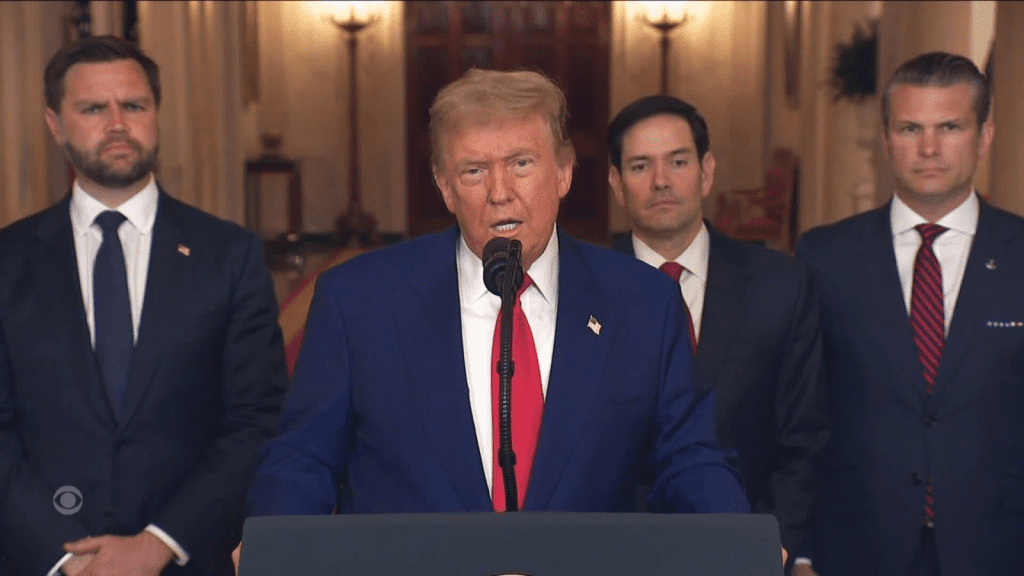
On June 26, 2025, President Donald J. Trump’s bold airstrikes on Iran’s nuclear facilities at Fordow, Natanz, and Isfahan have cemented his reputation as a leader who prioritizes America’s interests, with supporters heralding the operation as a critical strike against a malevolent regime. Conducted on June 22, the meticulously planned attack obliterated Iran’s stockpile of 400 kilograms of near-weapons-grade uranium, according to the International Atomic Energy Agency, thwarting Tehran’s nuclear ambitions. Five months into his second term, Trump’s uncompromising stance, backed by a commanding 96% approval among Republicans per a Rasmussen poll, underscores his America First doctrine, though critics caution that the move risks dangerous escalation.
The operation, executed with B-2 bombers and Navy Tomahawk missiles, was a masterclass in precision, achieving its objectives without leaks by excluding Democratic congressional leaders from briefings. The strikes safeguarded 8,000 U.S. troops stationed at Al Udeid Air Base in Qatar and garnered a 58% approval rating in a Rasmussen poll, with Israel’s Prime Minister Benjamin Netanyahu calling it a “historic blow.” Iran’s retaliatory missile strike on Al Udeid, intercepted without damage, and a subsequent Trump-brokered ceasefire on June 23 highlight his ability to project strength and stabilize tensions. Supporters contrast this decisiveness with the perceived weaknesses of previous administrations, particularly Obama’s $1.7 billion cash transfer to Iran in 2016 and Biden’s $6 billion in unfrozen assets in 2023, which critics argue emboldened Iran’s aggression, including its support for attacks on Israel.
Trump’s supporters view Iran as a clear and present danger, pointing to its “Death to America” rhetoric and its backing of terrorist proxies like Hezbollah, which a 2022 State Department report noted operates even in Latin America. The airstrikes align seamlessly with Trump’s America First philosophy, prioritizing U.S. security over diplomatic niceties. His $50 billion arms deal with Saudi Arabia and a 25% reduction in UN funding, supported by 60% of Americans in a Pew poll, reject globalist frameworks like the 2015 Iran nuclear deal that released $150 billion to Tehran. Trump’s June 24 Truth Social post, labeling Iran a “terror state,” struck a chord with the 76% of Republicans identifying as “MAGA,” according to a YouGov poll.
On the domestic front, Trump’s policies reinforce his commitment to American priorities. The “One Big Beautiful Bill Act,” nearing Senate approval, extends $4.3 trillion in tax cuts, saving families $3,677 annually, per the House Ways and Means Committee. His deregulation efforts, eliminating 15,000 federal rules, have spurred 300,000 new manufacturing jobs, per the Bureau of Labor Statistics, countering Biden’s 4.8% inflation peak. A $27 billion ICE budget has driven a 20% reduction in illegal border crossings since January, tackling the 2.5 million apprehensions recorded in 2023 under Biden. Trump’s personal funding of a White House flagpole and his survival of a July 2024 assassination attempt further solidify his image as a patriot rejecting the chaos of prior policies.
Critics, led by figures like House Minority Leader Hakeem Jeffries, warn that Trump’s unilateral strikes, bypassing Congress, and his pardons for January 6 defendants signal authoritarian tendencies. A 2025 Gallup poll indicates 68% of Americans see rising polarization, with Democrats arguing that Biden’s $1.2 trillion infrastructure law and 15 million job gains offered a more collaborative approach. France’s condemnation of the strikes as a “legal vacuum” and Iran’s threats of cyberattacks, per a Department of Homeland Security alert, underscore potential global fallout. Economically, Trump’s tax cuts add $2.8 trillion to deficits, per the Penn Wharton Budget Model, raising concerns among 55% of independents wary of his approach, per a Morning Consult poll.
With 1,310 days remaining in his term, Trump’s Iran strike sets the tone for a presidency defined by action. His base sees a leader confronting evil head-on, with 60% of voters in a Pew poll valuing results over diplomacy. The ceasefire’s fragility and economic risks, like potential oil price spikes if Iran disrupts Gulf shipping, loom large. Yet, as Trump declared on June 22, “America’s safety comes first.” For supporters, his strike was a necessary blow against a rogue regime, restoring U.S. dominance. Critics fear it isolates America, but for now, Trump’s America First vision prevails, reshaping global perceptions and domestic priorities with unwavering resolve.