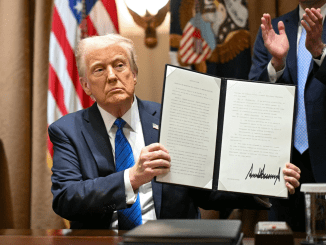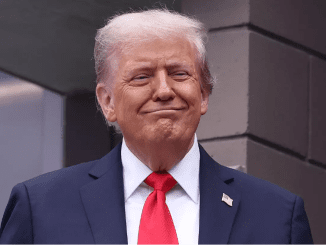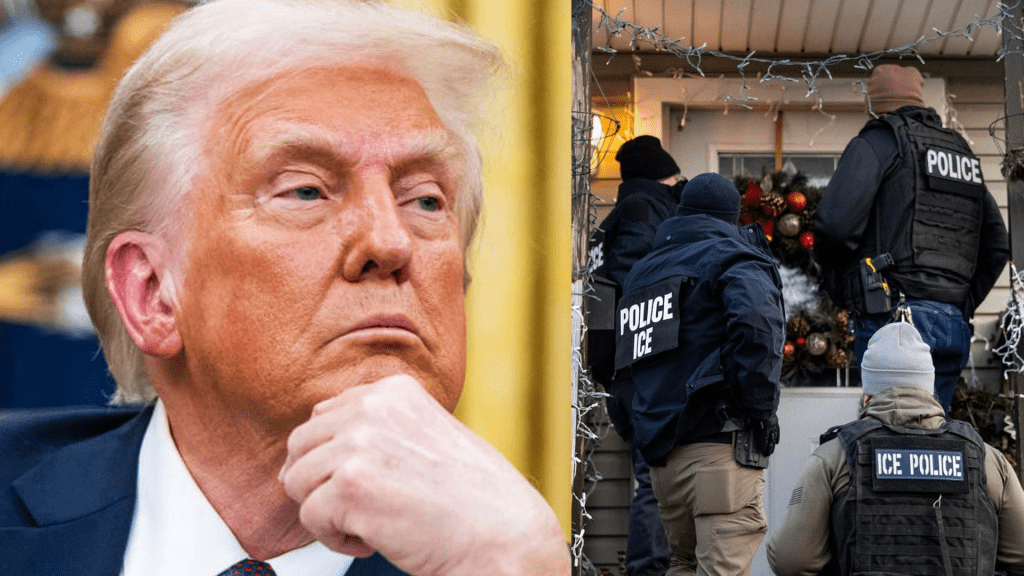
President Donald Trump’s aggressive immigration crackdown, targeting 3,000 daily arrests, is being hailed by supporters as a fulfillment of their uncompromising demand: “Deport. Them. All.” With Immigration and Customs Enforcement (ICE) agents at the forefront, netting 32,809 arrests since January 2025, the operation is seen as a bold stand for law and order. Amid praise for keeping ICE members safe, the raids—backed by 700 Marines and 4,000 National Guard troops—have ignited fierce debate, with critics decrying their scope and human cost.
The raids, launched to enforce federal immigration laws, focus on undocumented immigrants, including 1,155 gang members, but have also swept up non-criminals in “collateral arrests.” In Los Angeles, where riots over the operations caused $5.2 million in damages and injured 47 officers, supporters argue Trump’s decisive action protects communities and ICE agents alike. A Phoenix worksite raid, where an entire construction crew fled, exemplifies the policy’s impact, with only minor injuries reported among agents. With 48% of Americans approving the raids, Trump’s base cheers his commitment to border security.
Safety measures for ICE have been a priority. Agents are equipped with body armor, drones, and tactical support, minimizing risks in volatile environments like Los Angeles, where 338 arrests were made amid Molotov cocktails and projectiles. The deployment of military backup, ordered by Trump, has ensured no ICE fatalities, a stark contrast to the 2020 riots that injured dozens of federal officers. Supporters, waving American flags at rallies, credit Trump’s leadership for empowering agents to execute what they see as a mandate from the 2024 election.
The “deport them all” mantra, chanted at Trump’s campaign events, reflects frustration with sanctuary policies in states like California, where Governor Gavin Newsom’s SB 54 limits ICE cooperation. Texas, Florida, and Arizona, which backed Trump overwhelmingly, have seen fewer raids, prompting accusations of targeting blue states. Yet, supporters argue the focus on high-crime areas, like Los Angeles and Chicago, where damages hit $3.1 million, is strategic, not political. They point to a 2023 study estimating undocumented immigrants cost taxpayers $150 billion annually, justifying mass deportations.
Critics, however, slam the policy as inhumane and chaotic. The raids have disrupted industries, with construction sites in California facing 8% cost hikes due to labor shortages. Families, including those with U.S. citizen children, face separation, with 52% of blue-state voters opposing the crackdown. Los Angeles Mayor Karen Bass called the military presence “excessive,” arguing it escalates tensions. Reports of mistaken arrests, like a legal resident detained in Chicago, fuel claims of overreach, with civil liberties groups planning lawsuits.
Trump’s supporters remain undeterred, viewing the raids as a promise kept. They argue that prioritizing ICE safety—evident in zero agent deaths despite nationwide unrest—shows his unmatched leadership. The operations, they say, send a clear message: illegal entry has consequences. As “No Kings” protests, numbering nearly 2,000, challenge Trump’s $45 million parade, his base sees the deportations as a bulwark against lawlessness.
The raids’ future is uncertain, with legal challenges and economic fallout looming. But for now, Trump’s supporters celebrate a policy that delivers on their rallying cry, thanking him for protecting ICE while reshaping America’s borders—one arrest at a time.